

Receiving an FDA Form 483 signals potential non-compliance with cGMP, requiring a timely and well-crafted response. This response should address observations, assess product quality risks, and outline sustainable corrective actions to maintain regulatory trust.
Receiving an FDA Form 483 can be a challenging moment for any pharmaceutical manufacturer. This form indicates that an inspector has identified conditions that may suggest non-compliance with Current Good Manufacturing Practices (cGMP). The subsequent response is not merely a formality; it serves as an opportunity for the organization to demonstrate its commitment to quality and compliance. A well-crafted response can significantly influence the regulatory agency's perception and future actions.
Overview of FDA Form 483
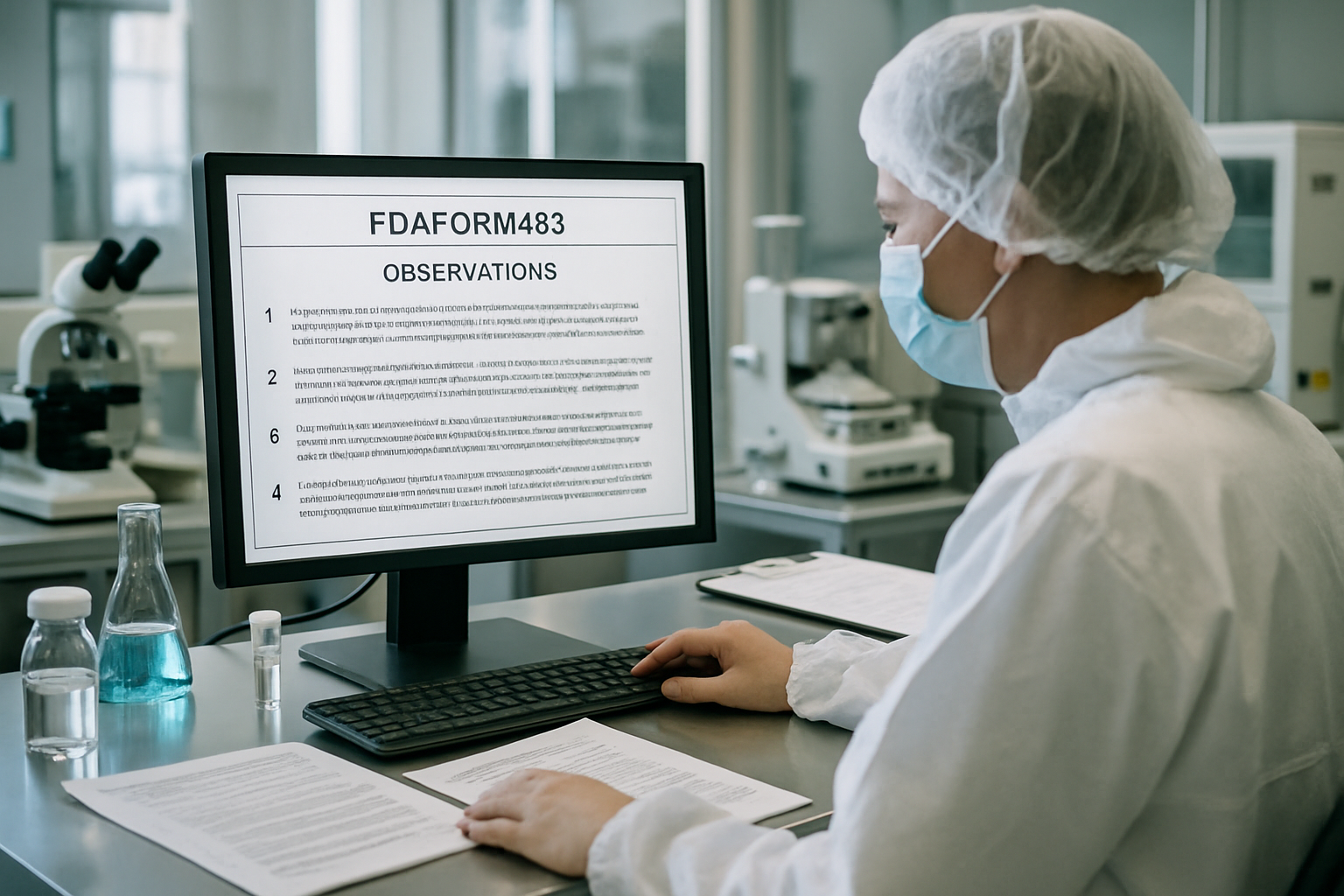
FDA Form 483 is issued when investigators observe conditions during an inspection that may indicate a failure to adhere to cGMP. These observations allow the facility to respond with corrective actions before the FDA decides on further regulatory measures. A response must convincingly address the following:
- Acknowledgment of the observations
- Assessment of product quality risks
- Identification of root causes
- Commitment to sustainable corrective actions
- Assurance that the same issues will not recur
Importance of Responding to FDA 483
Timely submission of a response, ideally within fifteen business days, is crucial. A prompt and satisfactory response reflects management's commitment, the maturity of the quality system, and effective risk management. Conversely, a poorly constructed response can lead to serious repercussions, including warning letters, increased scrutiny, and loss of customer trust.
Initial Steps Following Receipt of a 483

Loading flowchart…
The first 24 to 48 hours after receiving a Form 483 are critical. During this time, organizations should:
- Establish a cross-functional response team
- Review the investigator's notes
- Gather supporting documentation
- Assess the impact on products
- Implement immediate corrective actions where necessary
- Notify senior management of the situation
These actions demonstrate a commitment to compliance and help preserve essential evidence.
Identifying Root Causes
A common pitfall is addressing only the specific observations without understanding the underlying compliance issues. For example, an observation of
Comments (0)
Loading comments…
Checking sign-in status…