

This article provides insights on calculating sampling sizes for raw materials using various plans, ensuring compliance with GMP standards.
Sampling of raw materials is a critical process in the pharmaceutical industry, influencing the quality of the final products. A consistent and scientifically sound approach to sampling is essential for meeting regulatory standards and ensuring product integrity. Questions frequently arise regarding the appropriate number of containers to sample when receiving raw materials. While some companies opt for comprehensive sampling of every shipment, others may adopt a less rigorous approach based on the historical performance of suppliers. An understanding of the various sampling plans—namely n, p, and r—equips quality assurance professionals with the necessary tools to develop effective sampling strategies.
Significance of Raw Material Sampling

Effective raw material testing must begin before the samples reach the laboratory. If the sampling process fails to yield a representative sample, even the most advanced testing methods cannot provide reliable results. Poor sampling practices can result in:
The acceptance of contaminated goods,
Failure to identify mixing or switching of containers,
Incorrect batch release decisions,
Regulatory non-compliances,
Potential product recalls.
Consequently, sampling is a crucial quality control measure in pharmaceutical manufacturing.
Regulatory Considerations
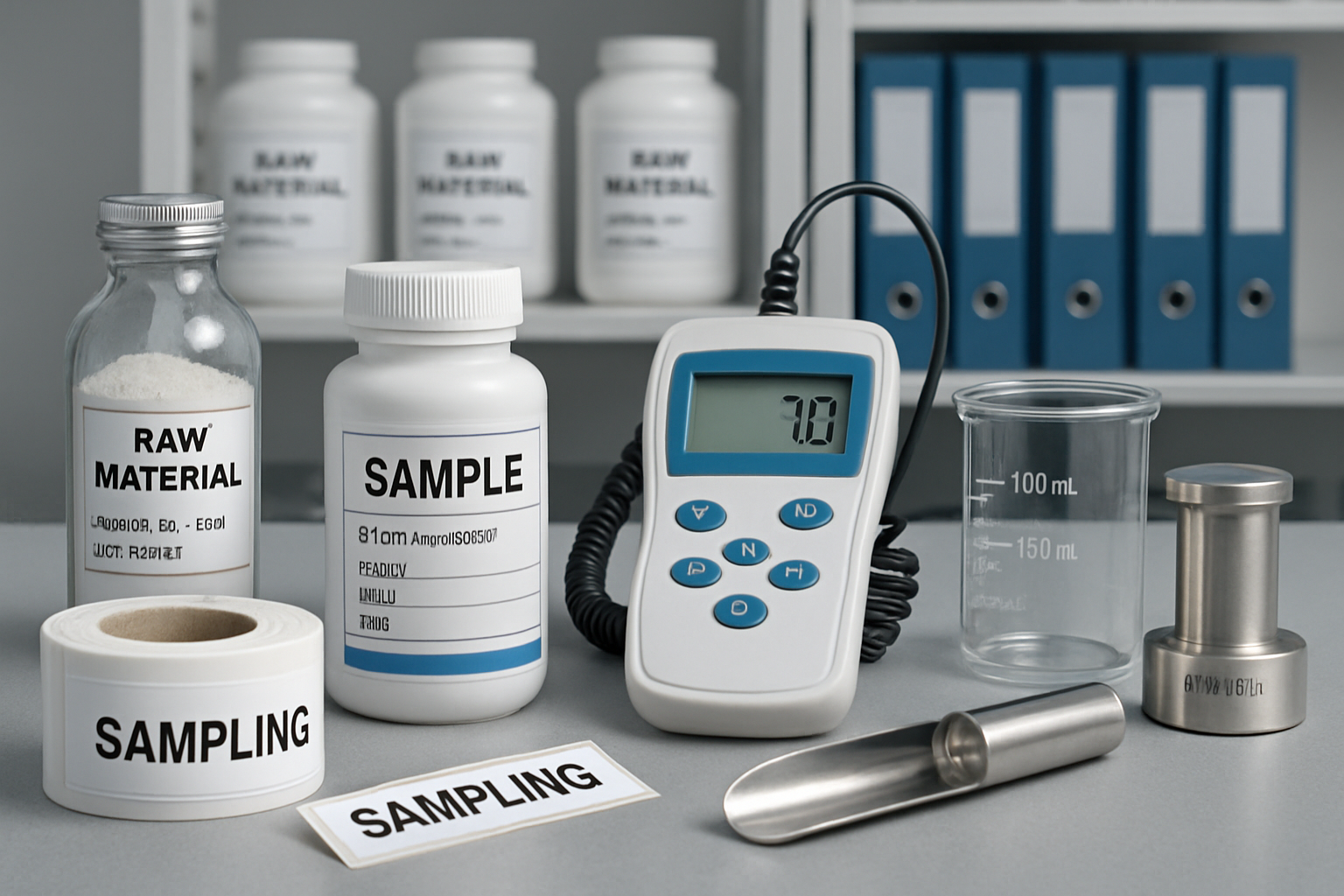
The regulatory framework mandates that manufacturers document their procedures for sampling raw materials, including specifications on how materials are sampled, identified, tested, and released. Inspectors typically review:
Procedures for sampling,
Sampling plans,
Documentation related to supplier qualifications,
Sampling locations,
Sampling equipment,
Sample identity documentation,
Environmental conditions during sampling,
Personnel training records.
While regulations from the FDA and the EU do not prescribe a specific formula for sampling, they emphasize the need for manufacturers to justify their sampling methods based on scientific principles, supplier qualifications, and risk assessments.
Factors Affecting Sampling Size
Several considerations should inform the choice of a sampling plan, including:
Supplier qualification status,
Criticality of the material,
Total container volume,
Manufacturing procedures,
Variability of the material,
Historical non-conformance records,
Risks of cross-contamination,
Packaging configurations.
For instance, the sampling strategy for a high-risk active pharmaceutical ingredient (API) will differ considerably from that of low-risk excipients sourced from reputable suppliers.
Overview of Sampling Methodologies
Loading flowchart…
Within pharmaceutical manufacturing, three distinct sampling plans are available: n, p, and r. The selection of the appropriate method should be based on risk rather than mere convenience.
Overview: 1. The n Plan (Complete Container Sampling)
The n plan is characterised by its conservative approach, requiring that every container within a batch be sampled. For example, if a shipment consists of 50 drums, all 50 are sampled. This method provides a high level of confidence in detecting variability but demands significant time and resource investment. The n plan is typically employed for:
Active pharmaceutical ingredients,
Sterile raw materials,
Highly potent substances,
New suppliers,
Materials with previous quality issues.
Overview: 2. The p Plan (Root of Total Plus One)
This method is widely used for qualifying suppliers. The number of sampling units is determined using the following formula:
Total number of sampling units = √N + 1
Where N is the total number of items to be sampled, rounded to the nearest whole number.
For example:
If there are 100 drums in a shipment, the calculation would be: Total number of sampling units = √100 + 1 = 10 + 1 = 11 drums sampled.
For a batch containing 49 bags: Total number of sampling units = √49 + 1 = 7 + 1 = 8 bags sampled.
This method serves as a practical approach, ensuring quality while simplifying the process, particularly with suppliers demonstrating consistent quality.
3. The r Plan (Risk-Based Sampling)
The r plan adopts a risk-based philosophy and is appropriate for materials from suppliers whose performance is consistently monitored. Unlike the n and p plans, the r plan lacks a mathematical formula. Instead, it depends on documented risk assessment and supplier performance information, which may include:
Supplier audit results,
Consecutive lots accepted,
Criticality assessments,
Process capability,
History of complaints,
Trend analyses,
Transportation conditions,
Previous laboratory results.
An example of this could involve a manufacturer deciding to sample only a limited number of units from a compliant supplier with an extensive history of quality, presuming that identity testing and supplier approval protocols are stringently followed.
Comparison of Sampling Plans
Sampling Plan | Containers Sampled | Typical Use |
|---|---|---|
n Plan | Every container | High-risk materials, new suppliers, API containers |
p Plan | √N + 1 | Qualified suppliers, routine raw materials, Excipients |
r Plan | Risk-based reduced sampling | Highly reliable suppliers with documented performance |
Practical Application
Consider a scenario where a pharmaceutical company receives 225 packs of microcrystalline cellulose from a verified vendor. Utilizing the various sampling approaches yields:
n Plan - Sample all 225 packs.
p Plan - Calculated as √225 + 1 = 15 + 1 = 16 packs.
r Plan - Sampling quantity is determined by risk assessment; this could be set at 8 or 10 packs.
The decision should be informed by risk management factors rather than subjective judgement.
Frequent Pitfalls in Raw Material Sampling
Many sampling deficiencies arise not from incorrect calculations but from inadequate procedural audits of GMP compliance. Common errors include:
Reducing sampling frequency for unapproved suppliers,
Using a uniform sampling plan for all materials,
Neglecting vendor performance monitoring,
Choosing readily accessible containers over random selections,
Failing to adjust sampling methods in response to vendor or process changes,
Inadequately justifying reduced sampling amounts,
Assuming reduced sampling negates identity testing.
Developing a Risk-Based Sampling Protocol
An effective sampling strategy should harness statistical guidelines and scientific rationale. When devising a sampling SOP, consider these questions:
Is the supplier fully approved and regularly audited?
Has the material consistently passed quality tests?
What risks do defective containers pose to the product?
Is there evidence of variability between containers?
Are there contamination risks associated with packaging and delivery?
Does testing align with regulatory requirements?
These inquiries assist in determining the appropriate n, p, or r plan to implement.
Documentation Standards
Every sampling event must be meticulously documented to ensure traceability. Essential documentation includes:
Material name,
Batch number,
Supplier name,
Total number of containers received,
Selected sampling plan (n, p, or r),
Formula used for sample size calculation,
Container identifiers,
Sampling date and time,
Sampler's name and signature,
Sampling equipment details,
Environmental conditions, if relevant.
Comprehensive documentation is vital for GMP compliance and serves as evidence during inspections. Sampling raw materials involves more than merely selecting samples for laboratory analysis; it must adhere to scientifically sound principles that significantly impact the reliability of test results and, consequently, the quality of the final pharmaceutical product. While the n plan guarantees maximum confidence through complete container sampling, the p plan strikes a balance between confidence and efficiency through the √N + 1 principle. The r plan, underpinned by supplier qualifications and risk assessments, allows for resource optimization while safeguarding quality. Based on experience, the most effective sampling plans are those that remain adaptable, evolving with changes in manufacturing processes, supplier performance, and regulatory demands.
Comments (0)
Loading comments…
Checking sign-in status…