
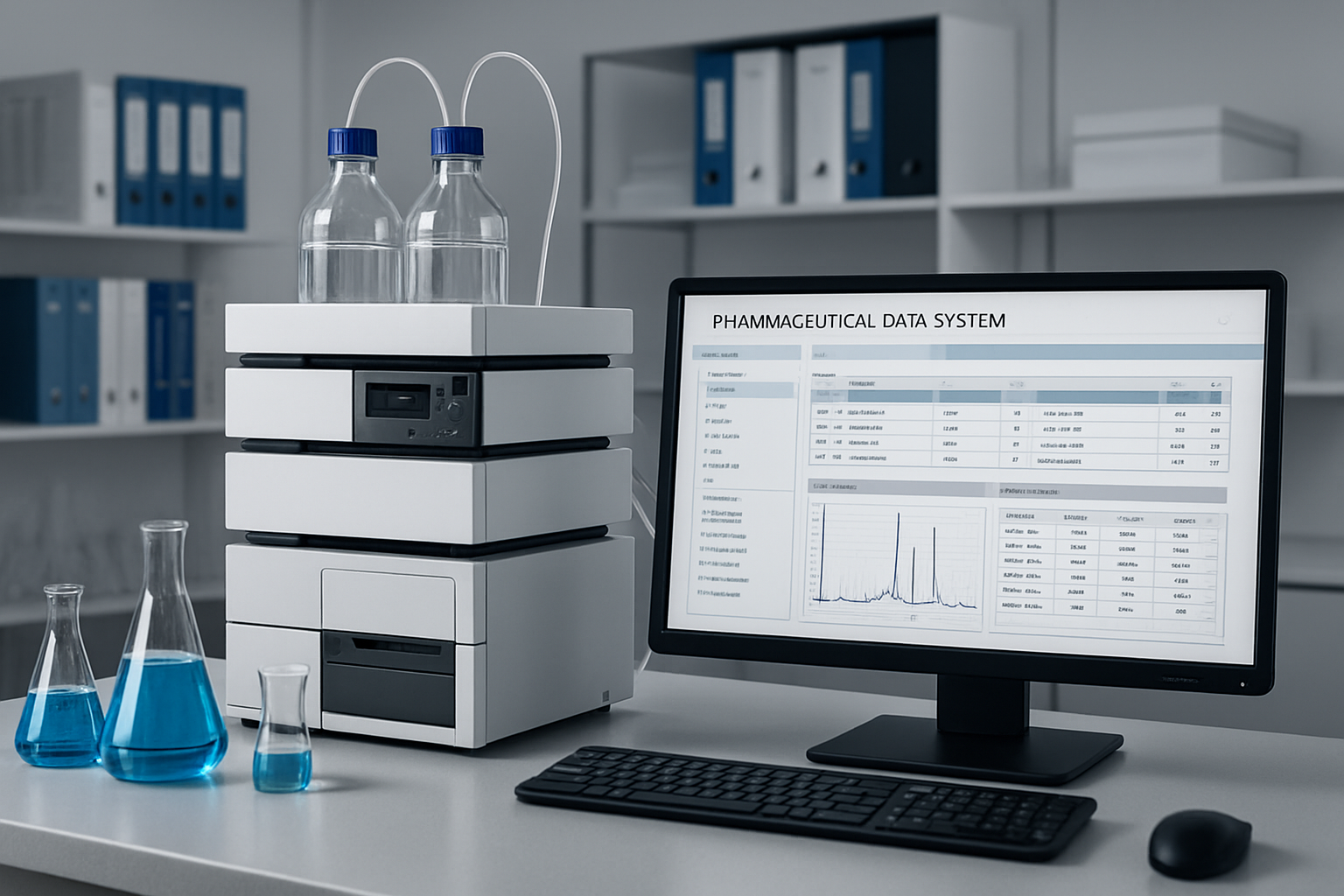
Effective management of drug information is vital in the pharmaceutical industry for compliance and quality. Various data storage and retrieval systems, including document, database, and reference-retrieval systems, enhance access to critical information.
The management of drug information is crucial in the pharmaceutical industry, particularly for ensuring compliance and maintaining quality standards. Effective data storage and retrieval systems allow organizations to access relevant information efficiently, which is essential for decision-making and regulatory adherence.
Understanding Data Management in Pharmaceuticals

Data management involves the systematic collection, cataloguing, and retrieval of information. With advancements in computer technology, organizations can now manage extensive datasets effectively. This capability is particularly important in pharmaceuticals, where timely access to accurate information can influence product development and regulatory compliance.
Types of Data Retrieval Systems

Data retrieval systems can be classified based on their functionality and the type of information they manage. Depending on the system's design, users can retrieve entire documents or specific data points. Here are some common types:
Document Retrieval Systems
These systems retrieve complete documents based on titles or keywords. They are particularly useful when searching for specific reports or publications. Some systems allow users to search the text within documents, enhancing the retrieval process.
Database Systems
Database systems store information in structured records with discrete fields, such as names, addresses, and contact numbers. Users can efficiently search these records based on specific criteria. For instance, one might search for all individuals associated with a particular area code.
Reference-Retrieval Systems
Instead of storing entire documents, these systems maintain references to them. When a user queries the system, it provides the locations of relevant documents. This approach is beneficial for managing extensive collections of printed materials, especially in dynamic environments like libraries.
Advancements in Data Storage Technologies
The evolution of data storage technologies has significantly impacted how information is managed. The introduction of optical storage media, such as CD-ROMs, has enabled the storage of vast amounts of text, graphics, and audio at a low cost. This development has facilitated the creation of local information systems that can store encyclopedias, databases, and various publications.
Categories of Databases in Pharmaceutical Information
Databases can be categorized into several types based on their content and purpose:
- Library Catalogues: These contain descriptions of various holdings, including books, reports, and journals.
- Full-Text Databases: These databases include the complete text of specific publications, allowing for comprehensive searches.
- Factual Databases: These contain factual information, often in numerical form, useful for drawing conclusions in research.
- Bibliographic Databases: These provide references and abstracts for various publications.
- Reference Databases: Examples include current research projects, product suppliers, and encyclopedias.
Information Storage and Retrieval Systems (ISRS)
Information Storage and Retrieval Systems (ISRS) are designed to facilitate the creation, search, and modification of data. These systems can operate on peer-to-peer networks, providing users with access to a broad range of information. While many ISRSs are accessible via the Internet, not all are available online.
A notable feature of ISRSs is their decentralised nature, which reduces the risk of catastrophic data loss due to hardware failures or security breaches. The redundancy of data across multiple computers enhances both robustness and adaptability, although it may also introduce some complexity.
ISRSs can also provide anonymity for users and contributors, enhancing privacy while accessing or contributing data.
[[TABLE_1]]
Comments (0)
Loading comments…
Checking sign-in status…