
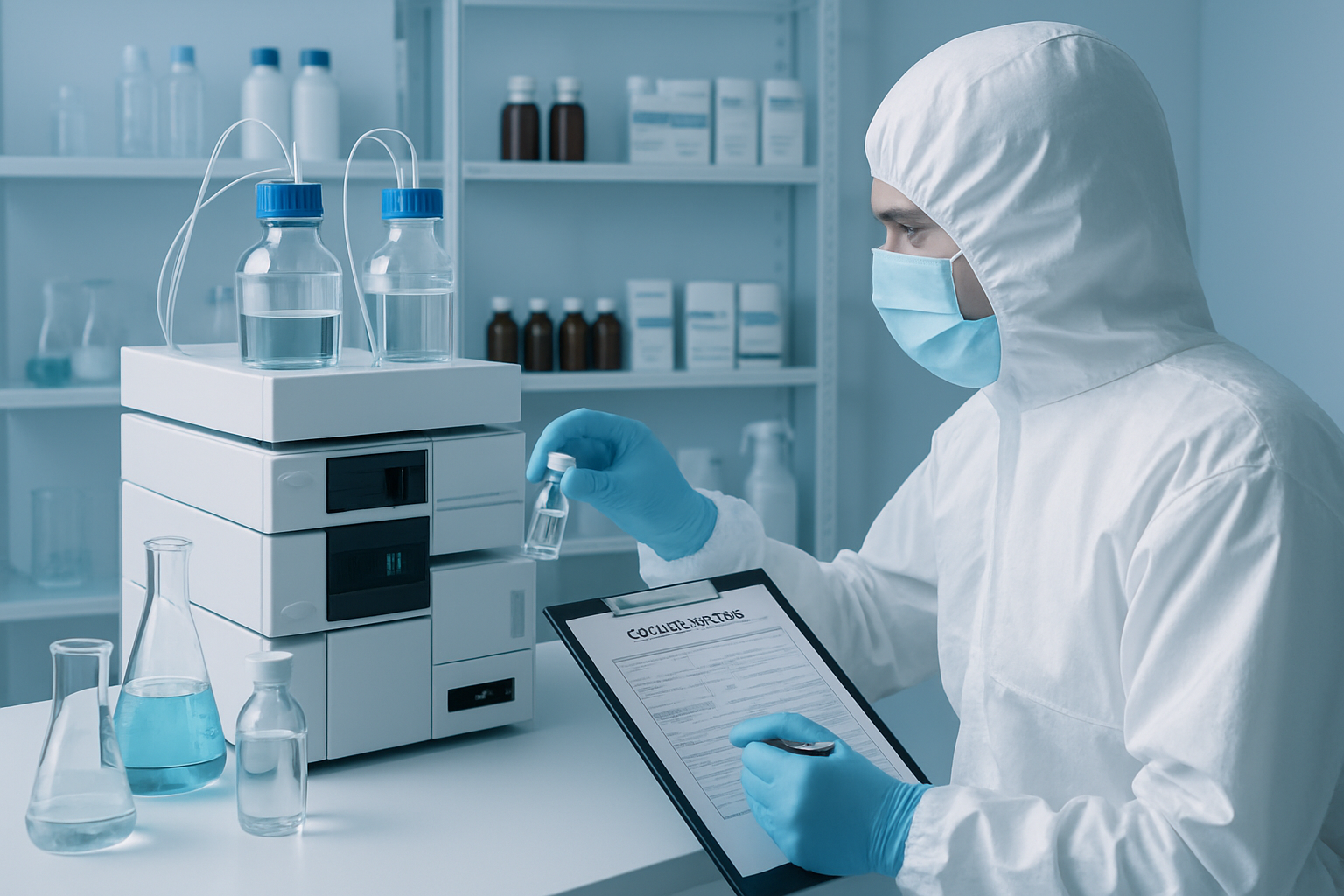
Acceptance criteria for cleaning validation in pharmaceuticals define allowable residue levels on equipment post-cleaning. Establishing these criteria involves scientific assessments of risks, residue calculations, and validation of analytical methods to ensure effective contamination control.
In pharmaceutical manufacturing, cleaning validation is critical to prevent contamination between different products. Acceptance criteria define the maximum allowable levels of residues from active pharmaceutical ingredients (APIs), cleaning agents, and other contaminants on equipment following cleaning procedures. Establishing these criteria involves a scientific approach that considers toxicological assessments, residue calculations, and risk evaluations.
Assessing Risks Associated with Residual Contamination
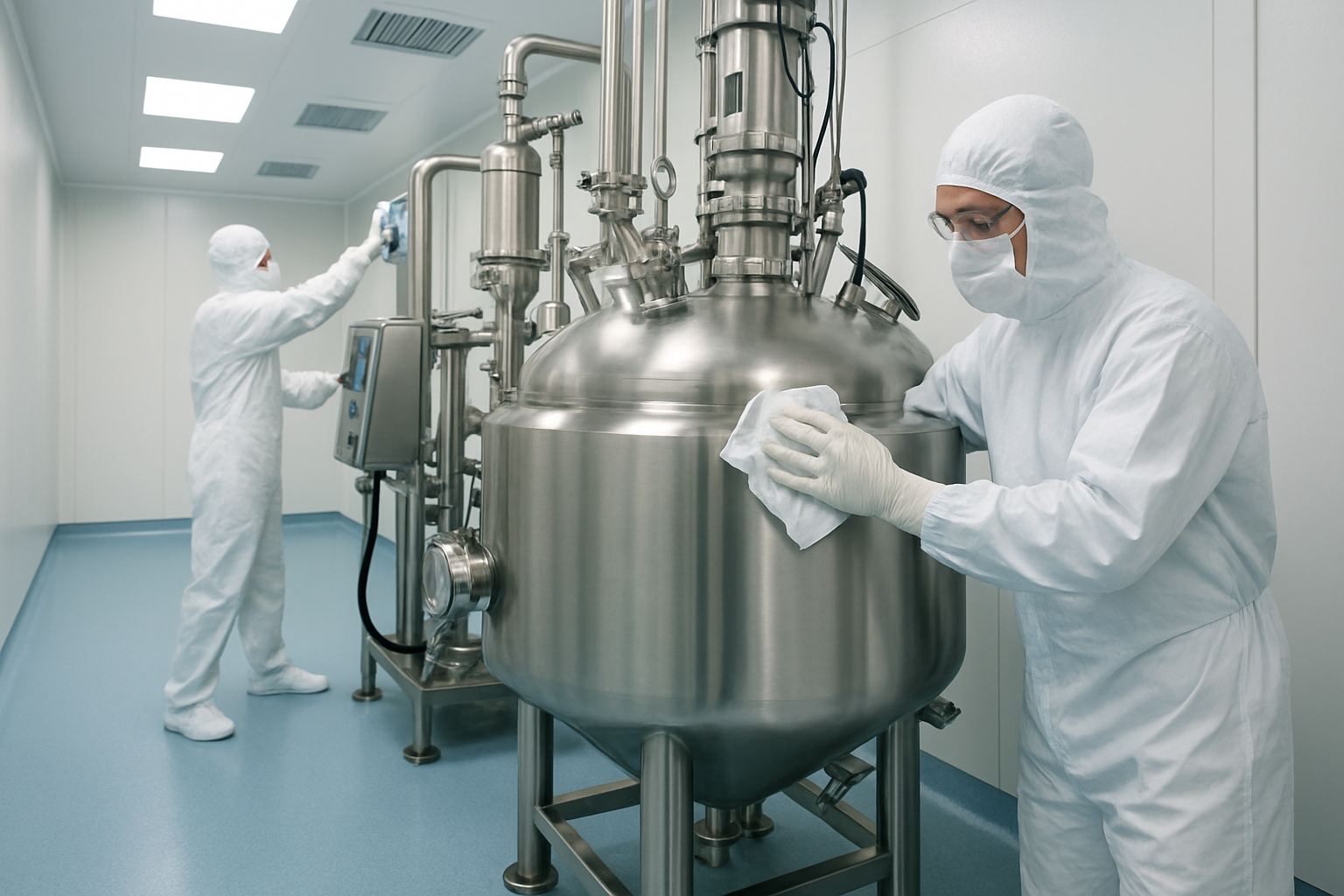
The first step in setting acceptance criteria is to identify the substances that cleaning operations must eliminate. This includes residues from APIs, excipients, degradation products, cleaning agents, and microbial contaminants. The risk posed by these substances can be influenced by the toxicity of the materials, potential transfer rates, and the dosage of the subsequent product batch. Equipment design and shared usage can complicate cleaning, necessitating a thorough evaluation of cross-contamination risks.
Determining a Scientifically Supported Carryover Limit
Loading flowchart…
To establish a maximum allowable carryover (MACO), which quantifies acceptable residue transfer from one product to another, the following formula is typically used:
MACO = (PDE of previous product × minimal batch size of next product) / maximal daily dose of next product
It is essential that all units in this calculation are consistent. For instance, if the permitted daily exposure (PDE) is expressed in mg per day, both the next product's batch size and maximum daily dose should also be in mg. This ensures that the resulting MACO is correctly quantified. The calculations should be based on worst-case scenarios, taking into account specific product characteristics and not merely convenient figures.
Reassessing the Traditional 10 ppm Limit
The historical 10 ppm limit for cleaning validation is often inadequate. This threshold does not universally guarantee safety against residual exposure. Regulatory bodies like the FDA advocate for scientifically justified limits that are practical and achievable. The European Medicines Agency (EMA) provides guidance on deriving health-based exposure limits (HBEL) that better account for the risks of cross-contamination.
Translating MACO into Practical Sampling and Equipment Limits
Once the MACO is established, it must be translated into practical limits for cleaning validation.
Defining Surface Residue Limits
The surface residue limit can be calculated by dividing the MACO by the total product contact surface area:
Surface limit = MACO / overall product contact surface area
For example, if the MACO is 100 mg and the surface area is 200,000 cm², the theoretical average surface limit would be 0.0005 mg/cm², or 0.5 µg/cm². This calculation must consider the variability of residue distribution on equipment.
Establishing Swab Sample Limits
The surface limit can be further defined for swab testing based on the area sampled:
Swabbing limit = surface limit × area swabbed
For a surface limit of 0.5 µg/cm² and a swab area of 25 cm², the theoretical residue limit would be 12.5 µg per swab. Protocols should clearly outline the swabbing area, extraction volume, and recovery correction methods.
Calculating Rinse Sample Limits
Rinse sampling is particularly useful for complex systems. The rinse concentration limit can be determined as follows:
Rinse concentration limit = allowable residue level / volume of rinse used
This method must ensure that the rinse adequately represents the surface of the equipment, as a clean rinse does not imply complete absence of contaminants.
Setting Criteria for Cleaning Agents and Microbial Residues
In addition to active ingredient limits, cleaning agents and their residues must also be assessed. Acceptance criteria should reflect the composition and safety profile of the cleaning agents used. For products sensitive to microbial contamination, limits on bioburden and endotoxins must be incorporated into the cleaning validation process.
Validating Analytical Methods for Measuring Limits
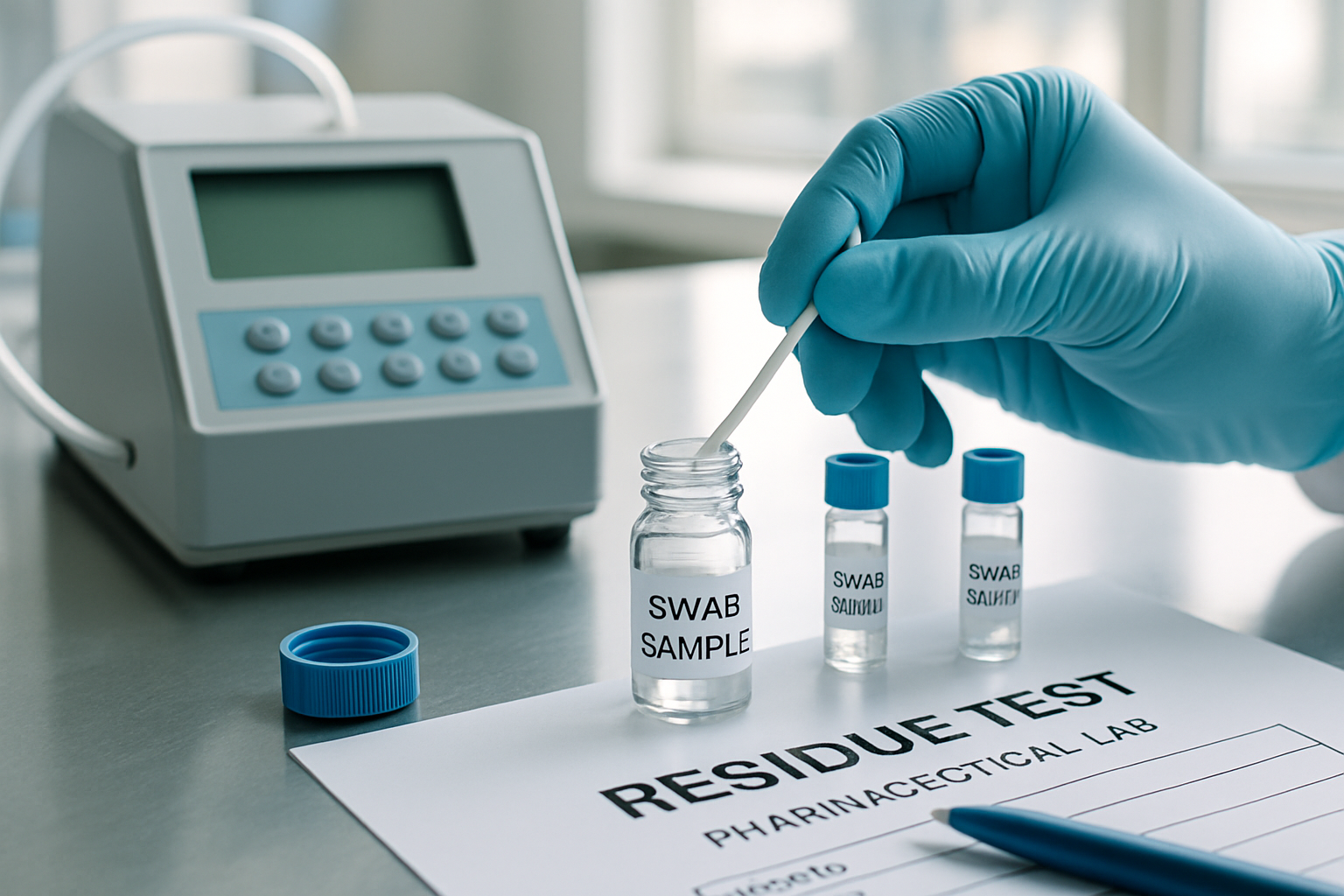
The effectiveness of acceptance limits hinges on the ability of analytical methods to reliably measure them. Validation studies should examine sensitivity, specificity, extraction efficiency, and recovery rates. If the defined limits cannot be accurately detected, the entire validation process may be compromised.
Documenting the Justification for Acceptance Criteria
A comprehensive cleaning validation plan must document the residue limits, scientific rationale, sampling locations, techniques, and analytical methods. Quality Assurance (QA) must verify that toxicological assessments align with MACO and surface area data, while Quality Control (QC) is responsible for analytical method validation. Operations and Engineering must ensure that the cleaning processes are accurately described.
In cases where sampling results exceed acceptance criteria, it is crucial to investigate rather than simply resampling until passing results are obtained. This investigation should encompass the cleaning methods, residue types, and their potential impact on future batches.
Ultimately, the acceptance criteria for cleaning validation must be rooted in a thorough risk assessment, translating potential contamination into quantifiable limits supported by rigorous sampling and analytical methods. Without a solid justification for these limits, the criteria cannot be deemed acceptable or defensible.
Comments (0)
Loading comments…
Checking sign-in status…