
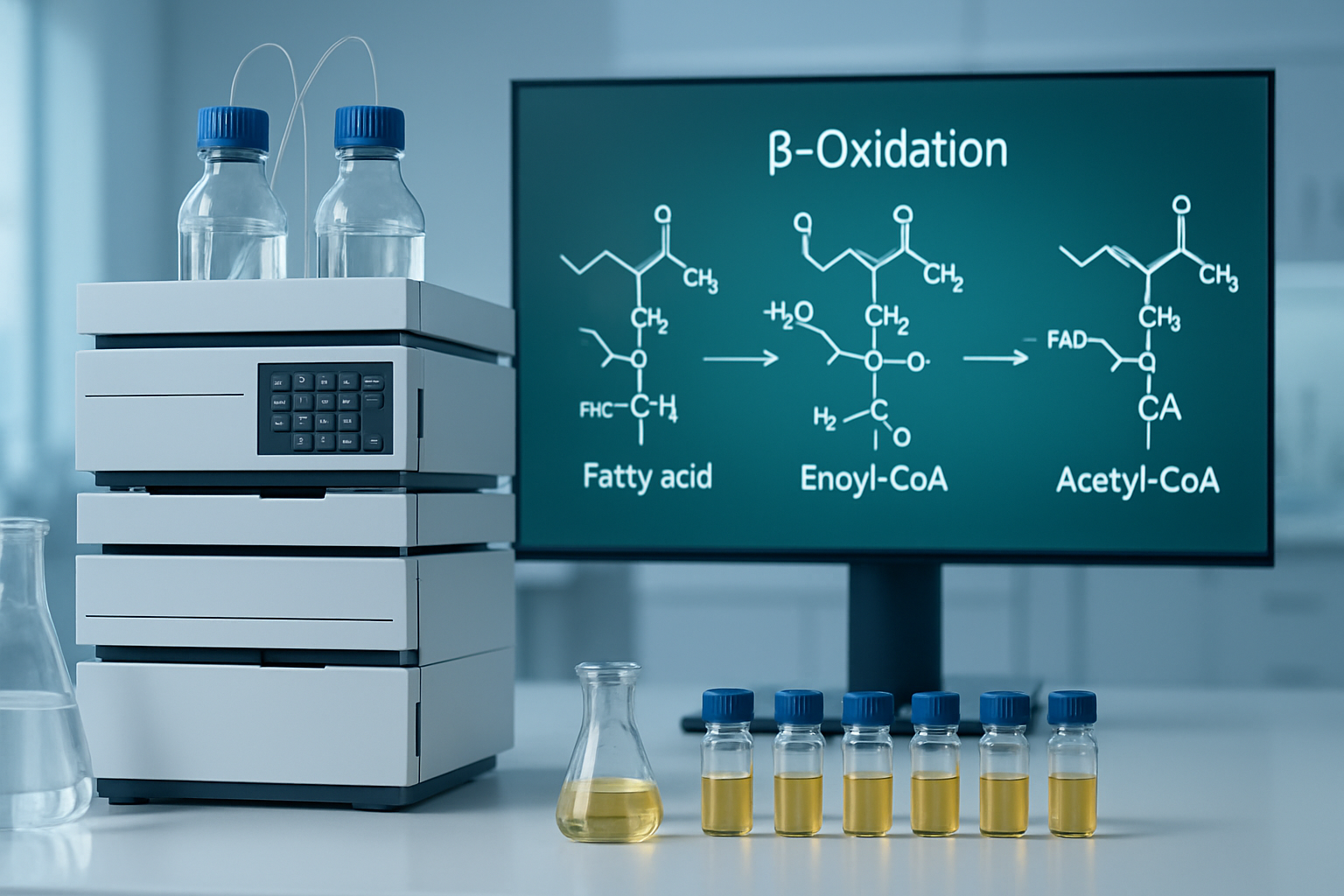
β-Oxidation is a key metabolic pathway that degrades fatty acids in mitochondria and cytosol to produce energy-rich metabolites like Acetyl-CoA, NADH, and FADH2. The process involves four enzymatic steps: initial oxidation, hydration, secondary oxidation, and cleavage, ultimately yielding energy and water.
β-Oxidation is a vital metabolic pathway in which fatty acids are degraded to produce energy. This process primarily occurs in the mitochondria of eukaryotic cells and the cytosol of prokaryotic cells, facilitating the conversion of long-chain fatty acids into shorter acyl-CoA molecules. The resulting metabolites, such as Acetyl-CoA, NADH, and FADH2, play crucial roles in cellular energy production, particularly through the citric acid cycle.
Mechanics of Fatty Acid Breakdown
Four Key Steps in β-Oxidation
Loading flowchart…
The process of β-oxidation can be broken down into four distinct enzymatic steps: initial oxidation, hydration, secondary oxidation, and cleavage. Each step acts on the acyl-CoA chain, progressively shortening it and yielding energy-rich compounds.
Initial Oxidation Phase
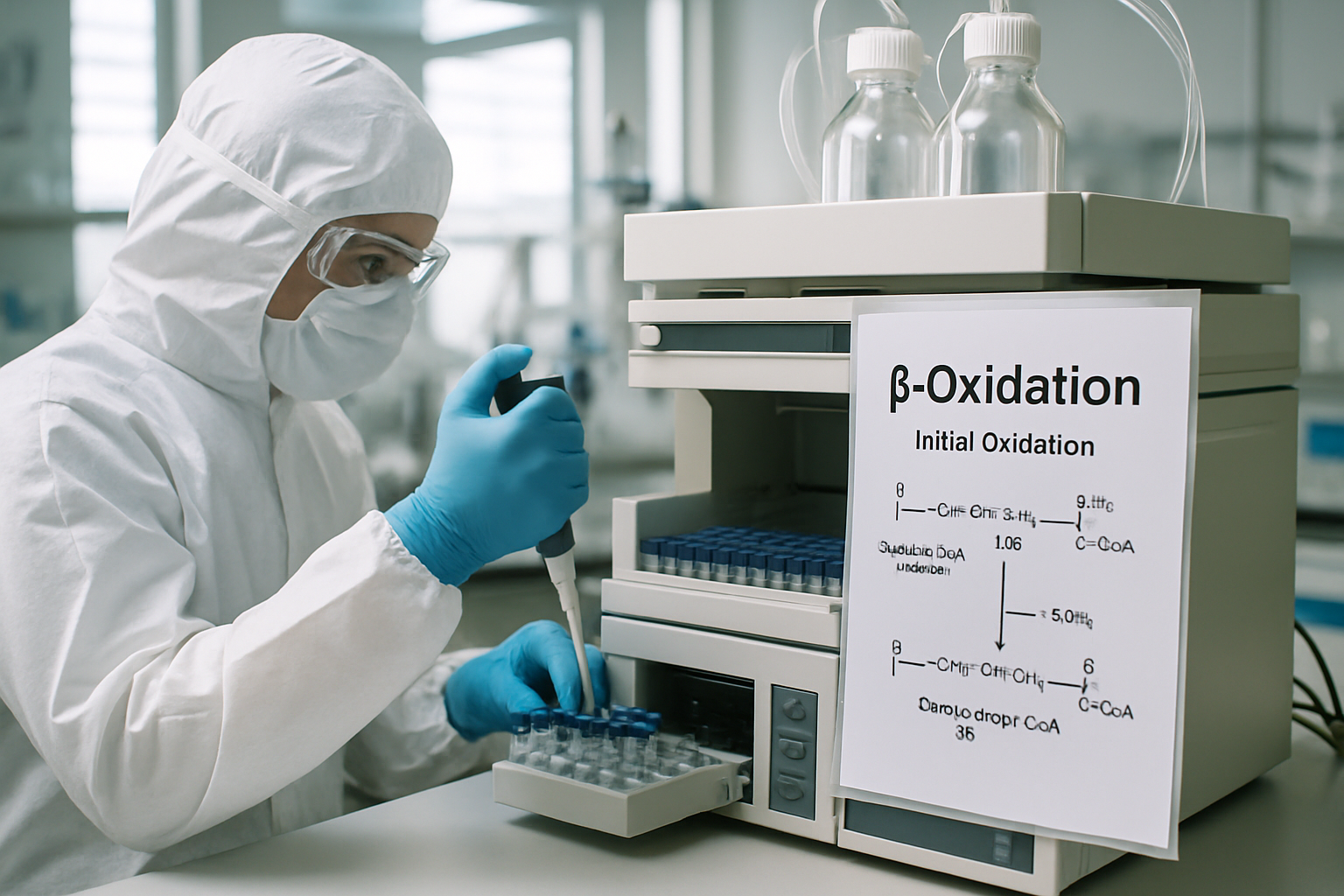
The first phase of β-oxidation involves the action of acyl CoA dehydrogenase, which catalyzes the oxidation of acyl-CoA. This reaction results in the formation of trans-Δ2-enoyl-CoA, where a double bond is introduced between the second and third carbons of the fatty acid. The reduction of FAD to FADH2 occurs during this step, contributing to the overall energy yield in subsequent reactions.
Addition of Water Molecule
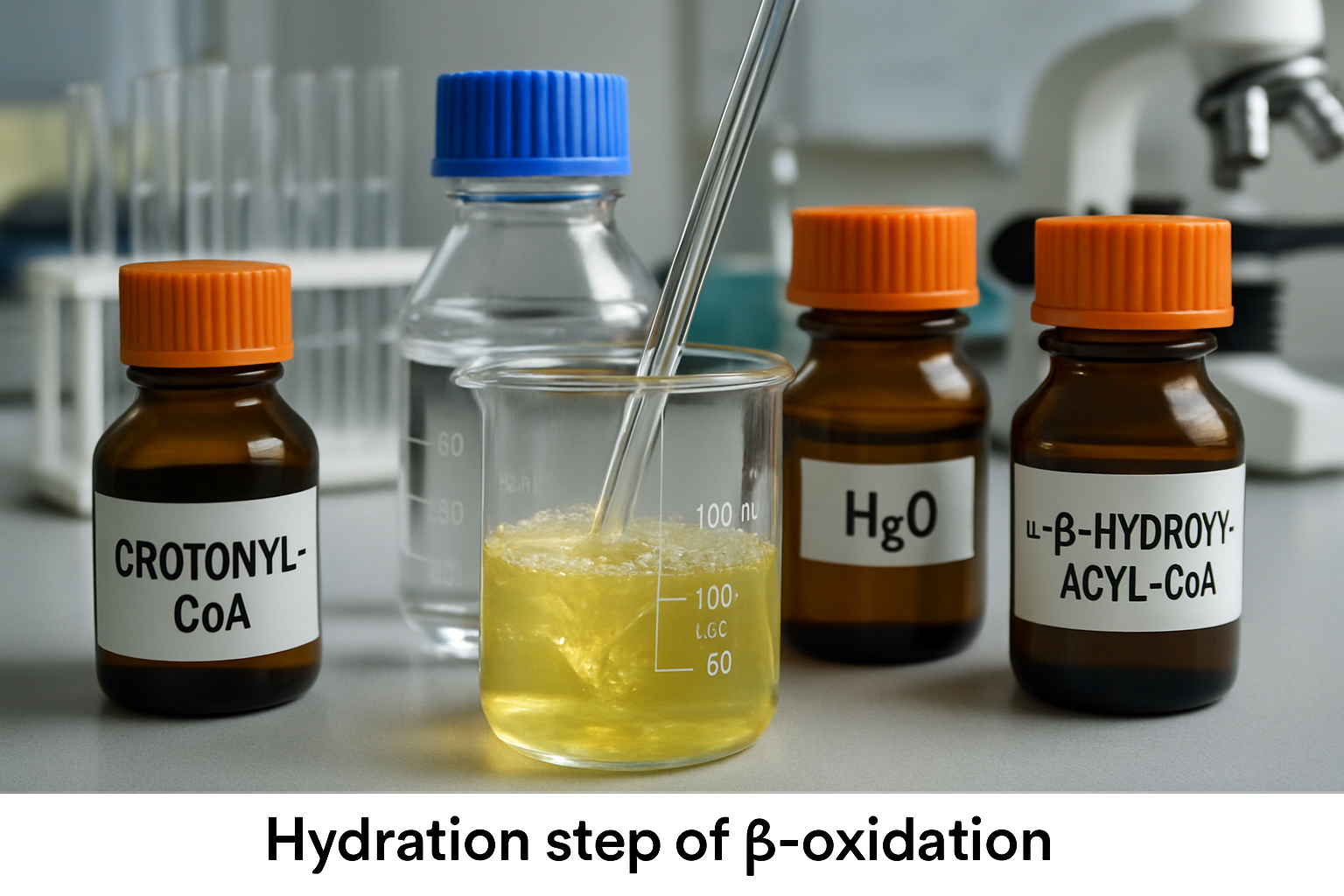
In the hydration step, water is added to trans-Δ2-enoyl-CoA, facilitated by the enzyme enoyl CoA hydratase. This reaction converts trans-Δ2-enoyl-CoA into L-β-hydroxyacyl CoA, effectively replacing the double bond with a hydroxyl group.
Second Oxidation Reaction
The next phase involves the action of 3-hydroxyacyl-CoA dehydrogenase, which oxidises the hydroxyl group of L-β-hydroxyacyl CoA. This results in the formation of β-ketoacyl CoA and NADH. The generated NADH subsequently enters the electron transport chain, contributing to ATP synthesis.
Cleavage to Produce Acetyl-CoA
The final step of β-oxidation, catalyzed by β-ketothiolase, involves the cleavage of β-ketoacyl CoA by coenzyme A (CoA-SH). This reaction yields two acyl-CoA molecules: the original and a new, shorter chain. Each complete cycle of β-oxidation results in the production of one Acetyl-CoA unit, which can enter the citric acid cycle for further energy extraction.
Final Stages of β-Oxidation
During the complete breakdown of even-numbered acyl-CoA chains, the process results in the formation of two Acetyl-CoA molecules when the last four-carbon chain is processed. For odd-numbered chains, the final product is a propionyl-CoA and one Acetyl-CoA. The propionyl-CoA is subsequently converted into succinyl-CoA before entering the citric acid cycle.
Energy Production from β-Oxidation
The energy yield from β-oxidation is significant, with each cycle yielding one FADH2, one NADH, and one Acetyl-CoA. The breakdown can result in approximately 17 ATP molecules per cycle, calculated as follows:
| Component | ATP Yield |
|---|---|
| 1 FADH2 | 2 ATP |
| 1 Acetyl-CoA | 12 ATP |
| 1 NADH | 3 ATP |
Summing these components provides a total of 17 ATP per cycle. However, the actual yield may be lower due to various metabolic factors. Additionally, β-oxidation generates water, which can be advantageous for organisms in arid environments.
Comments (0)
Loading comments…
Checking sign-in status…