
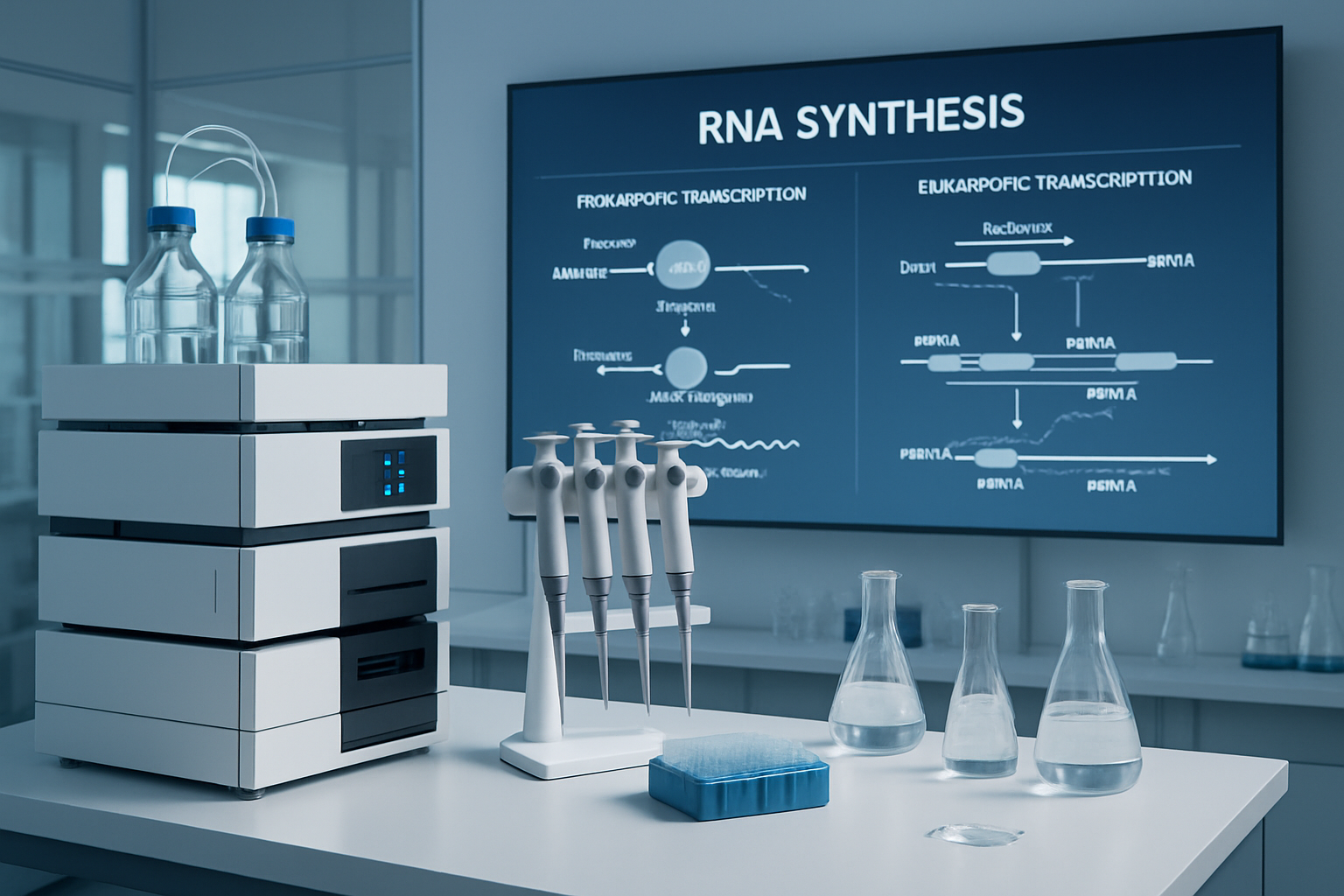
RNA synthesis, or transcription, involves creating RNA transcripts from DNA, differing between prokaryotic and eukaryotic systems. Prokaryotes use a single RNA polymerase, while eukaryotes utilize three distinct polymerases and require RNA processing before translation.
Understanding RNA synthesis is foundational in molecular biology and biotechnology, particularly within the pharmaceutical industry. This process, known as transcription, involves the synthesis of RNA transcripts from DNA sequences, ultimately leading to gene expression. The RNA strand serves as a mobile copy of the genetic information, and the mechanisms of synthesis differ across organisms.
RNA Synthesis in Prokaryotic Organisms
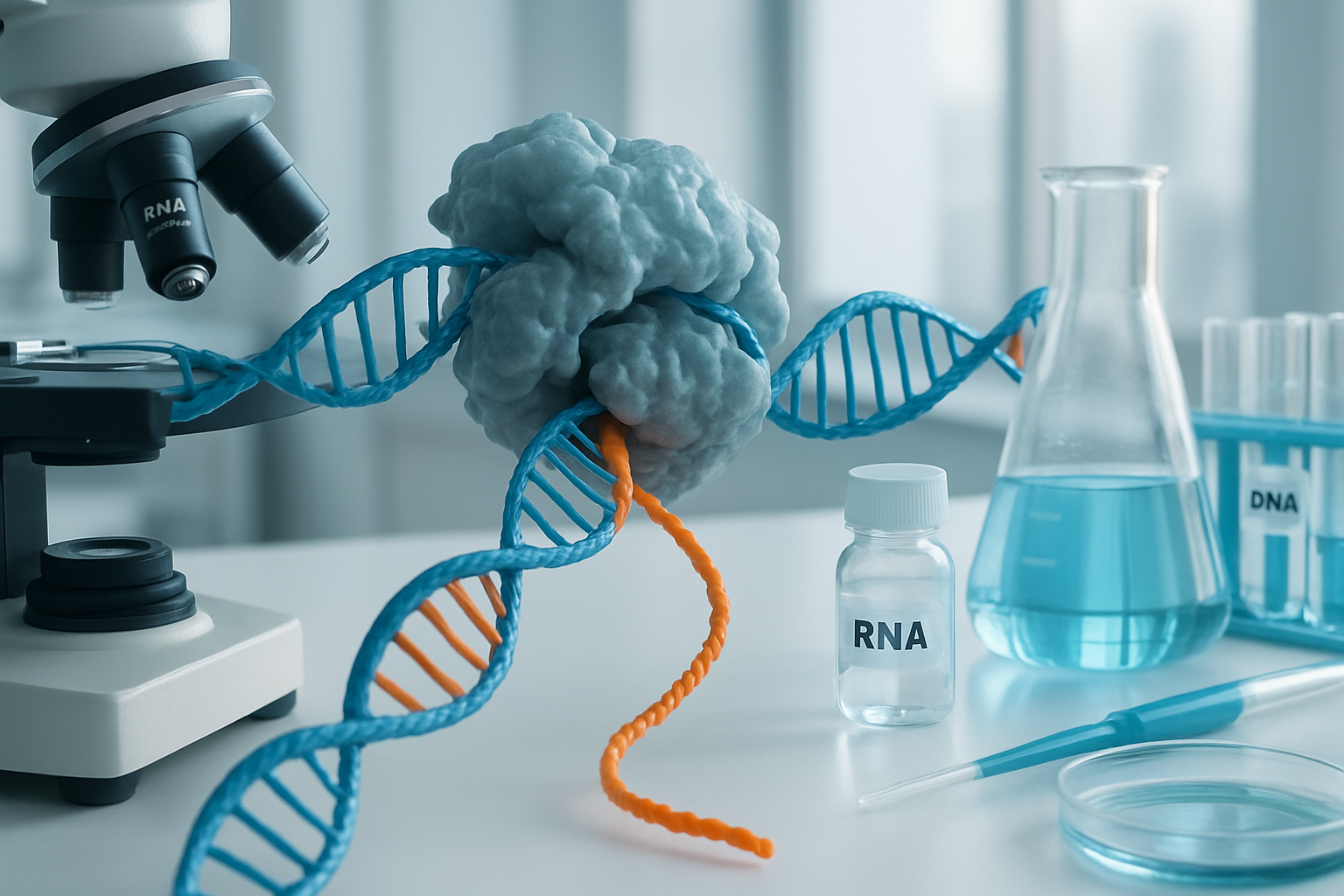
In bacteria, all genes are transcribed by a single type of RNA polymerase. This enzyme operates similarly to DNA polymerase, continuously extending the RNA strand by adding nucleotides. However, a notable distinction exists: RNA polymerase does not require a 3'-OH group for nucleotide addition, whereas DNA polymerase does. During transcription, nucleotides are linked through dehydration synthesis, forming covalent phosphodiester bonds between new and existing nucleotides.
The RNA polymerase complex consists of six polypeptide subunits, five of which form the core enzyme responsible for RNA synthesis. The sixth subunit, known as the sigma (σ) factor, is crucial for recognizing specific promoter sequences that initiate transcription. These promoter sequences are often conserved across various bacterial genomes.
Initiation Phase
Transcription initiation starts at a promoter, a specific DNA sequence where the transcription machinery assembles. The transcription initiation site marks the first nucleotide of the RNA transcript, designated as +1. Nucleotides before this site are termed upstream, while those following it are downstream. A common characteristic of bacterial promoters is the presence of consensus sequences located at -10 and -35 positions upstream of the initiation site. For instance, the consensus sequence TATAAT is typically found in the -10 region, and the σ factor binds to the -35 sequence.
Elongation Phase
During the elongation process, the σ factor dissociates from the RNA polymerase, allowing the core enzyme to synthesise RNA in the 5'-to-3' direction at a rate of approximately 40 nucleotides per second. As the polymerase moves along the DNA template, the double helix unwinds ahead of it while rewinding behind, facilitating continuous RNA synthesis.
Termination Phase
Transcription concludes when the RNA polymerase encounters termination signals in the DNA template. This prompts the polymerase to stall and release the newly formed RNA transcript, which is crucial for subsequent cellular processes.
Transcription Mechanisms in Eukaryotic Cells
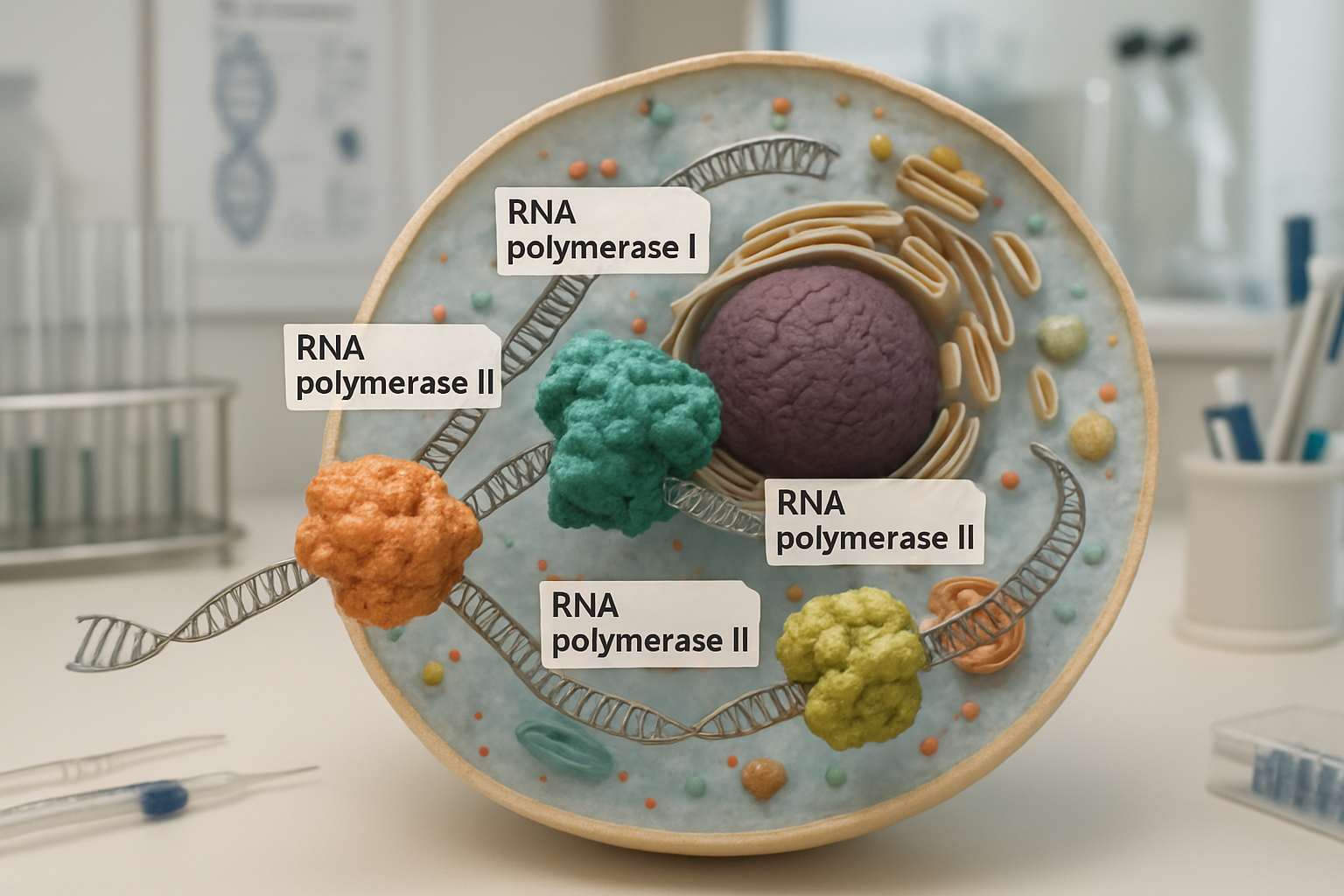
While eukaryotic transcription shares similarities with prokaryotic processes, several critical differences exist. Eukaryotes employ three distinct RNA polymerases—RNA polymerase I, II, and III—each responsible for transcribing specific gene sets. Interestingly, archaeal polymerases are structurally more akin to eukaryotic polymerases than to bacterial ones.
Eukaryotic mRNAs typically encode a single polypeptide, contrasting with the polycistronic mRNAs of bacteria and archaea. In eukaryotic cells, the presence of a membrane-bound nucleus complicates the process of protein synthesis. RNA transcripts that encode proteins must be transported from the nucleus to the cytoplasm to function effectively.
Processing of Eukaryotic RNA
During transcription, RNA polymerase synthesises primary transcripts, known as pre-mRNA, which require protection during their export from the nucleus. This process involves the addition of a 7-methylguanosine cap to the 5' end of the transcript, which serves to prevent degradation and facilitate ribosomal recognition for translation. Additionally, approximately 200 adenine nucleotides are added to the 3' end, forming a poly-A tail that further protects the mRNA.
Processing also involves the removal of introns—non-coding sequences that interrupt coding regions known as exons. Accurate splicing is essential to ensure that only the exons are joined together in the final mRNA. A spliceosome, composed of small nuclear ribonucleoproteins (snRNPs), facilitates this splicing process. Errors during splicing can lead to frame shifts that compromise the functional integrity of the encoded polypeptide.
Alternative Splicing in Eukaryotes
Alternative splicing is a notable feature of eukaryotic transcription, allowing for the generation of multiple mRNA variants from a single gene. This mechanism enhances protein diversity and functionality within the cell. Additionally, certain archaeal species exhibit splicing capabilities similar to those found in eukaryotes, underscoring the evolutionary connections between these organisms.
[[TABLE_1]]
Comments (0)
Loading comments…
Checking sign-in status…