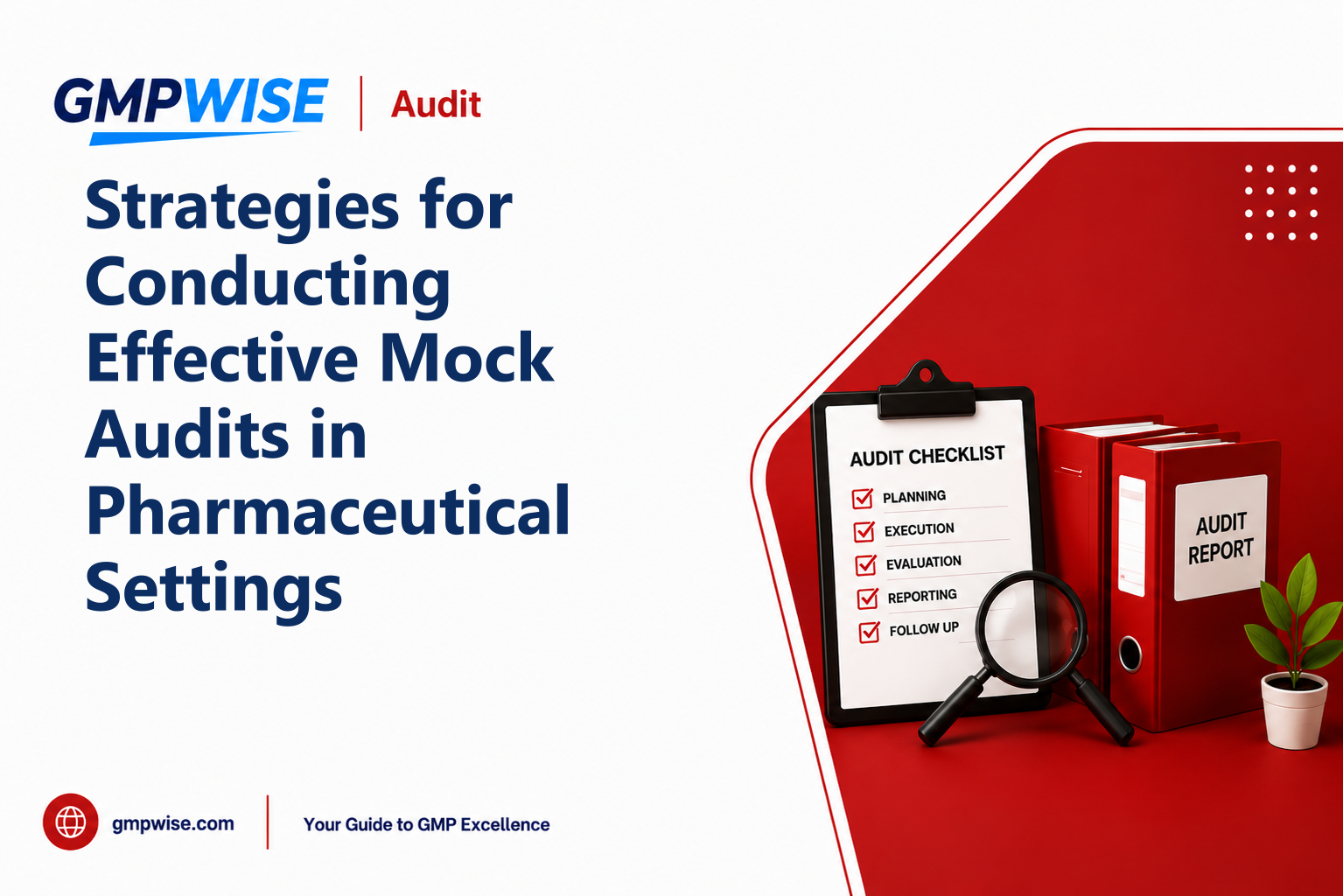
A mock audit is crucial for anticipating regulatory inspections, evaluating quality systems, and enhancing compliance readiness in pharmaceutical manufacturing.
In the pharmaceutical industry, preparation for regulatory inspections is paramount. A mock audit serves as a simulated inspection that not only tests compliance with Good Manufacturing Practices (GMP) but also assesses the preparedness of personnel and the integrity of documentation. The effectiveness of a mock audit lies in its ability to create an environment similar to that of an actual inspection, where employees are challenged under pressure.
Understanding the Distinction Between Mock and Internal Audits
Mock audits and internal audits are often confused, yet they fulfill different roles. An internal audit focuses on ensuring adherence to company policies and GMP regulations, with the aim of verifying that the quality systems are functioning properly. In contrast, a mock audit simulates the perspective of regulatory inspectors, rigorously examining decisions, requesting unexpected documents, and evaluating the overall preparedness of the organization for a regulatory visit.
Establishing the Audit Scenario
Loading flowchart…
Before initiating a mock audit, it is essential to determine the type of inspection scenario to replicate. Various scenarios may include:
General GMP compliance checks
Pre-approval inspections (PAI)
Data integrity assessments
Sterility assurance evaluations
Process validation checks
Follow-up reviews after prior audits
Varying the scenario regularly can prevent predictable preparation and enhance readiness.
Choosing Independent Auditors

To derive the most benefit from a mock audit, it is crucial to involve auditors without prior direct ties to the area being evaluated. An independent audit team may include:
Personnel from other company locations
Corporate quality assurance staff
External GMP consultants
Experienced auditors without day-to-day involvement in the audited department
This independence allows for a more objective evaluation, as external auditors are less likely to overlook issues that internal teams may consider routine.
Structuring the Audit After Regulatory Guidelines

Unlike traditional internal structures, regulators often focus on processes and products rather than predefined departments. A successful mock audit should therefore prioritize specific products or production lines. Auditors should examine:
Raw material receipt and approval
Warehouse storage conditions
Batch production records
Cleaning logs for manufacturing equipment
Calibration records
Results of environmental monitoring
Decisions regarding batch release
Documented corrective and preventive actions (CAPA)
This approach assesses the efficacy of the entire quality system rather than isolated departmental compliance.
Executing Professional Opening Meetings
Opening meetings should reflect professionalism and clarity. Key components to include are:
Introductions of the audit team
Inspection scope and objectives
List of participants from the department
Communication protocols
Documentation request procedures
Avoid lengthy introductions; regulators typically prefer direct discussions focusing on inspection objectives.
Evaluating Employee Responses Across Levels
During the mock audit, it's essential to gauge how staff react under scrutiny. Engage personnel from various roles, including:
Production team members
Quality assurance personnel
Laboratory analysts
Engineering staff
Warehouse operatives
Maintenance crews
Questions should be practical, demanding actual demonstrations rather than theoretical responses. For instance, asking employees to illustrate how they document deviations or confirm equipment cleanliness provides insight into their compliance with documented procedures.
Tracing Data Thoroughly
Regulatory audits increasingly emphasise data integrity, necessitating a review of source documents beyond printed reports. Examples of critical source documents include:
Electronic chromatograms
Audit trails
Laboratory notebooks
Calibration logs
Environmental monitoring records
Discrepancies between original data and final reports should trigger immediate investigation.
Assessing Production Practices
Effective compliance verification requires observation of actual manufacturing processes. Focus on aspects such as:
Gowning protocols
Material flows
Personnel movement
Equipment tagging
Cleanliness standards
Real-time documentation practices
Material and equipment identification
Housekeeping standards
Regulatory findings often derive from what inspectors observe rather than documentation alone.
Scrutinising Documentation
Mock audits must extend beyond the mere existence of documents. Challenge documentation rigorously by asking:
What justified the closure of a deviation with a single CAPA?
How were acceptance criteria established?
What rationale supports the decision against revalidation?
What justification is there for closing CAPA despite recurring deviations?
Such inquiries foster critical thinking and unveil issues often neglected during routine document reviews.
Documenting Findings by Risk Level
Not all findings carry the same weight in terms of product quality. Organising them by risk facilitates prioritisation for corrective actions. Classifications typically include:
Critical Findings: Issues that jeopardise patient safety or data integrity.
Major Findings: Serious GMP violations necessitating corrective measures.
Minor Findings: Documentation errors or occasional procedural deviations.
This classification allows for the optimal allocation of resources.
Concluding with Objectivity
The conclusion meeting should reflect the format of a regulatory debrief. Report findings objectively, supported by data, without assigning blame. Key points to cover include:
Observed issues
Reasons for concern
Related regulations or procedures
Potential impacts on product quality
Recommended corrective actions
Involve top management to underscore the importance of addressing findings and securing resources for corrective measures.
Valuing the Learning Process
The outcome of a mock audit becomes meaningless without appropriate follow-up. Each observation should be assessed for:
Root cause analysis
Immediate corrections
Corrective and preventive actions
Effectiveness verification
Timeliness of implementation
Responsible individuals for actions
Often, mock audits reveal systemic issues related to quality culture rather than isolated procedural failures.
Avoiding Common Pitfalls in Mock Audits
Even with good intentions, organisations may fall into several traps that compromise the effectiveness of mock audits. Common mistakes include:
Giving departments advance notice
Allowing preparation of documents ahead of time
Asking predictable questions
Overlooking electronic documentation
Conducting audits purely on paper without site visits
Failing to challenge scientific decisions
Closing issues without verifying CAPA effectiveness
Using a checklist mentality instead of true mock inspection techniques
A mock audit should reveal vulnerabilities rather than foster an unwarranted sense of security.
Cultivating a Culture of Inspection Readiness
Inspection preparedness should not be limited to the weeks leading up to an auditor's arrival. It needs to be an ongoing practice. High-performing organisations that excel during inspections typically:
Conduct regular mock audits throughout the year
Rotate auditors for fresh perspectives
Review past audit findings consistently
Train employees on audit behaviour and etiquette
Confirm CAPA effectiveness before closure
Integrate inspection readiness into their quality management processes
When employees understand that inspections are a regular occurrence, they begin to view them as opportunities to validate their established procedures rather than as sources of stress.
A well-executed mock audit serves as an invaluable tool for assessing regulatory preparedness in the pharmaceutical industry. By adopting the methodologies, questioning techniques, and expectations characteristic of regulatory inspectors, organisations can identify weaknesses before they result in official findings. The true value of a mock audit lies in its potential to foster quality compliance, build employee confidence, and reinforce adherence to regulations.
Regulatory Sources
FDA Investigations Operations Manual (IOM) Link
EU GMP Guidelines, Volume 4, Chapter 9: Self Inspection Link
WHO Good Manufacturing Practices for Pharmaceutical Products Link
Comments (0)
Loading comments…
Checking sign-in status…