

Enzymes play crucial roles in medical treatments for conditions like cancer and digestive disorders, as well as in diagnostics for liver and heart health. Isoenzymes provide insights into tissue damage and metabolic processes, aiding in the assessment and treatment of various diseases.
Enzymes are vital biological catalysts that facilitate numerous biochemical reactions in living organisms. Their applications span across therapeutic and diagnostic fields, reflecting their significance in modern medicine.
Therapeutic Uses of Enzymes

Enzymes are employed in various medical treatments for conditions ranging from cancer to digestive disorders. For example, bacterial asparaginase is used in the treatment of certain leukemias, while chymotrypsin assists in the dissolution of ligaments during lens extraction surgeries. Additionally, collagenase is effective for cleaning dermal ulcers and severe burns by removing necrotic tissue. Hyaluronidase aids in the subcutaneous injection of medications, and penicillinase is specifically used for patients with penicillin allergies. Furthermore, enzymes like streptokinase and urokinase are crucial for dissolving blood clots formed during myocardial infarctions. Digestive enzymes such as pepsin, lipase, amylase, elastase, and trypsin are also essential for managing gastrointestinal disorders and chronic pancreatitis.
Diagnostic Functions of Enzymes
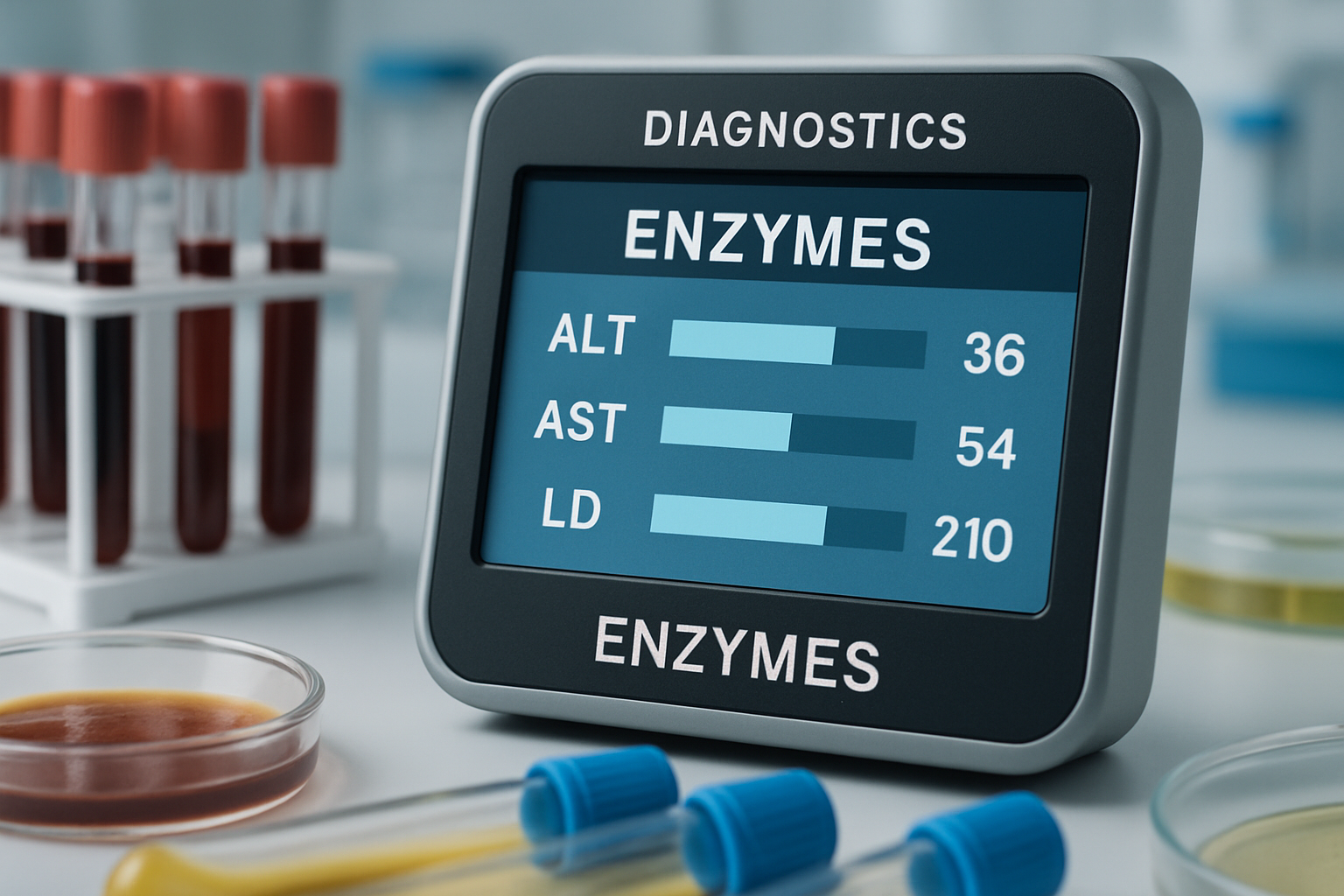
Enzymes serve as biomarkers for assessing cellular damage and disease states. Their presence and concentration in plasma can indicate various health issues, including those affecting the liver, heart, and skeletal muscles. The following enzyme groups are particularly significant in diagnostics:
Cardiac, Liver, and Skeletal Muscle Enzymes
Transaminases, particularly aspartate aminotransferase (AST) and alanine aminotransferase (ALT), are critical indicators of liver health. Elevated AST levels can suggest liver disease, especially following myocardial infarction due to its high concentration in heart muscle. In conditions like muscular dystrophy and dermatomyositis, AST activity may also be increased. Additionally, factors such as alcohol consumption and certain medications can lead to moderate increases in both AST and ALT levels. Alkaline phosphatase (ALP) is another enzyme whose plasma levels are instrumental in diagnosing bone and liver conditions.
Digestive Enzymes from the Pancreas
Enzymes originating from the pancreas are essential in diagnosing hepatobiliary diseases. For instance, elevated levels of 5'-nucleotidase can indicate bile secretion obstruction, while gamma-glutamyl transferase (GGT) levels rise in response to liver diseases. Testing these enzymes aids in identifying conditions like obstructive jaundice, cholecystitis, and cholangitis.
Enzymes Related to the Biliary Tract
Diagnostic assessments often include pancreatic digestive enzymes. For example, serum and urine amylase measurements are standard for diagnosing pancreatic diseases such as pancreatitis and cholecystitis. Serum trypsin levels are measured in newborns to screen for cystic fibrosis, while elevated chymotrypsin levels, exceeding eight times the normal value, may indicate renal failure.
Isoenzymes and Their Clinical Importance
Isoenzymes, or isozymes, are variants of enzymes that catalyse the same biochemical reactions but differ in their amino acid sequences. These molecular markers can provide insights into tissue damage since enzymes typically do not cross cell membranes, resulting in lower serum activity than within cells. Different isoenzymes can exhibit distinct kinetic parameters and regulatory properties, which allows for metabolic processes to be fine-tuned for specific tissues or developmental stages. For instance, lactate dehydrogenase (LDH) has various isoforms that serve different functions in the body.
Isoenzymes arise from homologous genes that have diverged over time, and while the terms isozyme and allozyme are often used interchangeably, they refer to different genetic contexts. Isozymes can be differentiated by their characteristics; for example, glucokinase, a variant of hexokinase, is not inhibited by glucose 6-phosphate, enabling it to perform unique roles in different organ cells. This distinction is crucial for functions like insulin secretion in pancreatic beta cells and glycogen synthesis in liver cells. When glucose levels are compromised, these processes can become impaired.
Summary of Enzyme and Isoenzyme Applications
The therapeutic and diagnostic applications of enzymes and isoenzymes underscore their indispensable role in healthcare. By understanding their functions and implications, healthcare professionals can better assess and treat a variety of conditions.
[[TABLE_1]]
Comments (0)
Loading comments…
Checking sign-in status…