

Enzyme kinetics examines the rates of enzymatic reactions and factors affecting them, crucial for predicting enzyme behavior and inhibition. The article discusses enzyme structure, models of substrate interaction, and various inhibition mechanisms, including competitive and non-competitive inhibition.
Enzymes play a crucial role as biological catalysts, significantly speeding up reactions without undergoing permanent changes themselves. Understanding enzyme kinetics is vital for pharmaceutical development, as it helps in predicting how enzymes will behave under various conditions and how they can be effectively inhibited.
Fundamentals of Enzyme Kinetics
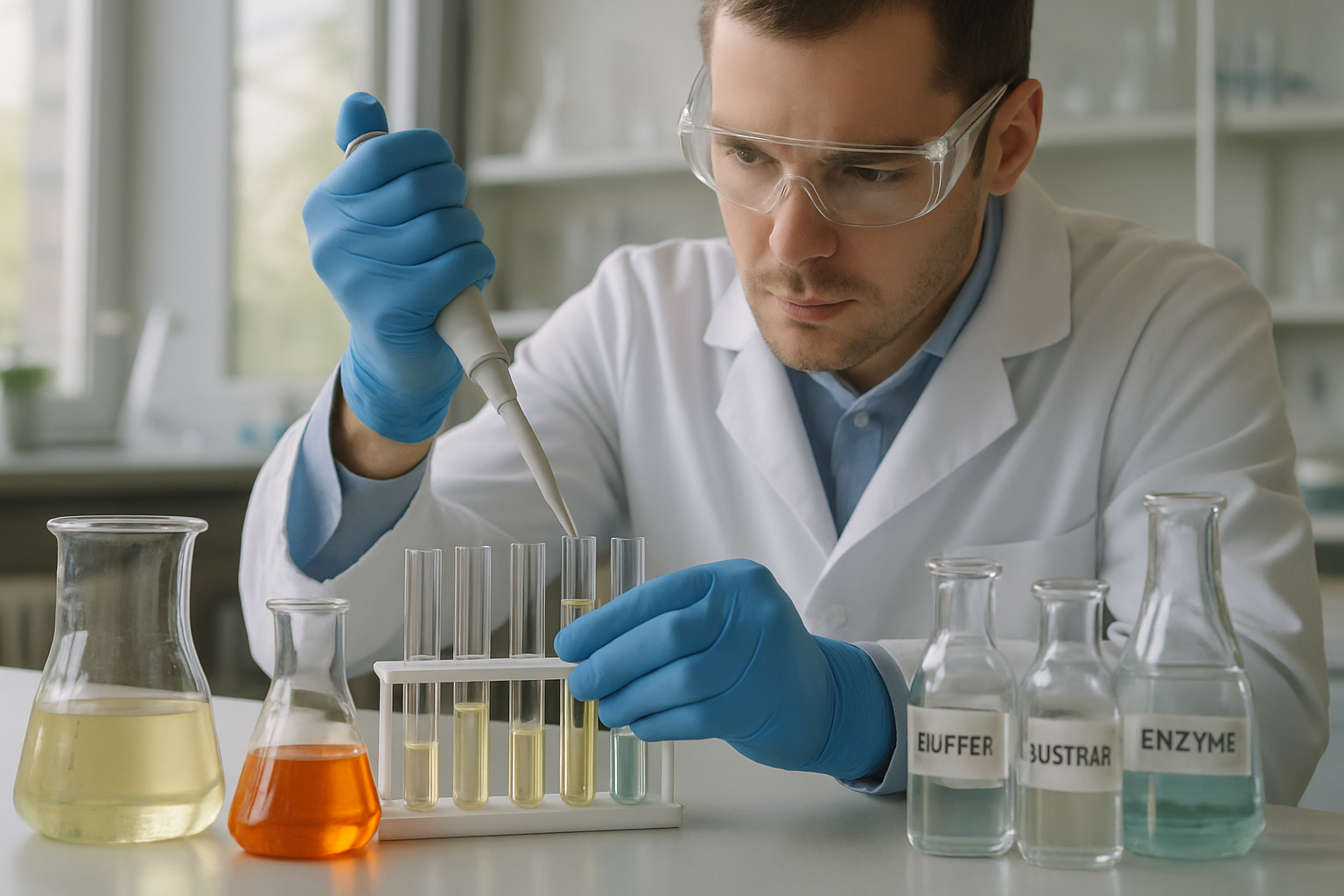
Enzyme kinetics focuses on the rates of enzymatic reactions and the factors influencing these rates. Enzymes typically interact with specific substrates, leading to the formation of an enzyme-substrate complex (ES) that eventually produces a product while releasing the enzyme for reuse.
Enzyme Structure and Function
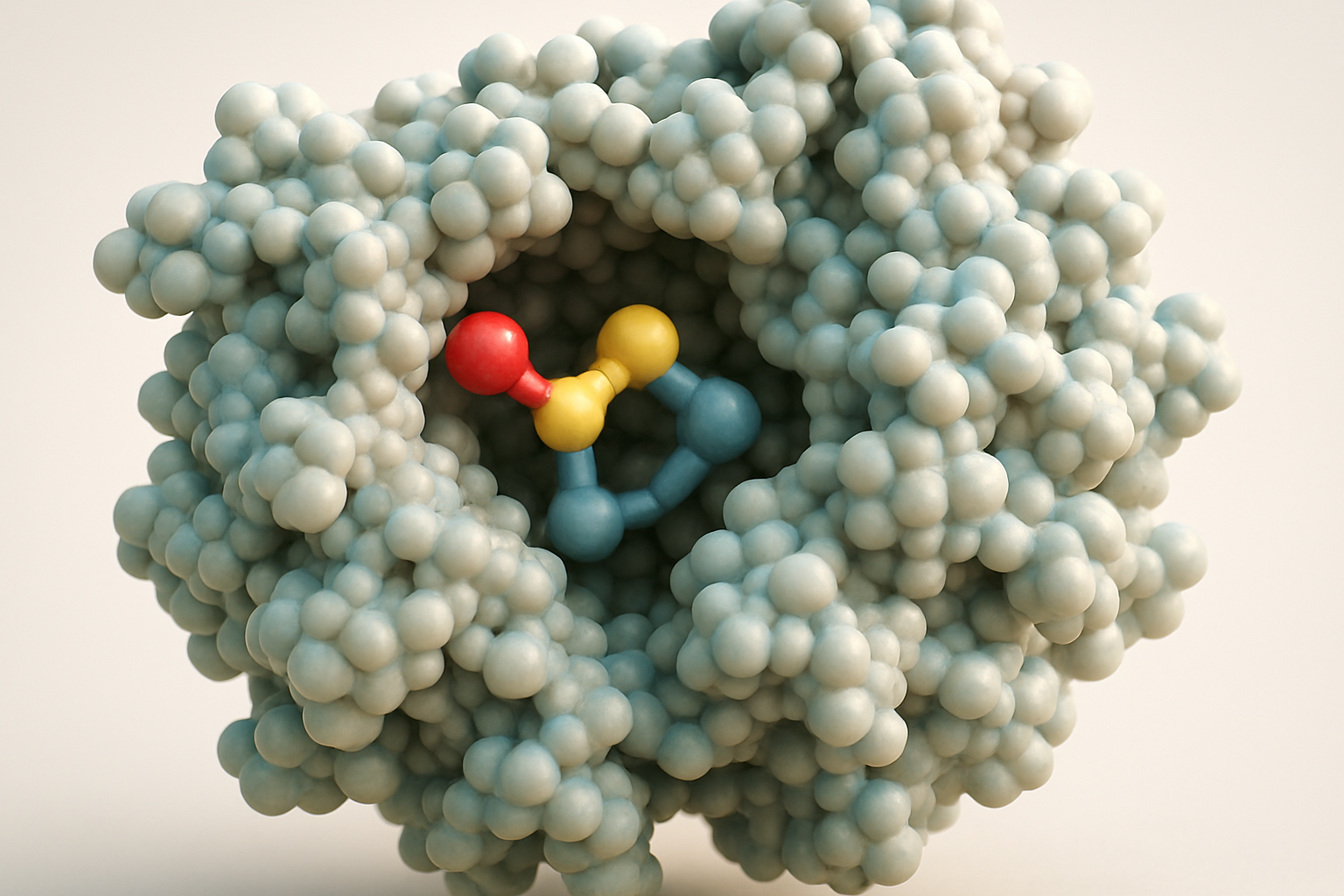
Enzymes are predominantly globular proteins with intricate tertiary structures. The active site, a small cleft within the enzyme, is where substrates bind. The interaction between enzymes and substrates can be described by two models:
- Lock and Key Model: The active site is perfectly shaped to fit the substrate without any modification.
- Induced Fit Model: The enzyme undergoes a conformational change upon substrate binding, enhancing the fit.
The optimal temperature and pH for enzyme activity are specific to each enzyme and its biological context. Deviations in temperature or pH can lead to denaturation, rendering the enzyme inactive due to altered active site configurations.
Graphical Representations of Enzyme Activity
The relationship between substrate concentration and reaction rate can be illustrated using Michaelis-Menten kinetics. The fundamental equation for this relationship is:
S + E ⇌ ES → P + E
Two key parameters emerge from this model:
- Vmax: The maximum reaction rate when the enzyme's active sites are fully saturated with substrate.
- Michaelis Constant (Km): The substrate concentration at which the reaction rate is half of Vmax, indicating enzyme affinity for the substrate; a lower Km signifies higher efficiency.
As substrate concentration increases, the initial reaction rate can be plotted. Initially, the rate shows first-order kinetics, increasing linearly with substrate concentration until it reaches a plateau (zero-order kinetics) when the enzyme is saturated.
The Lineweaver-Burk plot provides a linear representation of Michaelis-Menten kinetics by plotting the inverse of the reaction rate (1/V) against the inverse of substrate concentration (1/[S]). This transformation simplifies the interpretation of kinetic parameters, with Vmax represented by the y-intercept of the line.
[[TABLE_1]]Mechanisms of Enzyme Inhibition
Loading flowchart…
Enzyme inhibition is a critical regulatory mechanism that prevents excessive product formation. Inhibitors can be classified based on their binding characteristics:
Competitive Inhibition
Competitive inhibitors bind to the active site of the enzyme, competing with the substrate. This interaction increases Km, which shifts the enzyme activity plot to the right, while Vmax remains unchanged. The Lineweaver-Burk plot will exhibit a steeper slope compared to the absence of an inhibitor.
Non-competitive Inhibition
Non-competitive inhibitors attach to sites other than the active site, reducing the overall Vmax without affecting Km. This results in a lower maximum reaction rate on the enzyme activity plot, with the Lineweaver-Burk graph showing a higher y-intercept.
Allosteric Inhibition
Allosteric inhibitors interact with allosteric sites, leading to conformational changes that typically reduce enzyme activity. Allosteric enzymes often display a sigmoidal curve in their activity plots, reflecting their complex regulation. The K0.5 value, analogous to Km in Michaelis-Menten kinetics, can be influenced by these inhibitors.
Feedback inhibition is a specific form of allosteric regulation where the end product of a pathway inhibits an earlier step, ensuring homeostasis within the cell. For example, ATP can inhibit pyruvate kinase, regulating energy production based on cellular needs.
Additional Inhibition Mechanisms
Phosphorylation serves as another regulatory mechanism, wherein kinase enzymes add phosphate groups to target enzymes, modifying their activity. This post-translational modification can either enhance or inhibit enzyme function as needed.
Zymogens are inactive precursors of enzymes that become activated through the cleavage of specific amino acids by other enzymes. For instance, chymotrypsinogen is synthesized in the pancreas and activated in the intestine by trypsin, allowing it to participate in digestion.
[[TABLE_2]]Understanding these mechanisms is essential for the development of pharmaceutical agents that target specific enzymatic pathways, enabling more effective treatments and therapies.
Comments (0)
Loading comments…
Checking sign-in status…