
Amino acid metabolism includes key reactions such as transamination, deamination, and decarboxylation, essential for maintaining metabolic balance. Each reaction plays a distinct role in amino acid synthesis and breakdown, facilitated by specific enzymes.
Amino acid metabolism is crucial in various biological processes, particularly in the synthesis and breakdown of amino acids. Key reactions in this area include transamination, deamination, and decarboxylation, each playing a vital role in maintaining metabolic balance.
Transamination Process
Loading flowchart…
Transamination involves the transfer of an amino group from one amino acid to a keto acid, resulting in the formation of a new amino acid and a new keto acid. This reversible process is fundamental for amino acid synthesis.
Enzymatic Catalysis
This reaction is facilitated by enzymes known as transaminases or aminotransferases, which are prevalent in tissues such as the liver, heart, and skeletal muscle. These enzymes exhibit specificity towards different amino and keto acids, ensuring precise metabolic control.
Role of Amino Keto Acids
Amino acids generally exist in a state of equilibrium between their amino and keto forms during transamination. Commonly involved keto acids include pyruvic acid, oxaloacetic acid, and α-ketoglutaric acid, with exceptions for certain amino acids such as lysine and proline.
Pyridoxal Phosphate Interaction
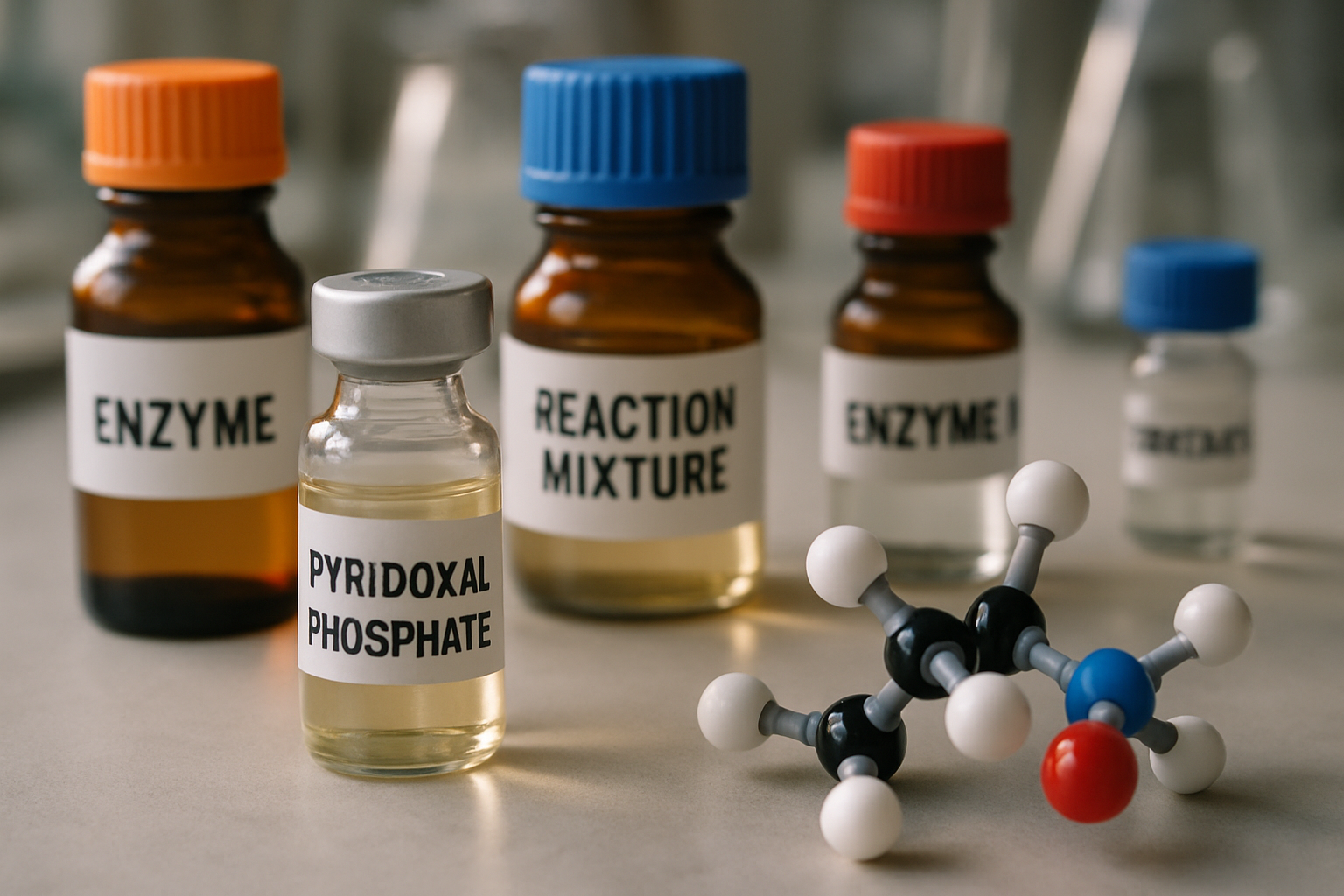
The activity of transaminases is dependent on pyridoxal phosphate, a vitamin B6 derivative. This cofactor forms a Schiff base with the amino acid, facilitating the necessary rearrangement of amino groups.
Reaction Mechanism
The transamination reaction can be categorized as a double displacement bi-substrate reaction. Initially, pyridoxal phosphate binds to the enzyme, forming an enzyme-pyridoxal phosphate complex. The complex then reacts with the amino acid, leading to the formation of an enzyme-Schiff base intermediate. Following a series of tautomerization steps, a new amino acid and keto acid are produced alongside the regeneration of the cofactor.
Deamination Overview
Deamination refers to the removal of an amino group from an amino acid, leading to the production of ammonia and a corresponding keto acid. This process predominantly occurs in the liver and is crucial for amino acid catabolism.
DNA Deamination Reactions
Deamination can also occur in nucleic acids, particularly affecting cytosine. This spontaneous process converts cytosine to uracil, releasing ammonia. In DNA repair mechanisms, uracil is recognized and replaced with thymine. Conversely, the deamination of 5-methylcytosine results in thymine, which is not corrected by repair systems, potentially leading to mutations in genetic sequences.
Decarboxylation Mechanism
Decarboxylation involves the removal of a carboxyl group from a molecule, resulting in the release of carbon dioxide. This reaction is a critical step in various metabolic pathways, including amino acid degradation.
Decarboxylases are the enzymes responsible for catalysing this reaction, playing a significant role in the conversion of carboxylic acids into amines or other products essential for cellular functions. Decarboxylation can be contrasted with carboxylation, where carbon dioxide is added to a compound, a key step in photosynthesis.
Comments (0)
Loading comments…
Checking sign-in status…