
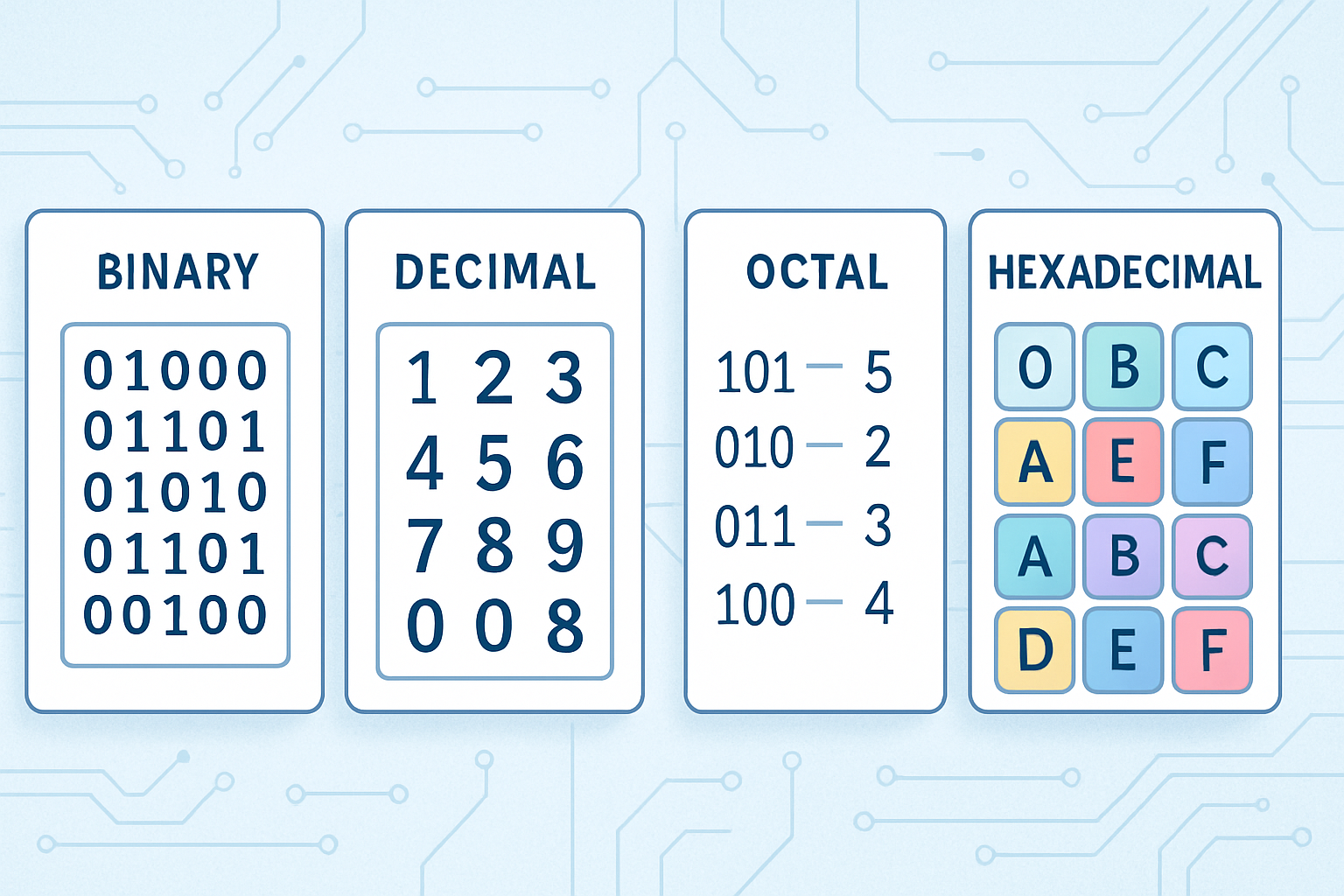
Understanding number systems like binary, decimal, octal, and hexadecimal is crucial in computing. Each system has unique characteristics and applications in programming and data representation.
In the realm of computing and digital systems, understanding various number systems is essential. This knowledge underpins numerous applications in programming, data representation, and computational logic.
Characteristics of the Binary System

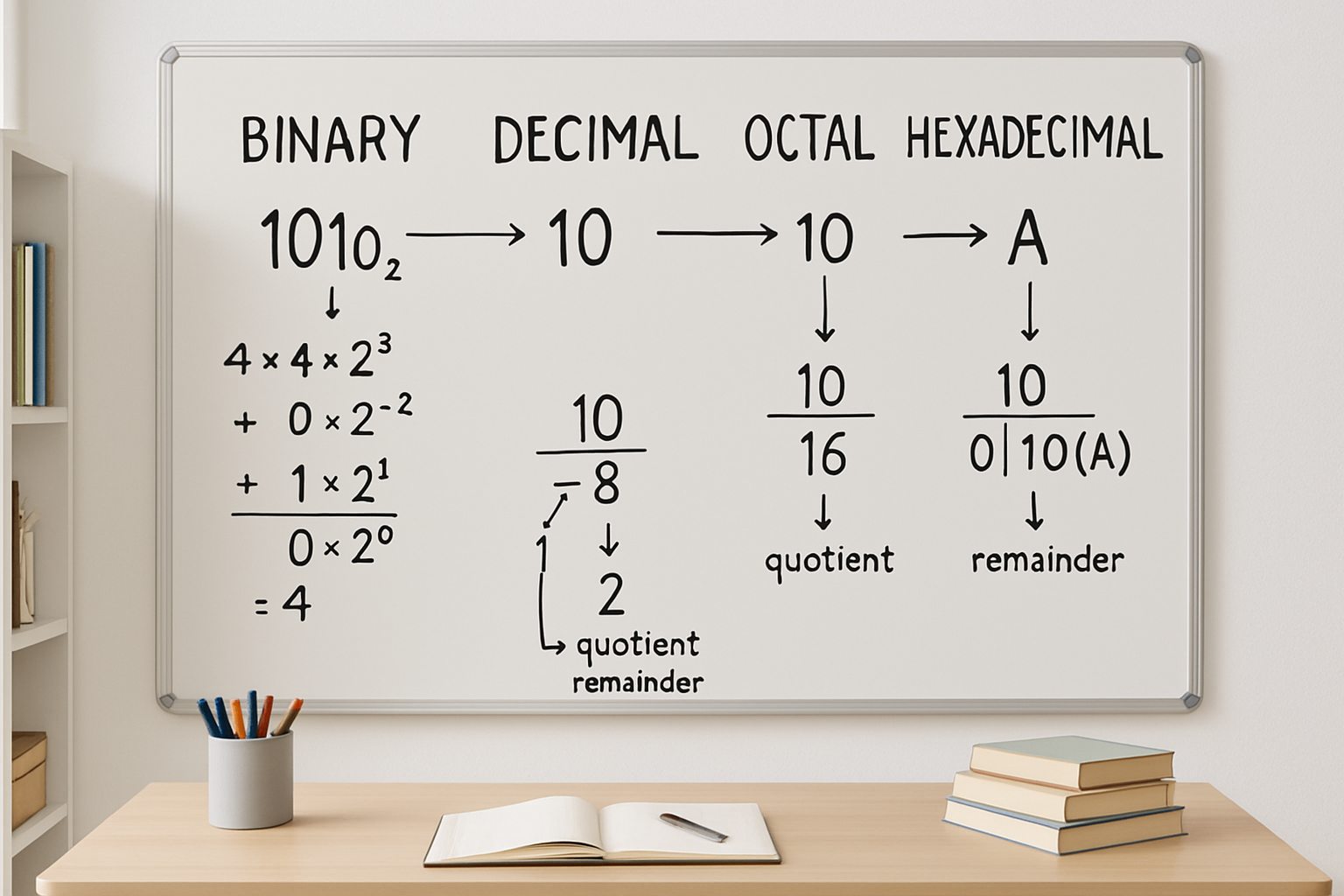
The binary system operates on a base of two, utilising only the digits 0 and 1. This system is fundamental in computer science, as it is the language understood by computers. All data processed by a computer is converted into binary form, allowing machines to perform calculations and operations efficiently. For instance, converting a decimal number into binary involves a systematic process of dividing by two and noting the remainders, which can then be reversed to obtain the binary equivalent.
Features of the Decimal System
The decimal system, also known as base 10, employs ten distinct digits from 0 to 9. Each digit's position represents a power of ten, significantly affecting its value. For example, in the number 253, the digit 2 occupies the hundreds place, representing 200, while 5 is in the tens place, contributing 50 to the total. Understanding this positional significance is crucial for converting decimal numbers into other bases.
Exploring the Octal System
The octal system is based on eight digits, ranging from 0 to 7. It can be particularly useful in computing, where binary numbers can be grouped in threes to create octal equivalents. For example, converting the binary representation of the decimal number 74 (which is 1001010 in binary) to octal involves grouping the binary digits: adding leading zeros if necessary, to form groups of three, resulting in the octal number 112.
Understanding the Hexadecimal System
The hexadecimal system is based on sixteen symbols, using digits from 0 to 9 and letters A to F to represent values ten to fifteen. This system simplifies the representation of large binary numbers, as one hexadecimal digit corresponds to a four-bit binary sequence. For example, the hexadecimal number 2F represents 2 in the 16s place and 15 (F) in the 1s place, translating to the decimal value of 47. Hexadecimal notation is often prefixed with '0x' or suffixed with 'h' to indicate its base.
Comparison of Number Systems
| System | Base | Digits |
|---|---|---|
| Binary | 2 | 0, 1 |
| Decimal | 10 | 0-9 |
| Octal | 8 | 0-7 |
| Hexadecimal | 16 | 0-9, A-F |
Each of these number systems serves distinct purposes in computing and data representation. Mastery of these systems is vital for anyone involved in software development, data analysis, or electronic engineering.
Comments (0)
Loading comments…
Checking sign-in status…