
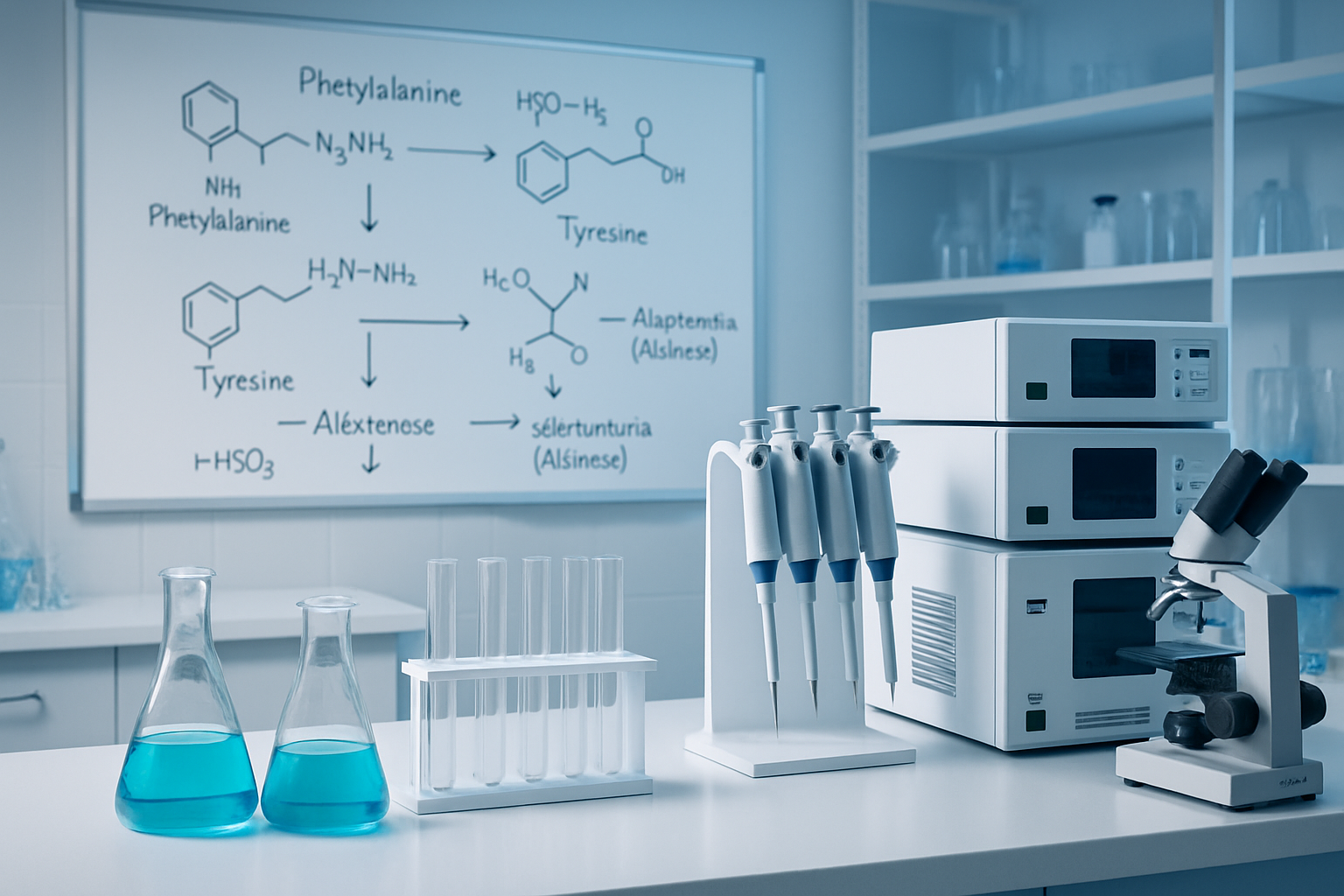
Phenylalanine and tyrosine are crucial amino acids involved in various metabolic processes. Their catabolism is linked to several disorders, including phenylketonuria, albinism, alkaptonuria, and tyrosinemia, each with distinct causes and health implications.
Phenylalanine and tyrosine are aromatic amino acids that play critical roles in metabolic processes within the body. Understanding their catabolism is essential in the context of various metabolic disorders that arise from dysfunctions in their metabolic pathways.
Overview: pathways of Phenylalanine and Tyrosine Catabolism
Phenylalanine serves as a precursor to tyrosine, which is central to several key biological functions. Although dietary intake of phenylalanine is necessary, the body does not require direct consumption of tyrosine, as it can synthesize tyrosine from phenylalanine, reducing the demand for phenylalanine intake—a phenomenon known as the 'sparing action'. Tyrosine metabolism involves the synthesis of various important compounds, including catecholamines (epinephrine, norepinephrine, and dopamine), thyroid hormones, and melanin.
Conversion of Phenylalanine to Tyrosine
The conversion of phenylalanine to tyrosine mainly occurs through the hydroxylation of phenylalanine, catalysed by phenylalanine hydroxylase. This process is irreversible and necessitates the coenzyme tetrahydrobiopterin (BH4). During this reaction, BH4 is oxidized to dihydrobiopterin, which can be regenerated back to tetrahydrobiopterin via dihydrobiopterin reductase, using NADPH as the reducing agent.
Degradation of Phenylalanine and Tyrosine
The catabolism of both phenylalanine and tyrosine takes place in the liver, primarily following the same metabolic pathway. Tyrosine undergoes transamination to form p-hydroxyphenylpyruvate, catalysed by tyrosine transaminase, which is dependent on pyridoxal phosphate. The subsequent conversion steps involve a series of reactions leading to the formation of various metabolites, including acetoacetate and fumarate. These metabolites can serve as precursors for glucose synthesis and fat metabolism.
Role in Thyroid Hormone Production
Tyrosine is vital for the synthesis of thyroid hormones, specifically thyroxine (T4) and triiodothyronine (T3). The iodination of tyrosine residues in thyroglobulin results in the formation of mono- and diiodotyrosine, which are crucial intermediates in the biosynthesis of T3 and T4. Thyroglobulin is then proteolytically cleaved to release the active thyroid hormones.
Associated Metabolic Disorders
There are several metabolic disorders that arise from the dysregulation of phenylalanine and tyrosine metabolism. These disorders can lead to serious health consequences if not managed appropriately.
Phenylketonuria (PKU)
Phenylketonuria is a genetic disorder caused by the deficiency of phenylalanine hydroxylase, resulting in the accumulation of phenylalanine in the bloodstream. Without proper dietary management, individuals with PKU can develop severe neurological impairments and other complications. Pregnant women with untreated PKU risk significant developmental issues in their offspring due to in utero exposure to high levels of phenylalanine.
Overview: albinism
Albinism is a genetic condition characterised by a lack of melanin production due to defects in genes responsible for melanin biosynthesis. Individuals with this condition present with lighter skin, hair, and eyes, as melanin is crucial for pigmentation. The inheritance pattern typically requires both parents to pass on the gene for albinism, with varying degrees of expression.
Overview: alkaptonuria
Alkaptonuria results from a deficiency in the enzyme homogentisic dioxygenase, leading to the accumulation of homogentisic acid. This can result in darkening of the urine and may cause osteoarthritis and other joint issues due to the deposition of this acid in connective tissues. Symptoms often manifest later in life, and management includes dietary restrictions to limit phenylalanine intake.
Overview: tyrosinemia
Tyrosinemia is a metabolic disorder characterised by the inability to properly metabolise tyrosine due to a deficiency in fumarylacetoacetate hydrolase (FAH). This enzymatic deficiency results in the accumulation of toxic byproducts, leading to progressive liver and kidney damage. Genetic mutations are typically inherited from both parents, and early diagnosis is crucial for effective management.
| Disorder | Deficiency | Effects |
|---|---|---|
| Phenylketonuria | Phenylalanine hydroxylase | High phenylalanine levels, neurological impairment |
| Albinism | Melanin synthesis defect | Lack of pigment in skin, hair, eyes |
| Alkaptonuria | Homogentisic dioxygenase | Urine darkening, joint problems |
| Tyrosinemia | Fumarylacetoacetate hydrolase | Liver damage, kidney issues |
Comments (0)
Loading comments…
Checking sign-in status…