
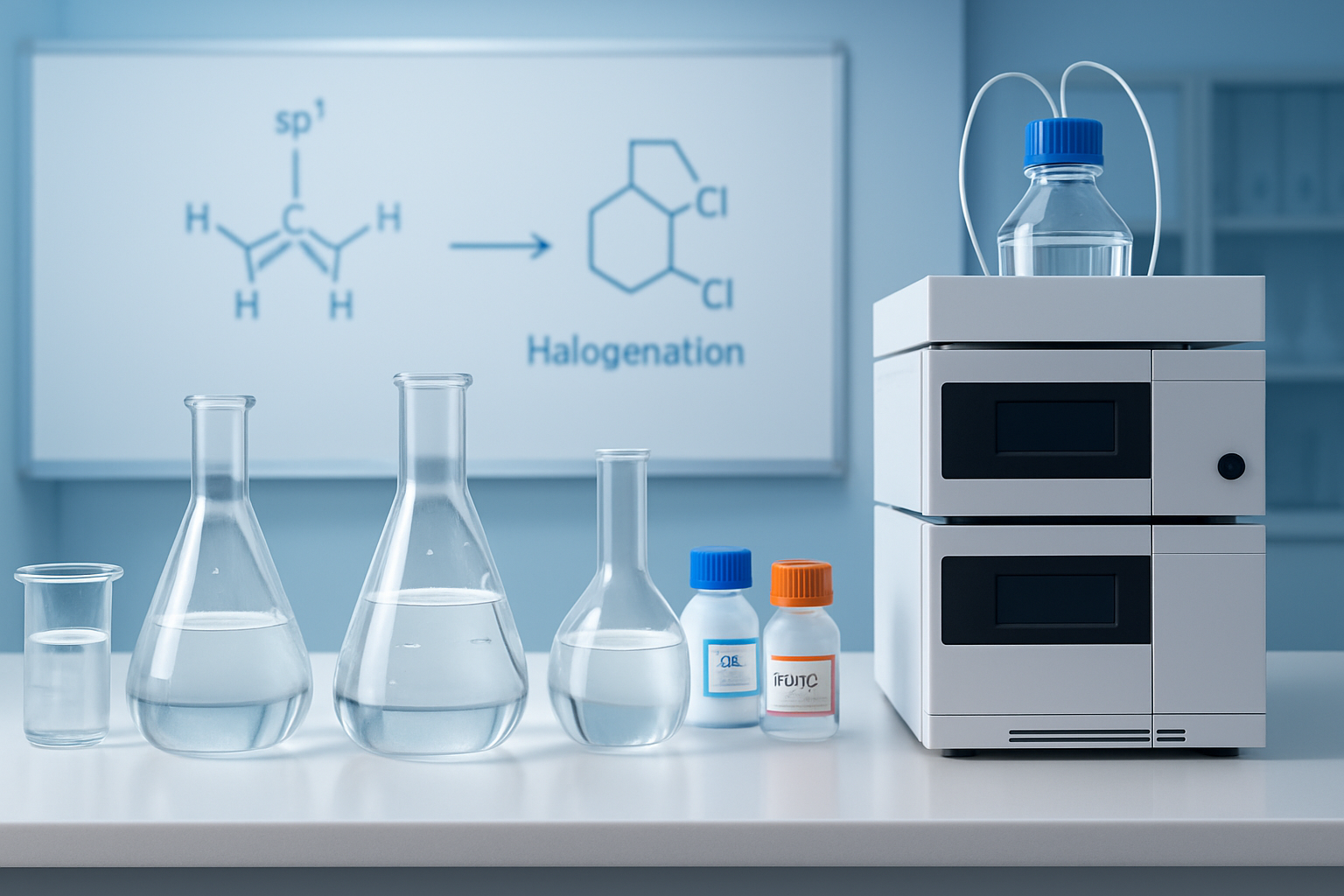
The article discusses sp3 hybridization in alkanes, explaining how carbon forms four equivalent bonds, and outlines the halogenation process where hydrogen is replaced by halogens. It also highlights the applications of paraffins in fuels and various industries.
In the realm of organic chemistry, understanding the structure and reactivity of alkanes is fundamental. This includes the concept of sp3 hybridization, which is crucial for explaining the bonding characteristics of carbon atoms in these compounds.
Mechanics of Sp3 Hybridization in Alkanes
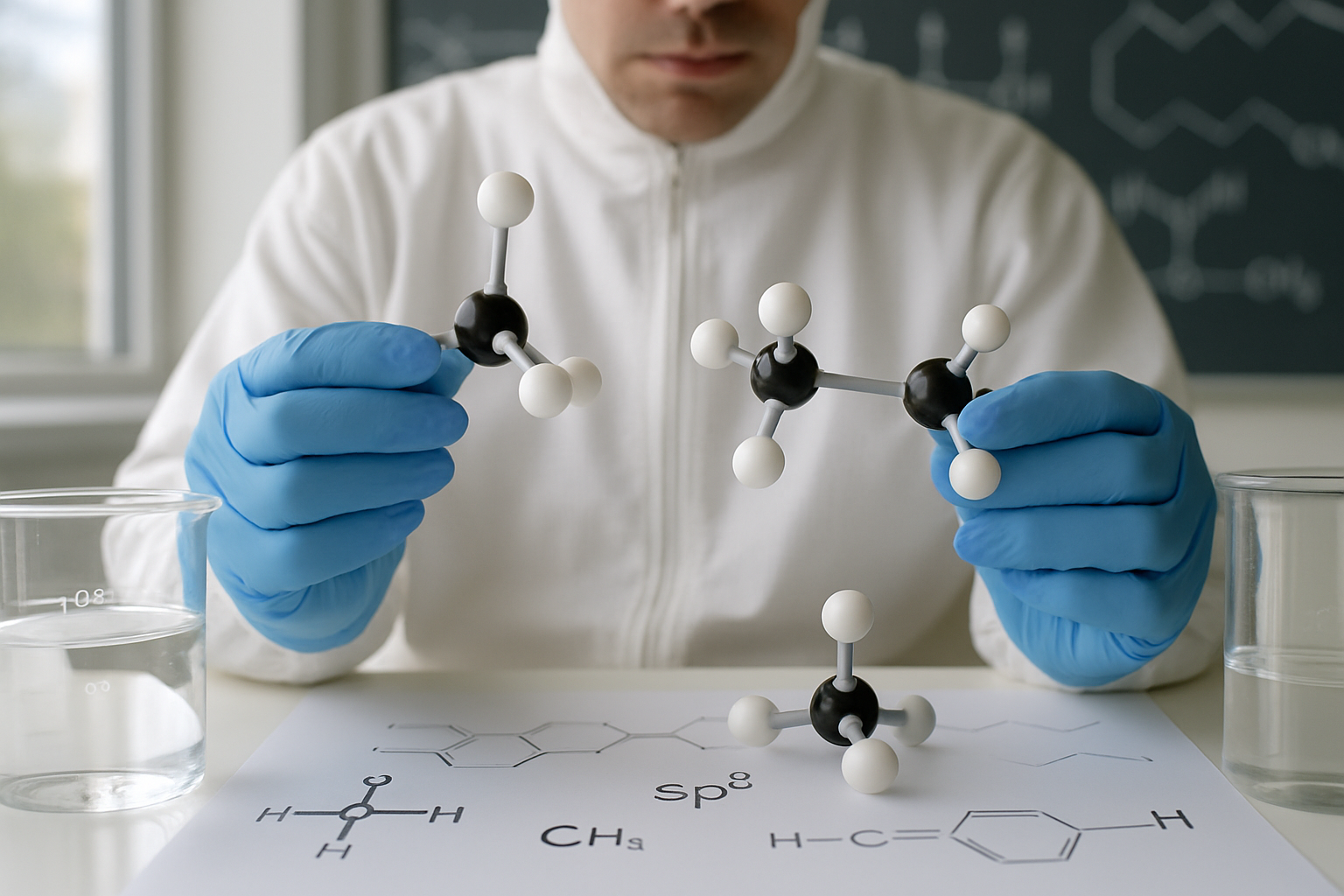
The formation of sp3 hybrid orbitals involves the combination of three 2p orbitals and one 2s orbital in carbon atoms. This process yields four equivalent sp3 orbitals, which play a significant role in the bonding of methane (CH4), a primary example of an alkane. Each of these orbitals can form a bond with another atom, resulting in a stable molecular structure.
In methane, for instance, one carbon atom forms four equal bonds with hydrogen atoms. The requirement for four bonds necessitates that each of the carbon atom's electrons must be unpaired. This is achieved by promoting one electron from the 2s orbital to an empty 2p orbital, allowing for the formation of four unpaired electrons, thus facilitating the sp3 hybridization.
Other molecules, such as ammonia (NH3) and water (H2O), also exhibit sp3 hybridization. In ammonia, one of the sp3 orbitals contains a lone pair of electrons, while the other three form bonds with hydrogen atoms. In water, two of the sp3 orbitals are occupied by hydrogen atoms, and the remaining two contain lone pairs of electrons on the oxygen atom. The bond angles in these molecules are influenced by the presence of these lone pairs, leading to angles of approximately 109.5° for methane and 104.5° for water.
Halogenation Process in Alkanes
Loading flowchart…
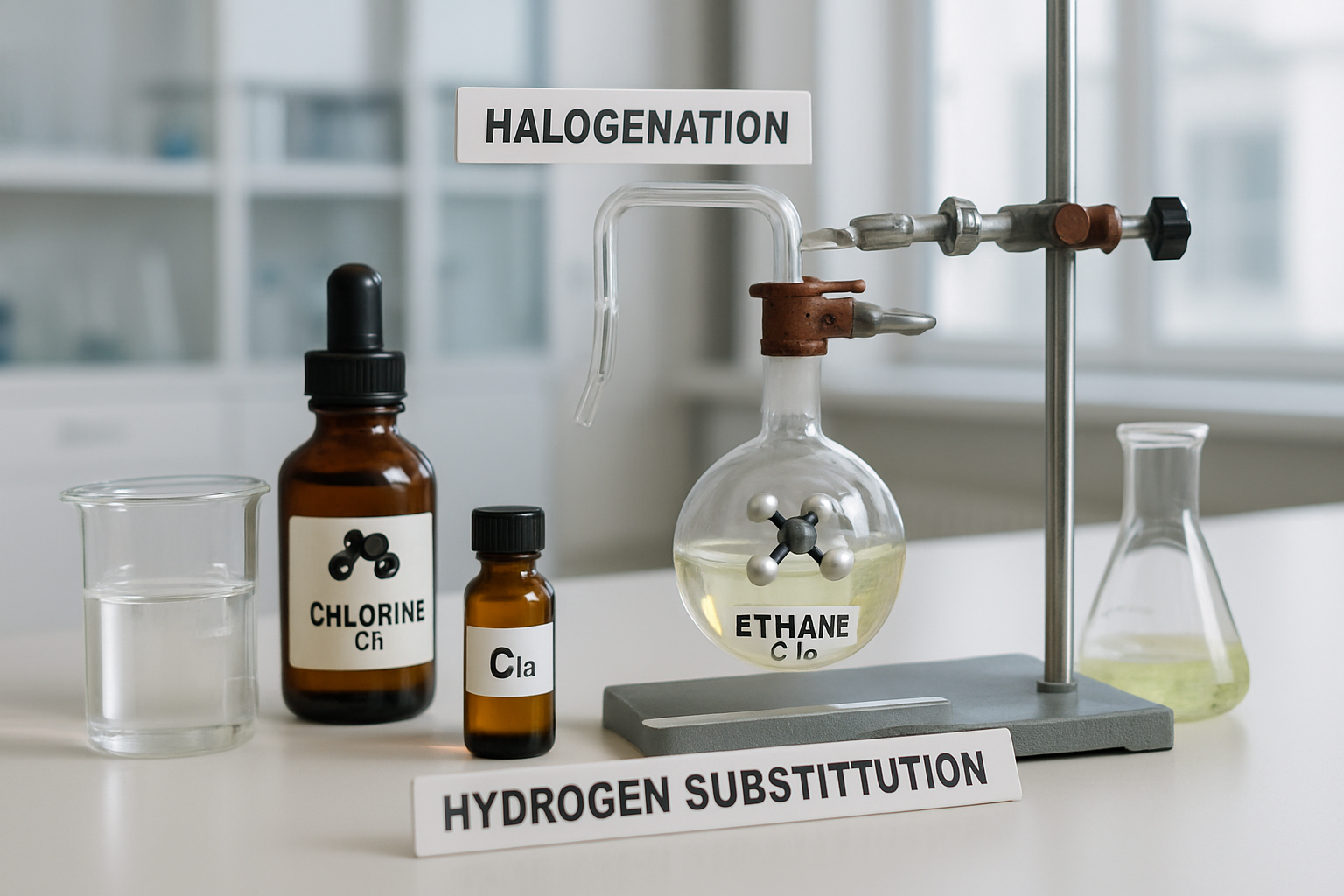
Halogenation is a significant reaction involving alkanes where hydrogen atoms are replaced by halogen atoms. This substitution reaction typically requires the presence of heat or light to initiate the process, leading to the formation of halogenated alkanes.
Alkanes are generally unreactive; however, the free-radical halogenation method enables the functionalization of these compounds. The process involves the generation of free radicals, which are highly reactive species that can substitute hydrogen atoms with halogen atoms. For example, in the reaction of ethane (C2H6) with chlorine (Cl2), one hydrogen atom can be replaced by a chlorine atom, resulting in chloroethane (C2H5Cl).
While halogenation can be useful, it presents challenges, particularly in selecting the appropriate C-H bond to break. The complexity of alkanes complicates the halogenation process, especially for larger or branched alkanes.
Applications of Paraffins
Paraffins, which are alkanes, have numerous applications across various industries due to their chemical properties. They are primarily used as fuels, with jet fuel and rocket fuel being notable examples. Additionally, paraffin is widely employed in the production of lubricants, candle wax, and as an alternative to petroleum jelly.
Liquid paraffin, known for its high level of refinement, is utilized in medicinal applications. It can be found in two forms: heavy and light liquid paraffin. Both types are colourless and odourless, making them suitable for various uses, including as plasticizers and solvents in chemical processes. Kerosene, a type of paraffin, serves as a fuel for household stoves, particularly in rural areas.
In summary, the understanding of sp3 hybridization and halogenation processes in alkanes is essential for grasping the reactivity and applications of these hydrocarbons. The versatility of paraffins in energy production and everyday products underscores their importance in both industrial and domestic contexts.
Comments (0)
Loading comments…
Checking sign-in status…