
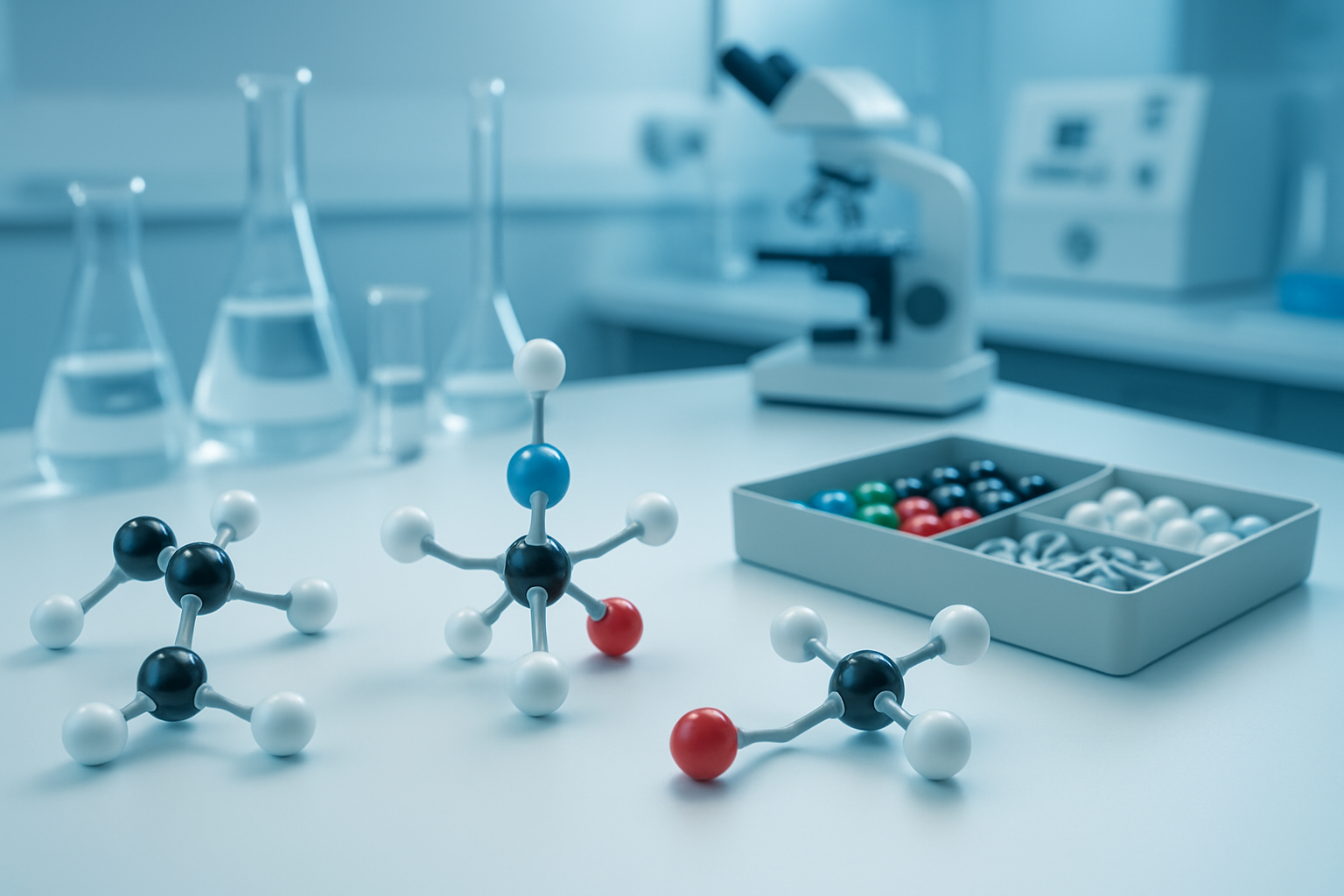
Symmetry is essential in molecular chemistry for distinguishing achiral and chiral compounds. Key elements include points, lines, and planes, which help identify superimposable structures and understand molecular behavior.
Symmetry plays a crucial role in molecular chemistry, particularly when distinguishing between achiral and chiral compounds. Understanding the elements of symmetry can help determine how molecules interact and behave in various environments.
Key Components of Molecular Symmetry
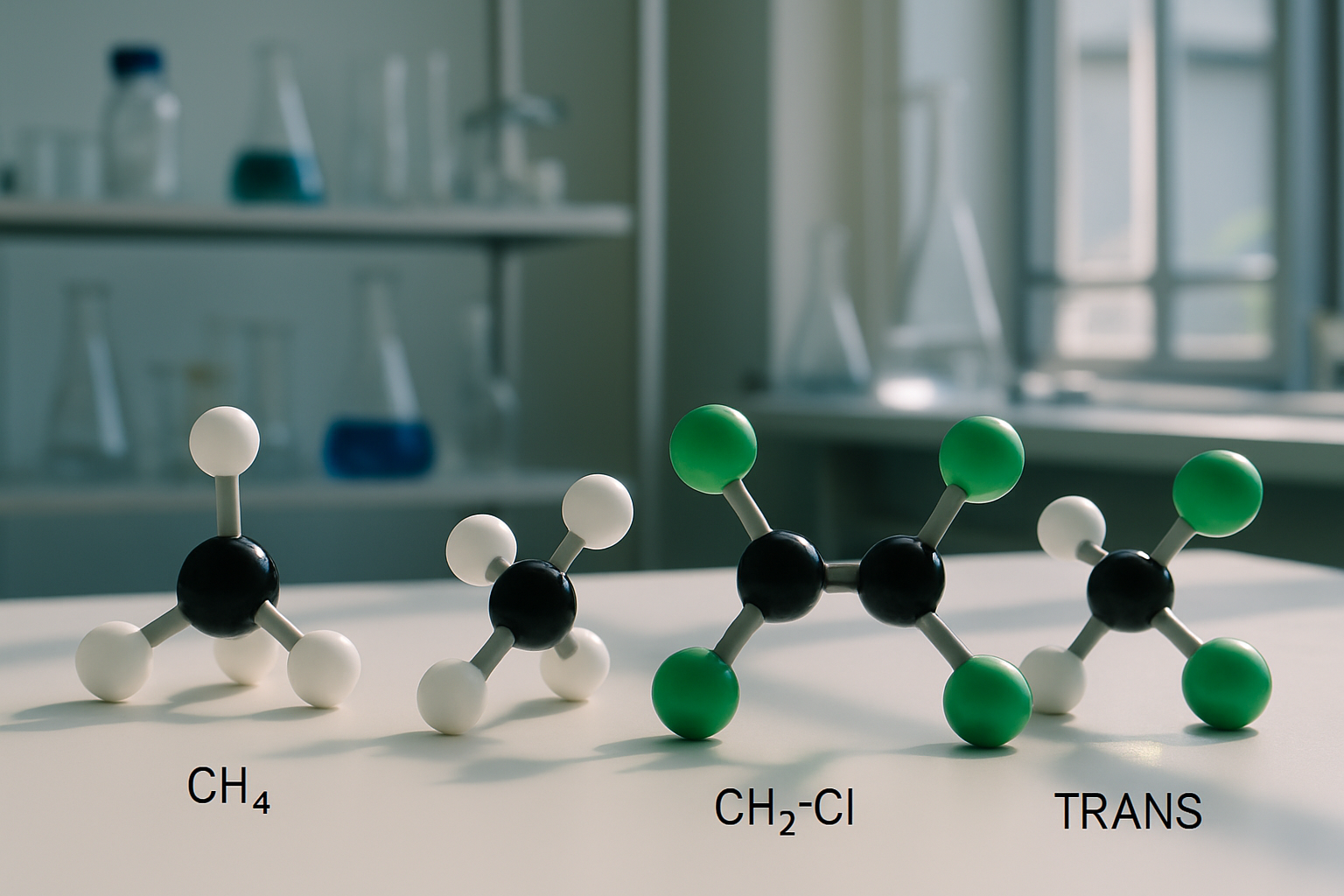
Symmetry in molecules can be evaluated through various elements, including points, lines, and planes. These elements help identify whether a molecule can be superimposed on its mirror image. For example, chiral molecules are inherently non-superimposable, while achiral molecules can be laid over their mirror images.
Defining Symmetry Points
A point of symmetry indicates that a molecule has the same structural characteristics in opposite directions across its central point. For instance, in the case of (E)-1,2-dichloroethene, one can observe structural features mirrored across a central point. In cyclohexane, particularly in its boat conformation, the planes of symmetry intersect, indicating that it is achiral.
Illustrative Examples
Several molecules demonstrate different symmetry elements:
- Methane: Exhibits four C3 axes, three C2 axes, and six planes of symmetry, confirming its achiral nature.
- Cis-1,2-dichloroethane: Defined by the intersection of two orthogonal planes and a C2 axis, also achiral.
- Trans-1,2-dichloroethane: Contains multiple orthogonal axes intersecting at a point of symmetry, confirming achirality.
- Trans-1,2-dimethylcyclopropane: Features a singular C2 axis and two chiral axes, indicating chirality.
- Cyclohexane (boat form): Includes two symmetry planes and a C2 axis, confirming its achiral status.
- Cyclohexane (chair form): Defined by symmetry points, planes, and axes, with a principal C3 axis.
Understanding Symmetry Planes
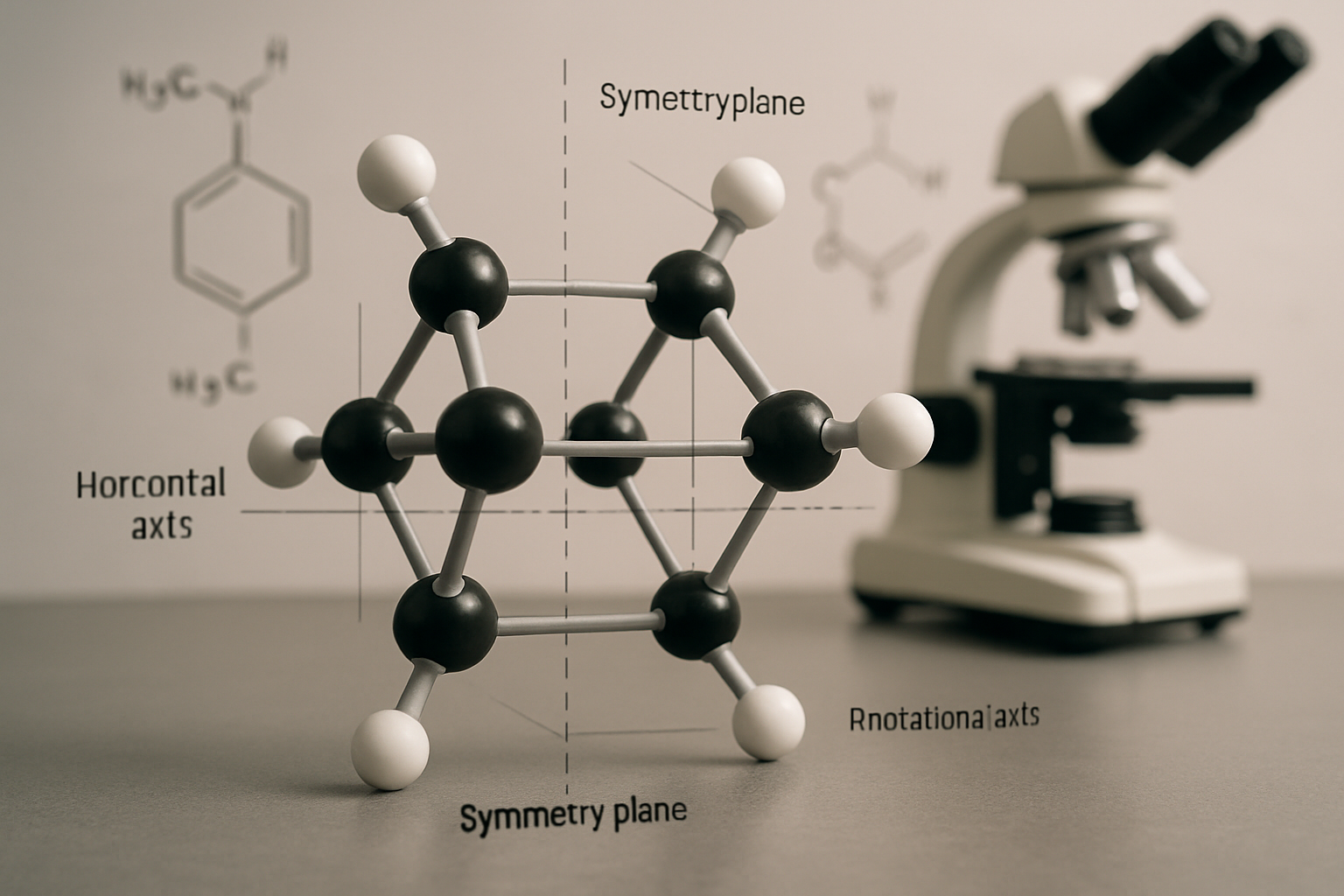
A symmetry plane divides a molecule into two identical halves. Achiral molecules typically lack stereocenters, while those with an odd number of stereoisomers are usually chiral. The presence of meso compounds within a molecule can also lead to overall achirality.
In the context of symmetry, a symmetry plane serves as the dividing line that allows for identical representations on both sides. The orientation of a perpendicular line can vary, either intersecting the plane or aligning within it. Generally, achiral molecules possess a symmetry plane, regardless of their conformation.
Inversion Centers in Molecular Symmetry
An inversion center is a specific point within a molecule where all atoms can be reflected across a point to yield another identical part. Typically, these centers are easier to identify than symmetry planes. For example, in certain symmetrical molecules, one half can mirror the other through an inversion center, confirming the achiral nature of the molecule.
Inversion centers are vital for understanding molecular symmetry and are frequently found in achiral compounds. By examining these centers, chemists can better understand the structural and functional properties of molecules.
Comments (0)
Loading comments…
Checking sign-in status…