
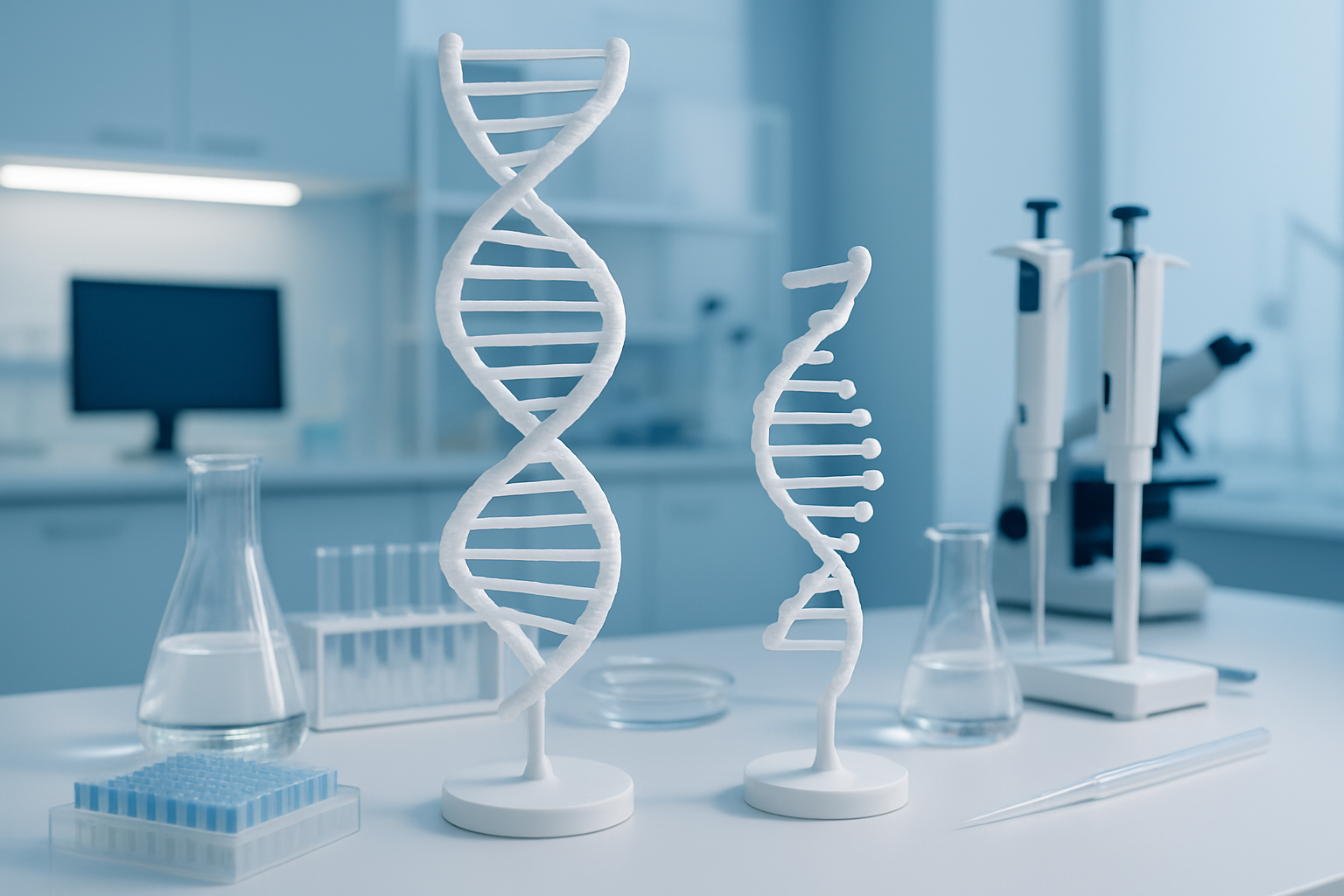
DNA and RNA are essential nucleic acids with distinct structures and functions. DNA encodes genetic information and facilitates replication, while RNA is crucial for protein synthesis and gene regulation.
In the realm of molecular biology, nucleic acids play a pivotal role in the genetic blueprint of all organisms. DNA and RNA are the two primary types of nucleic acids, each serving distinct yet complementary functions within the cell.
Deoxyribonucleic Acid (DNA)
Composition and Structure
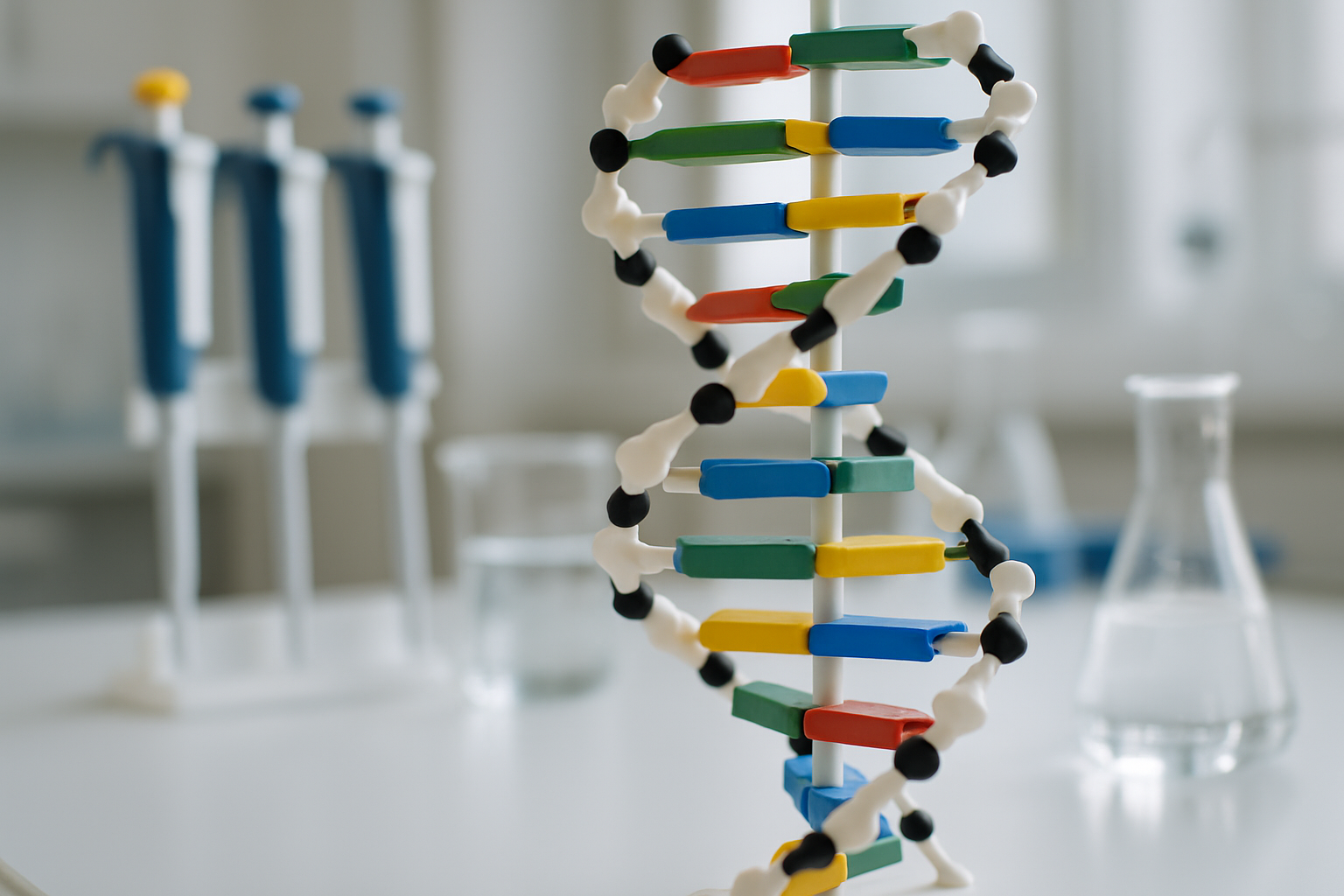
DNA, or deoxyribonucleic acid, is characterised by its unique structure, which resembles a twisted ladder, known as a double helix. This structure consists of two strands that run antiparallel to each other, with each strand composed of a sugar-phosphate backbone and nitrogenous bases. The four nitrogenous bases—adenine (A), thymine (T), cytosine (C), and guanine (G)—pair specifically (A with T, and C with G) through hydrogen bonds, which stabilise the helical structure. The arrangement of these bases encodes genetic information, forming the basis of heredity.
Varieties of DNA
DNA can exist in three conformations:
- A-DNA: A right-handed helix that forms under dehydrating conditions, providing a protective configuration for the genetic material.
- B-DNA: The most common form of DNA found under physiological conditions, characterised by its right-handed helical structure.
- Z-DNA: A left-handed helix with a zig-zag shape, identified through research by Alexander Rich and Andres Wang.
Roles of DNA
DNA serves several critical functions within biological systems:
- Storage of genetic information: The sequence of nitrogenous bases determines genetic traits.
- Replication: DNA is accurately copied during cell division, allowing genetic information to be transmitted to daughter cells.
- Mutation: Variations or alterations in the DNA sequence can lead to genetic diversity or disease.
- Gene expression: Specific sequences of DNA are transcribed to produce mRNA, which translates into proteins.
Ribonucleic Acid (RNA)
Composition and Configuration

RNA, or ribonucleic acid, is primarily involved in protein synthesis and is composed of ribonucleotides. Each ribonucleotide consists of a ribose sugar, a phosphate group, and one of four nitrogenous bases: adenine (A), cytosine (C), guanine (G), or uracil (U), which replaces thymine present in DNA. Most RNA molecules exist as single strands, but they can fold into complex structures that facilitate their various functions within the cell.
Functional Roles of RNA
RNA plays a crucial role in the translation of genetic information:
- Messenger RNA (mRNA): Transports genetic codes from DNA in the nucleus to ribosomes in the cytoplasm.
- Transfer RNA (tRNA): Delivers amino acids to ribosomes, where they are assembled into proteins.
- Ribosomal RNA (rRNA): Forms the core of ribosome structure and is essential for protein synthesis.
In addition to these roles, various types of regulatory RNAs, such as microRNAs (miRNAs) and piwi-interacting RNAs (piRNAs), play significant roles in gene regulation and maintaining genome integrity.
Conclusion
The structures of DNA and RNA, along with their functions, underscore their importance in genetics and cellular processes. Understanding these nucleic acids is vital for advancements in biotechnology, genetics, and medicine.
[[TABLE_1]]
Comments (0)
Loading comments…
Checking sign-in status…