

The Drug Master File (DMF) is a confidential document submitted to the FDA, detailing manufacturing processes and materials for pharmaceutical products. Understanding the DMF submission process, including its types, preparation, and ongoing maintenance, is essential for compliance and protecting sensitive information.
The Drug Master File (DMF) is a critical component in the pharmaceutical industry, serving to protect sensitive information while facilitating communication with regulatory agencies. For manufacturers of active pharmaceutical ingredients (APIs), excipients, and packaging materials, understanding how to prepare and submit a DMF is vital for compliance and operational success.
Defining the Drug Master File
A DMF is a confidential document submitted to the FDA that contains comprehensive details regarding the facilities, processes, and materials involved in the manufacturing, processing, packaging, and storage of pharmaceutical products. While a DMF cannot replace a New Drug Application (NDA) or Abbreviated New Drug Application (ANDA), it plays a supportive role by providing essential data that can be referenced in these applications.
Classification of DMFs
The FDA categorizes DMFs into five distinct types:
- Type I: Contains information about manufacturing sites, facilities, operating procedures, and personnel.
- Type II: Focuses on drug substances, intermediates, and materials involved in drug preparation.
- Type III: Pertains to packaging materials used in drug products.
- Type IV: Covers excipients, colourants, flavours, or materials used in their preparation.
- Type V: Includes FDA-accepted reference information.
Rationale for DMF Submission
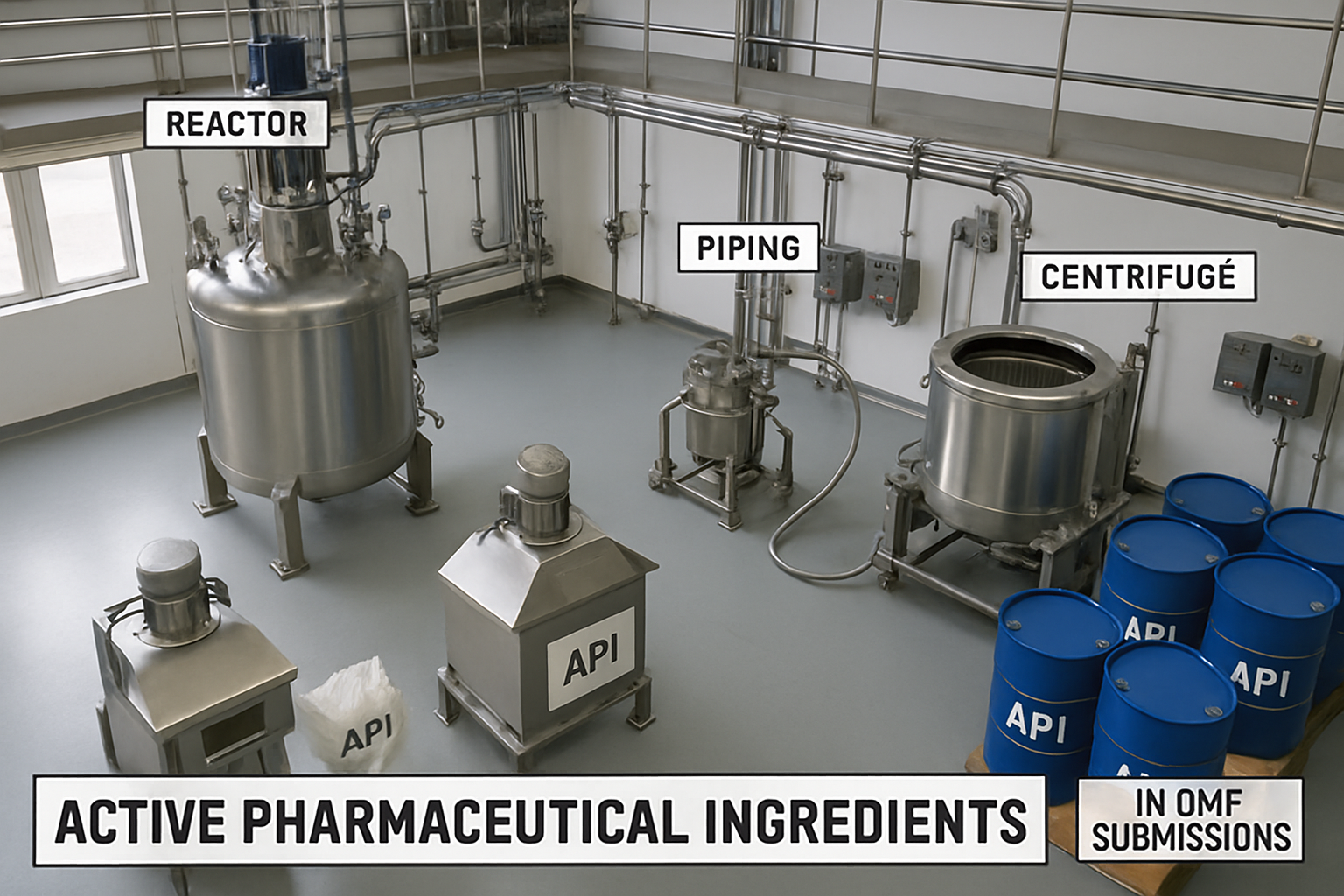
Submitting a DMF allows manufacturers to safeguard their intellectual property while sharing technical information with regulatory bodies. For instance, an API manufacturer can provide process and synthesis details to finished dosage form manufacturers without revealing proprietary trade secrets. Similarly, suppliers of excipients and packaging materials can confidentially share product specifications.
Procedure for DMF Submission
Loading flowchart…
The submission process for a DMF involves several key steps:
Identifying the Type and Purpose of the DMF
Begin by determining the appropriate type of DMF based on your product (e.g., API, excipient, packaging) and its intended use, whether it supports an ANDA, NDA, IND, or export application. This alignment is crucial to avoid complications during the review process.
Preparing the DMF in CTD Format

DMFs must be submitted in the electronic Common Technical Document (eCTD) format as mandated by the FDA. The CTD consists of five modules:
- Module 1: Regional administrative information specific to the country.
- Module 2: Quality overall summary, summarising Module 3.
- Module 3: Detailed information about the drug substance or product, which forms the core of the DMF.
- Module 4: Nonclinical study reports, when applicable.
- Module 5: Clinical study reports, when applicable.
Essential components of a DMF include manufacturing process flowcharts, material controls, specifications and test methods, stability data, validation studies, and environmental controls for sterile APIs or packaging. It is critical to maintain consistency, traceability, and completeness of data throughout the submission.
Requesting a Pre-Assigned DMF Number
Prior to submission, it is necessary to obtain a DMF pre-assignment number through the FDA’s Electronic Submissions Gateway (ESG). This requires submitting Form FDA 3938 along with a letter of intent and company information. The FDA will then issue a DMF number, which must be referenced in all correspondence and the eCTD submission.
Compiling and Validating the Submission
Once the DMF is prepared in eCTD format, validation is essential. Use tools such as Lorenz docuBridge, eCTDmanager, or GlobalSubmit to ensure the XML backbone is correct and free of broken hyperlinks. All required files must be correctly organized within designated folders. Technical errors can result in rejection before the FDA reviews the DMF.
Submitting via the Electronic Submissions Gateway
After validation, the eCTD file should be uploaded to the FDA’s ESG using active credentials. Following successful submission, the FDA will provide a Receipt of Acknowledgement and Technical Acceptance Notification. Only after technical acceptance will the DMF enter the review queue.
Letter of Authorization Essentials
A Letter of Authorization (LOA) allows another party to reference your DMF. It should include the DMF number, the DMF holder's name and address, the authorized party's name, a description of the referenced information, and the signature and contact details of the DMF holder. This letter must be included by the referencing applicant in their submission.
Ongoing Maintenance and Updates for Your DMF
Submitting a DMF is not a one-off task; ongoing updates are necessary to keep the DMF active. Notify the FDA and authorized parties of any changes to the manufacturing site or process improvements. Failure to submit updates may result in the DMF being deemed inactive.
Best Practices for DMF Submission
- Data Integrity: Ensure that all data included in the DMF is accurate, traceable, and complete. Avoid copying data from other documents without proper verification.
- Clarity and Conciseness: Use clear and straightforward language to facilitate understanding by FDA reviewers.
- Adhering to FDA Guidance: Familiarize yourself with the latest FDA guidelines regarding DMF submissions prior to preparation.
- Document Control Systems: Maintain a version history for the DMF, track amendments, and implement a quality management system to oversee the DMF lifecycle.
- Confidentiality: As a confidential document, avoid sharing the full DMF with customers; instead, provide only the LOA to protect sensitive information.
The DMF submission process is a fundamental aspect of pharmaceutical compliance. A well-prepared DMF not only aids in regulatory approvals but also protects confidential information and enhances collaboration with suppliers. Ultimately, the DMF is not merely a regulatory obligation; it can also provide a competitive edge for pharmaceutical manufacturers.
Comments (0)
Loading comments…
Checking sign-in status…