
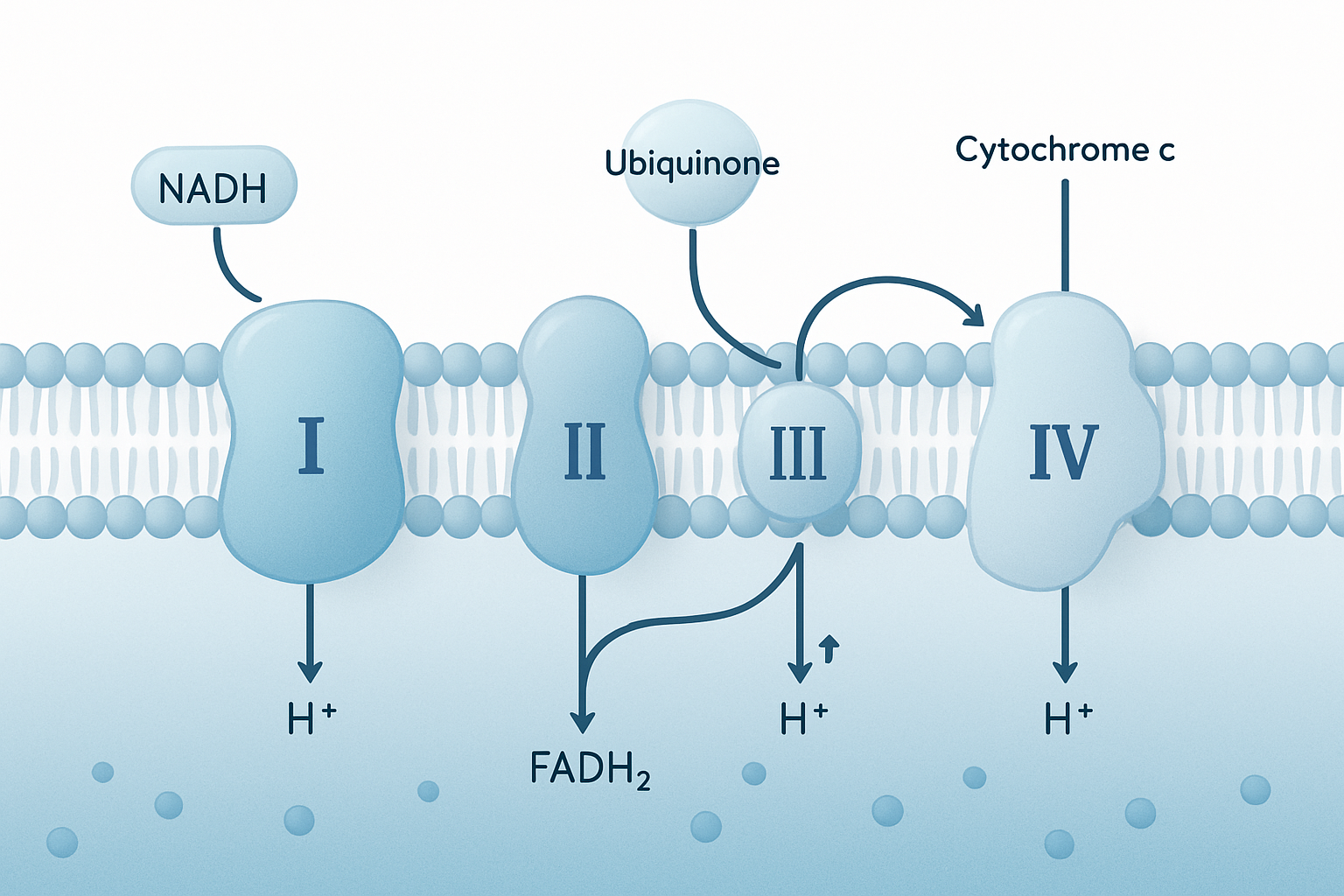
The electron transport chain (ETC) is vital for ATP production during cellular respiration, primarily through redox reactions and proton gradients. It consists of four protein complexes that facilitate electron transfer and culminate in the reduction of oxygen to water, significantly contributing to ATP synthesis.
The electron transport chain (ETC) is a crucial component of cellular respiration, significantly contributing to ATP production. While glycolysis and the citric acid cycle produce ATP, the majority of ATP generated during aerobic respiration is a result of electron transfer through the ETC. This process is fundamentally linked to redox reactions and the movement of electrons, ultimately leading to the formation of a proton gradient that drives ATP synthesis.
Key Components of the Electron Transport Chain
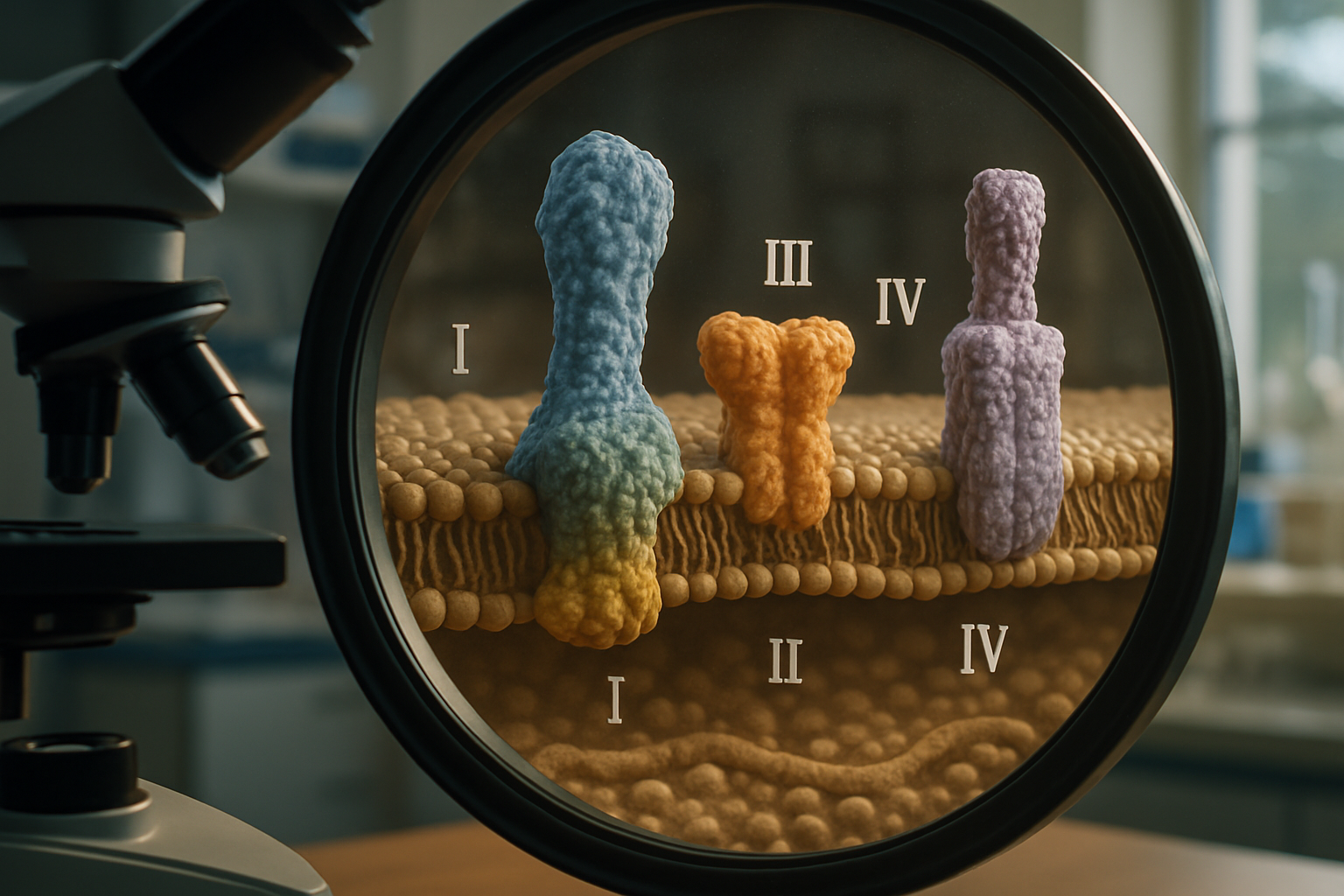
The electron transport chain consists of four main protein complexes, labelled as I through IV, along with mobile electron carriers. These complexes are embedded in the mitochondrial membrane and facilitate the transfer of electrons through a series of reactions, culminating in the reduction of molecular oxygen to water.
Complex I Overview
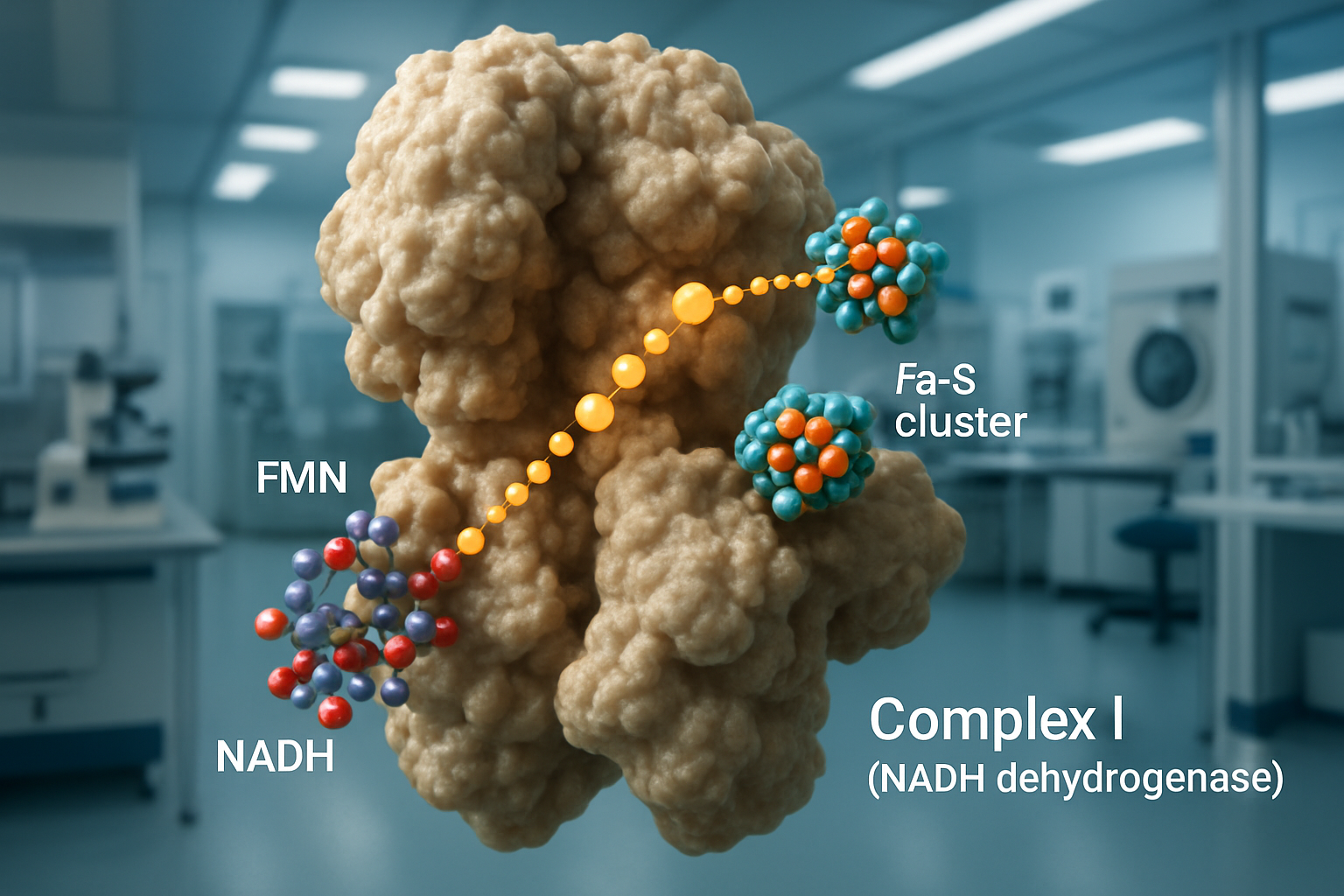
Complex I, also known as NADH dehydrogenase, initiates the electron transport process. It receives two electrons from NADH, which are then transferred through a series of cofactors, including flavin mononucleotide (FMN) and iron-sulfur clusters. This complex plays a critical role in establishing a proton gradient by pumping four hydrogen ions from the mitochondrial matrix into the intermembrane space, contributing to the electrochemical gradient essential for ATP synthesis.
Interaction of Ubiquinone and Complex II
Complex II, or succinate dehydrogenase, accepts electrons directly from FADH2 without passing through Complex I. Ubiquinone (Q), a lipid-soluble molecule, acts as a mobile electron carrier between Complexes I and II. The electrons from FADH2 are transferred to Q, which is subsequently reduced to ubiquinol (QH2). Unlike Complex I, Complex II does not contribute to the proton gradient, resulting in a lower yield of ATP from FADH2 compared to NADH.
Functionality of Complex III
Complex III, known as cytochrome bc1 complex, is comprised of cytochromes b and c, along with iron-sulfur proteins. It accepts electrons from ubiquinol and transfers them to cytochrome c, while simultaneously pumping protons into the intermembrane space. This step is vital for maintaining the proton gradient, which drives ATP synthesis in subsequent steps.
The Role of Complex IV in Oxygen Reduction
Complex IV, or cytochrome c oxidase, is the final complex in the electron transport chain. It receives electrons from cytochrome c and ultimately transfers them to molecular oxygen, reducing it to water. This complex contains heme groups and copper ions, which are essential for the reduction process. The removal of protons from the matrix during this step also contributes to the proton gradient necessary for ATP production.
Mechanism of Chemiosmosis
Chemiosmosis is the process by which the proton gradient established by the electron transport chain is used to synthesise ATP. As protons flow back into the mitochondrial matrix through ATP synthase, the energy released is harnessed to phosphorylate ADP, forming ATP. This process accounts for approximately 90% of ATP generated during aerobic respiration.
ATP Yield from Glucose Catabolism
The total amount of ATP produced from glucose metabolism varies due to several factors, including the efficiency of electron carriers and the specific pathways utilised in different tissues. For instance, NAD+ is more effective than FAD+ for transporting electrons, leading to a higher ATP yield when NADH is involved. Furthermore, the interconnectedness of metabolic pathways means that variations in substrate availability can influence the overall ATP production from glucose catabolism.
In summary, the electron transport chain is essential for efficient ATP production in aerobic organisms. Understanding its components and mechanisms provides insight into cellular energy metabolism, which is crucial for maintaining life.
Comments (0)
Loading comments…
Checking sign-in status…