
DNA replication is a critical process for cell division, ensuring each daughter cell receives an accurate copy of the genome. The semi-conservative mechanism involves key enzymes that facilitate the unwinding, synthesis, and sealing of DNA strands, maintaining genetic integrity.
DNA replication is a fundamental process essential for cell division and the propagation of genetic material. This intricate mechanism ensures that each daughter cell receives an accurate copy of the genome, which consists of approximately 3 billion base pairs in humans. The semi-conservative model of replication means that each new double helix contains one original strand and one newly synthesized strand, providing a reliable method for DNA duplication.
Mechanics of DNA Replication
Loading flowchart…
The replication process begins at specific sites on the chromosome, known as origins of replication. In prokaryotes, such as E. coli, there is typically a single origin. The sequence of the origin, rich in adenine (A) and thymine (T) base pairs, facilitates the separation of DNA strands due to the lower number of hydrogen bonds compared to guanine (G) and cytosine (C) pairs.
Role of Key Enzymes
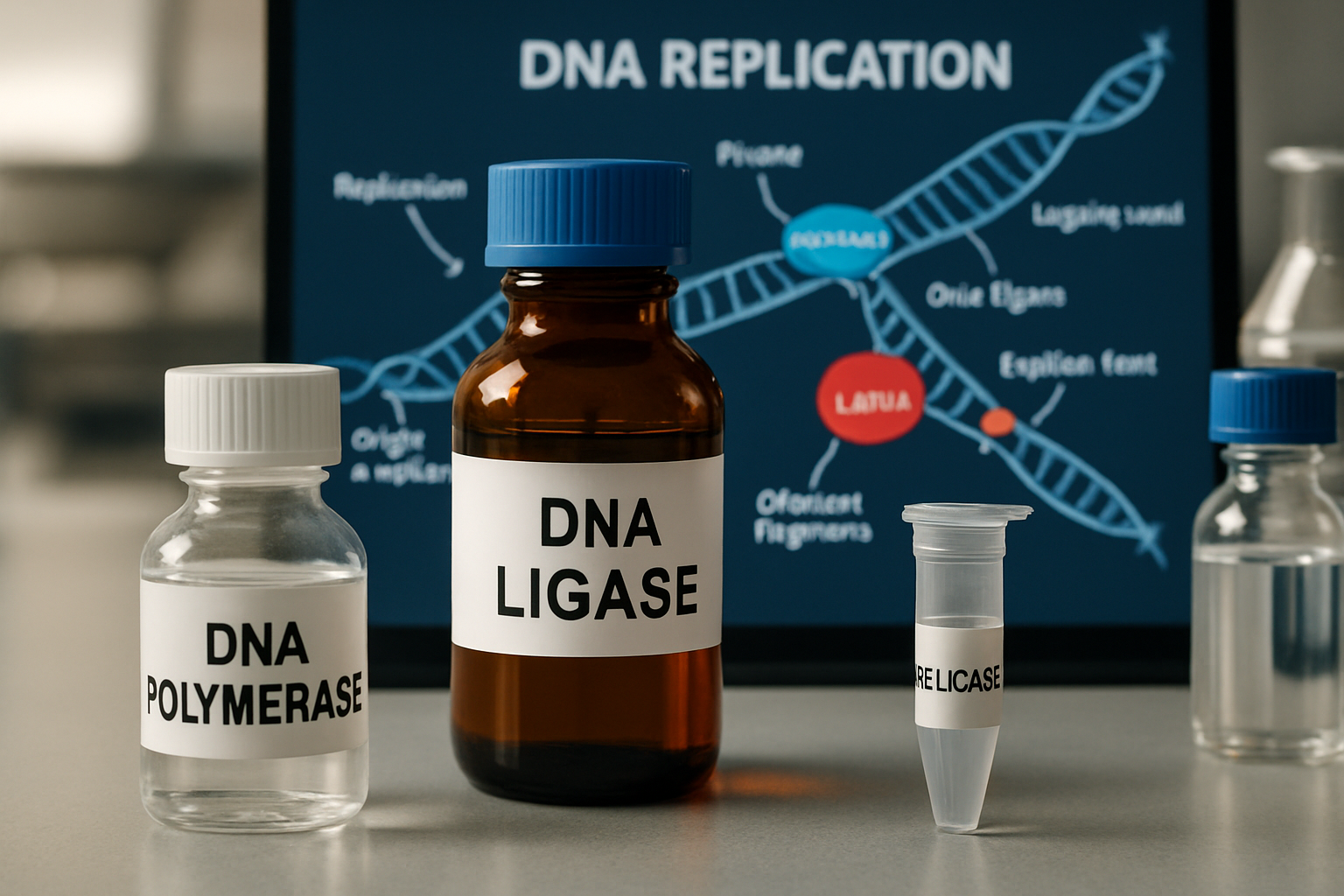
Several enzymes coordinate to ensure the accuracy and efficiency of DNA replication:
- DNA Polymerase: This enzyme is crucial for synthesizing the new DNA strand by adding nucleotides complementary to the template strand. DNA polymerases cannot initiate synthesis; they require a primer that provides a free 3' hydroxyl (-OH) group.
- Primase: This enzyme synthesizes short RNA primers that allow DNA polymerases to begin DNA synthesis. Primers typically range from five to ten nucleotides in length.
- Helicase: This enzyme unwinds the DNA double helix, breaking hydrogen bonds between base pairs to create two single strands at the replication fork.
- Ligase: After the RNA primers have been replaced with DNA, ligase seals any nicks in the sugar-phosphate backbone, ensuring the integrity of the newly synthesized strand.
- Topoisomerase: This enzyme alleviates tension in the DNA molecule that arises during unwinding, preventing tangling and ensuring smooth progression of the replication fork.
Leading and Lagging Strands
During DNA replication, one strand, known as the leading strand, is synthesized continuously in the 5' to 3' direction as the replication fork advances. Conversely, the lagging strand is synthesized discontinuously, forming short segments known as Okazaki fragments. This occurs because the two strands of DNA run in opposite directions, necessitating a different approach to synthesis.
Okazaki Fragments
The lagging strand requires multiple primers, with each Okazaki fragment starting from a new primer. Once the fragments are synthesized, they are later joined together by DNA ligase to form a continuous strand. This method of replication is essential for maintaining the integrity of the genetic information.
Conclusion of the Replication Process
Once the entire DNA molecule has been replicated, the final steps involve the removal of RNA primers and the sealing of gaps. DNA polymerase I replaces RNA primers with DNA, while ligase ensures the sugar-phosphate backbone is intact. This meticulous process highlights the complexity and precision required for successful DNA replication, which is critical for cellular function and organismal development.
Importance of Accurate Replication
Accurate DNA replication is vital to prevent mutations that can lead to diseases, including cancer. The combination of various enzymes and proteins working in concert ensures that DNA is replicated swiftly and with minimal errors. Understanding these mechanisms provides insight into fundamental biological processes and the potential for therapeutic interventions in genetic disorders.
Comments (0)
Loading comments…
Checking sign-in status…