
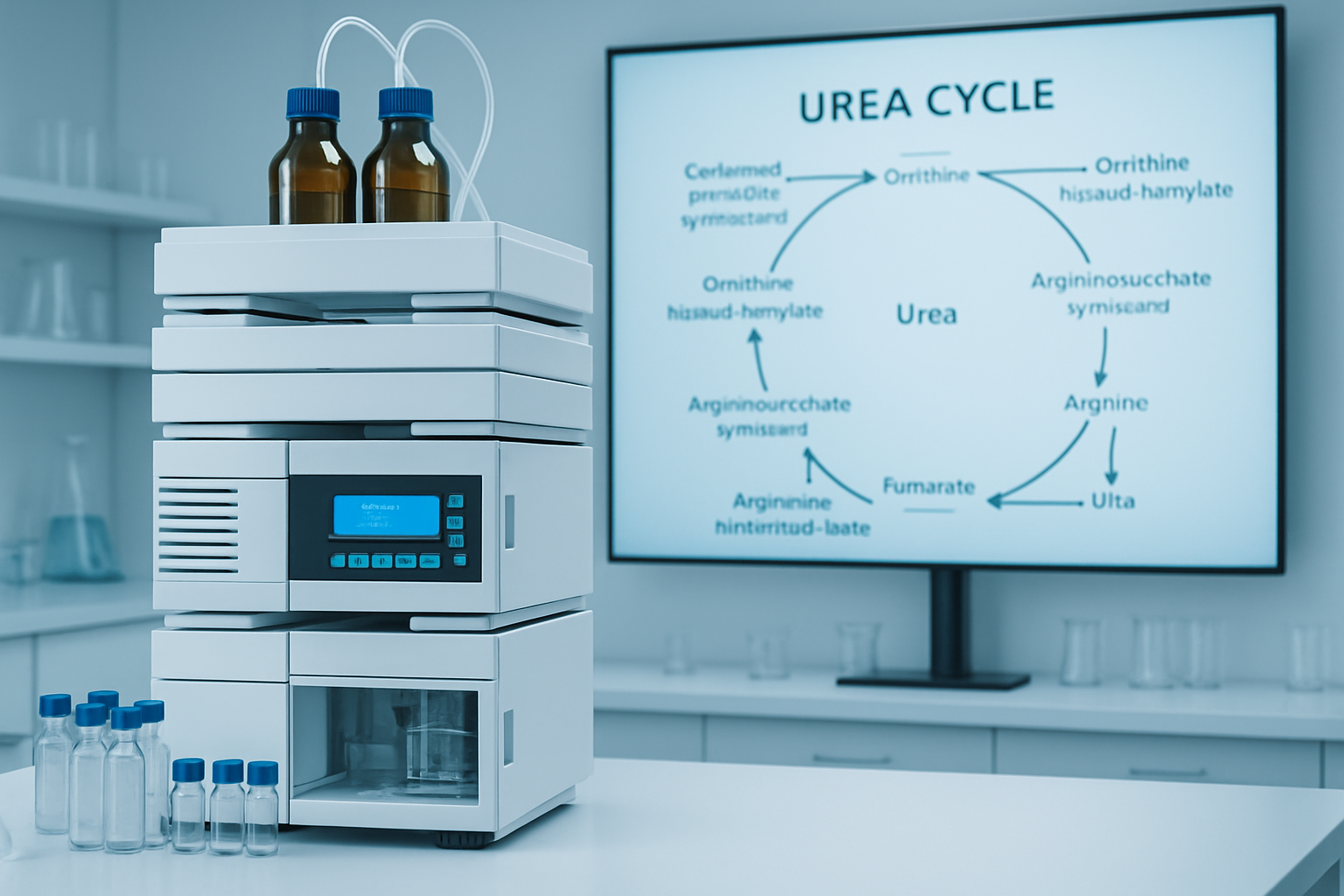
The urea cycle converts toxic ammonia into urea in the liver, and dysfunction can lead to serious health issues, including hyperammonemia. Various urea cycle disorders arise from enzyme deficiencies, each with distinct consequences and treatment options.
The urea cycle is a vital metabolic pathway that converts toxic ammonia into urea, which is subsequently excreted from the body. This process occurs exclusively in the liver, specifically within its mitochondria and cytoplasm. Dysfunction in this cycle can lead to the accumulation of ammonia, resulting in serious health consequences.
Mechanisms of the Urea Cycle

The urea cycle involves a series of enzymatic reactions that occur in two main cellular compartments: the mitochondria and the cytoplasm of hepatocytes. The cycle begins with the formation of carbamoyl phosphate, which is critical for the subsequent steps.
Initial Reactions in the Cycle
The first step is catalysed by carbamoyl phosphate synthetase I (CPS I), which combines carbon dioxide and ammonia to produce carbamoyl phosphate. This reaction requires N-acetyl-glutamate (NAG) as an essential activator. The synthesis of NAG occurs via the enzyme NAG synthase, where glutamate and acetyl-CoA are converted into NAG, with arginine enhancing this reaction.
The reaction can be summarised as follows:
CO2 + NH3 + 2 ATP → Carbamoyl phosphate + 2 ADP + Pi
Subsequent Steps of the Urea Cycle
In the second step, ornithine transcarbamoylase (OTC) combines carbamoyl phosphate with ornithine to produce citrulline. Citrulline is then transported from the mitochondria to the cytoplasm by ornithine translocase.
Next, citrulline reacts with aspartate to form argininosuccinate, a reaction facilitated by argininosuccinate synthetase, which requires ATP. Aspartate is generated through transamination of oxaloacetate and glutamate, with vitamin B6 as a cofactor.
The reaction can be described as:
Citrulline + Aspartate + ATP → Argininosuccinate + AMP + PPi
Argininosuccinate is then cleaved into arginine and fumarate by argininosuccinate lyase. Finally, arginine is hydrolysed by arginase to yield urea and regenerate ornithine, completing the cycle:
Arginine + H2O → Urea + Ornithine
Consequences of Urea Cycle Dysfunction
Disruptions in the urea cycle can lead to urea cycle disorders, which are often congenital and result from enzyme deficiencies. Such deficiencies can lead to toxic levels of ammonia in the bloodstream, known as hyperammonemia, which can have severe neurological impacts.
Types of Urea Cycle Disorders
There are several key disorders associated with urea cycle deficiencies, each linked to specific enzyme defects:
- N-acetyl glutamate synthase (NAGS) deficiency: This condition impairs CPS I function, leading to hyperammonemia similar to CPS I deficiency. Treatment with carglumic acid can be effective.
- Carbamoyl phosphate synthetase I (CPS1) deficiency: This severe disorder results in early-onset hyperammonemia. Patients remain at risk for hyperammonemia even after treatment due to the enzyme's critical role.
- Ornithine transcarbamylase (OTC) deficiency: Primarily affects males and can lead to severe hyperammonemia. Females may be less affected due to the presence of two X chromosomes.
- Argininosuccinate synthase (ASS1) deficiency: Known as citrullinemia type I, it leads to significant hyperammonemia and elevated citrulline levels.
- Citrin deficiency: This condition disrupts aspartate transport, resulting in hyperammonemia and neurological symptoms. It is more common in certain ethnic populations.
- Argininosuccinate lyase (ASL) deficiency: This disorder can cause acute hyperammonemia in newborns, along with liver enlargement and increased liver enzyme levels.
- Arginase (ARG) deficiency: Patients may experience growth issues and spasticity, but rapid-onset hyperammonemia is not typical.
- Ornithine translocase deficiency: This condition leads to ammonia accumulation due to impaired transport within the urea cycle, resulting in severe symptoms such as vomiting and coma.
Understanding these disorders is crucial for early diagnosis and intervention, as untreated hyperammonemia can lead to irreversible brain damage and may be fatal, particularly in newborns.
Comments (0)
Loading comments…
Checking sign-in status…