
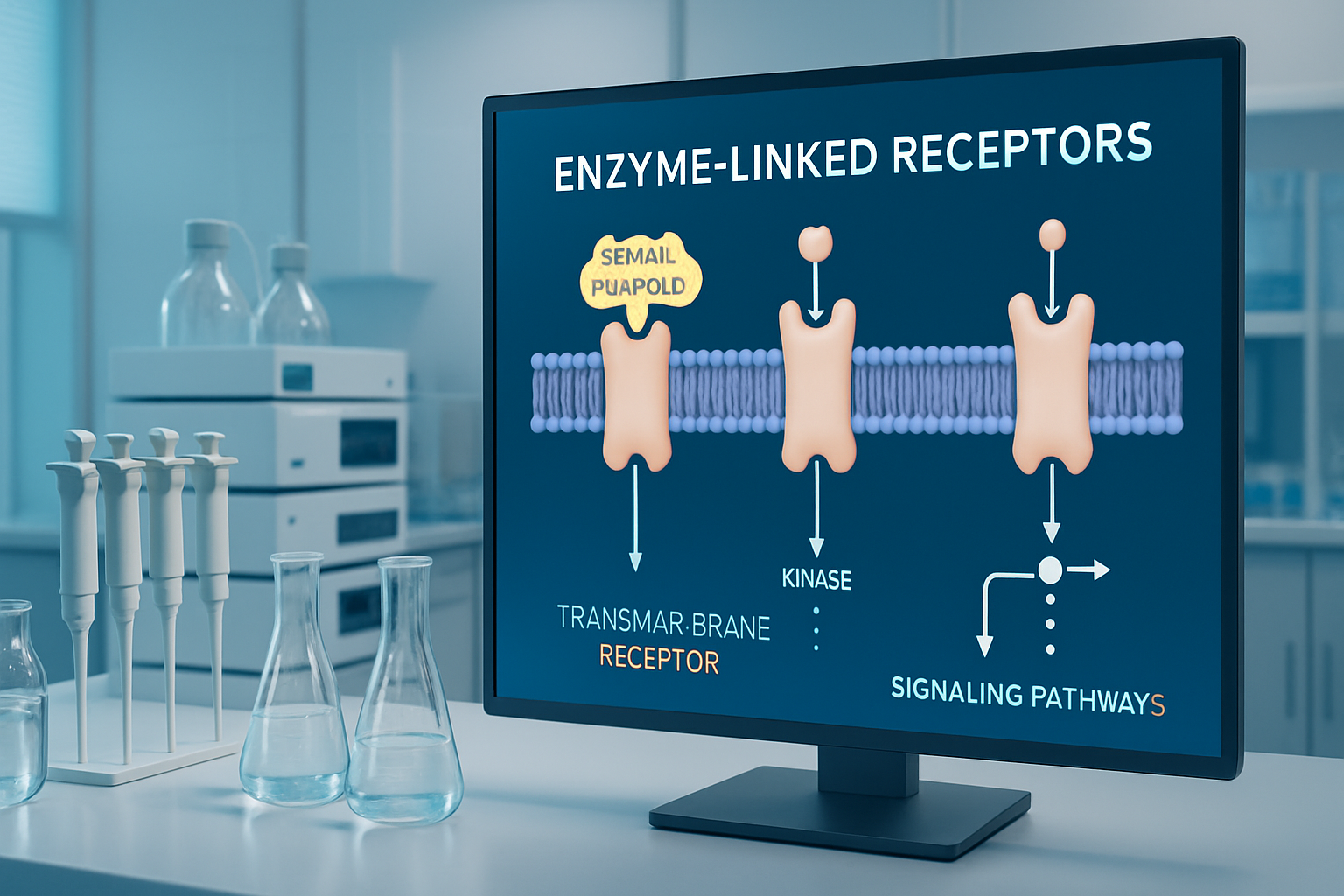
Transmembrane enzyme-linked receptors are crucial for cellular signalling, influencing processes like growth and apoptosis. They are activated by ligands, leading to complex intracellular cascades and can be classified into various families based on their enzymatic activities.
Transmembrane enzyme-linked receptors play a vital role in cellular signalling, impacting various biological processes including cell growth, differentiation, and apoptosis. These receptors are primarily activated by ligands, leading to complex intracellular signalling cascades that are crucial for maintaining cellular functions.
Mechanisms of Enzyme-Linked Receptors
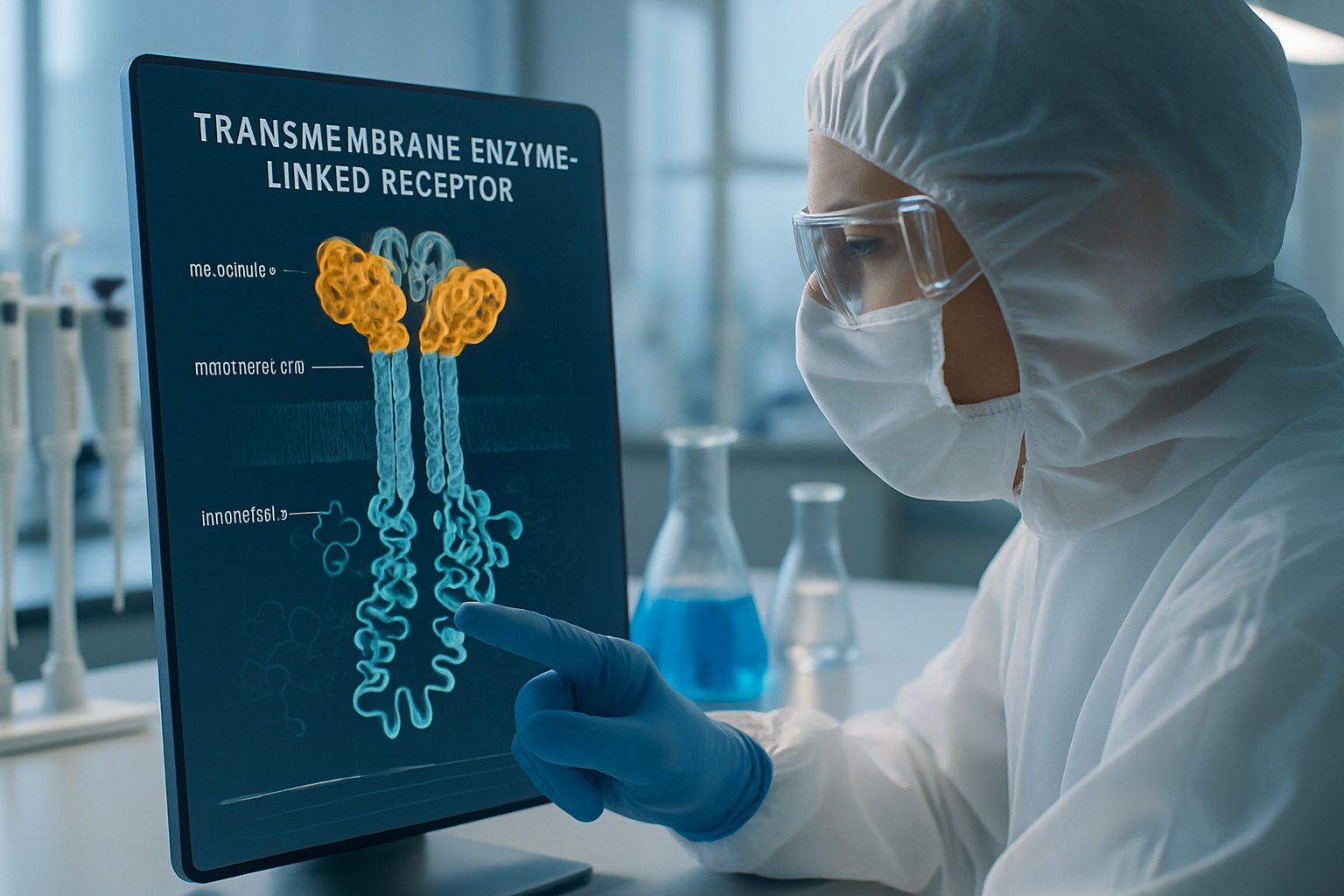
Enzyme-linked receptors are characterised by their single transmembrane domain and enzymatic activity located on the cytoplasmic side. The activation of these receptors often involves dimerisation, which is essential for their enzymatic functions. The enzymatic sites can exhibit various activities, including:
- Tyramine kinase activity
- Tyramine phosphatase activity
- Serine or threonine kinase activity
- Guanylyl cyclase activity
For receptors with tyrosine kinase activity, autophosphorylation occurs at both tyrosine and serine/threonine sites. Mutations in these receptors frequently lead to continuous activation, contributing to oncogenic processes.
Types of Enzyme-Linked Receptors
Enzyme-linked receptors can be broadly classified into several families based on their enzymatic activity:
- Receptor Tyrosine Kinases (RTKs): These receptors dimerise upon ligand binding, leading to phosphorylation of tyrosine residues and activation of downstream signalling pathways, such as the MAP kinase pathway, which influences gene transcription and cell division.
- Tyramine Phosphatase Receptors: These receptors dephosphorylate tyrosine residues on other proteins, playing essential roles in immune responses.
- Tyramine Kinase-Associated Receptors: Lacking intrinsic kinase activity, these receptors activate associated kinases, such as JAKs, which further propagate signalling pathways.
- Receptor Serine-Threonine Kinases: These receptors phosphorylate serine and threonine residues, affecting various cellular processes.
- Guanylyl Cyclase Receptors: Unique in that they produce their own second messengers, these receptors play roles in vasodilation and other physiological processes.
Receptor Tyrosine Kinases in Cancer
Receptor tyrosine kinases, including the epidermal growth factor receptor (EGFR) and human epidermal growth factor receptor 2 (HER2), are pivotal in cancer biology. Their aberrant activation is often linked to tumour proliferation and survival. For instance, the Bcr-Abl fusion protein in chronic myeloid leukaemia exemplifies how continuous RTK activity can lead to uncontrolled cell growth, which is targeted by specific inhibitors like imatinib.
Interplay with G-Protein Coupled Receptors
While enzyme-linked receptors primarily signal through direct phosphorylation, they also interact with G-protein coupled receptors (GPCRs), highlighting the complexity of cellular signalling networks. This cross-talk can lead to enhanced or altered signalling outcomes, complicating therapeutic strategies.
JAK-STAT Pathway
The Janus kinase (JAK) and signal transducers and activators of transcription (STAT) pathway is a significant signalling route activated by various cytokine receptors. JAKs phosphorylate STAT proteins, which dimerise and translocate to the nucleus to regulate gene expression. This pathway is implicated in numerous cancers, demonstrating the intricate connections between different signalling pathways.
Conclusion
Understanding the roles and mechanisms of transmembrane enzyme-linked receptors is essential for elucidating their involvement in cellular signalling and their implications in diseases such as cancer. The continued study of these receptors will enhance our ability to develop targeted therapeutic strategies.
[[TABLE_1]]| Receptor Type | Function |
|---|---|
| Receptor Tyrosine Kinases | Phosphorylate tyrosine residues, involved in growth factor signalling |
| Tyramine Phosphatase Receptors | Dephosphorylate tyrosine residues, important in immune regulation |
| Tyramine Kinase-Associated Receptors | Activate associated kinases, propagate signalling |
| Receptor Serine-Threonine Kinases | Phosphorylate serine and threonine residues |
| Guanylyl Cyclase Receptors | Synthesize second messengers |
Comments (0)
Loading comments…
Checking sign-in status…