

Bioinformatics combines biology and computer science to manage and analyze biological data, focusing on gene functions, evolutionary relationships, and protein structures. It relies on biological databases for data storage and retrieval, supporting research and advancements in medicine.
Bioinformatics represents a crucial intersection of biology and computer science, enabling the storage, analysis, and dissemination of biological data. This field applies computational techniques to understand the functions of genes and proteins, establish evolutionary relationships, and model the three-dimensional structures of proteins. Its significance lies in the analysis of biological sequences, offering insights into genetic relationships and functional patterns.
Key Goals of Bioinformatics
As the volume of biological data generated by next-generation sequencing continues to grow, the need for effective bioinformatics tools becomes paramount. The primary goals of bioinformatics encompass:
- Developing tools to manage and analyse sequencing data efficiently.
- Facilitating collaboration among researchers to avoid redundancy in bioinformatics projects.
- Providing training and support for bioinformatics initiatives.
- Ensuring quality control through adherence to best practices and standards.
Advanced technologies play a vital role in achieving these objectives. Techniques such as sequence assemblers, multi-alignment searches, and single nucleotide polymorphism (SNP) detection are integral to the analysis of complex biological sequences. Additionally, phylogenetic analysis contributes to understanding evolutionary relationships.
Biological Data Management Systems

Biological databases are fundamental in the bioinformatics landscape, consisting of organized records of biological information. These databases facilitate the storage, retrieval, and manipulation of data such as protein sequences, molecular structures, and DNA sequences.
A biological database typically employs specialized software for tasks such as updating and querying data. Many of these databases are accessible online, providing researchers worldwide with valuable resources. The structured nature of these databases allows for the removal of redundant information and the consolidation of knowledge, enhancing the understanding of biological phenomena.
Applications of Biological Databases
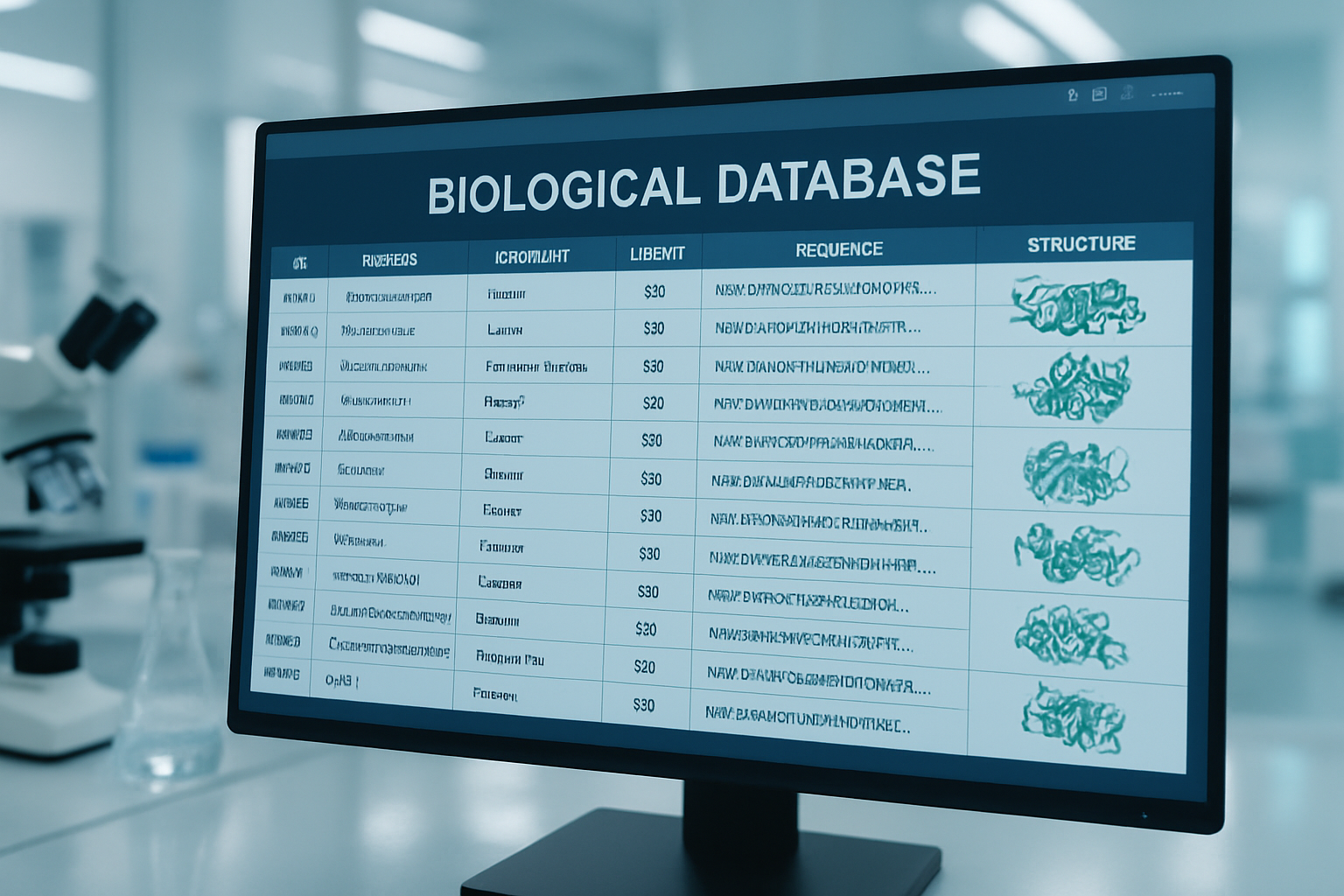
Researchers utilize biological databases for various purposes, including:
- Studying data to develop new theories and medical advancements.
- Creating new antiviral agents and beneficial bacteria.
- Facilitating collaborative research efforts globally.
By leveraging the extensive data available in these databases, scientists can form new hypotheses and contribute to advancements in medicine and biology.
Conclusion
The integration of bioinformatics into biological research enhances our capability to analyse and interpret complex biological data. As tools and databases continue to evolve, their impact on scientific discovery will only grow.
Comments (0)
Loading comments…
Checking sign-in status…