
Heme catabolism is vital for blood health and liver function, influencing conditions like hyperbilirubinemia and jaundice. The liver processes bilirubin, and elevated levels can lead to jaundice, particularly in newborns.
The catabolism of heme is a critical biochemical process in the body, particularly in the context of blood health and liver function. Understanding this process is essential for recognising conditions such as hyperbilirubinemia and jaundice, which can have significant implications for patient care.
Heme Degradation Mechanisms
Heme, a cyclic tetrapyrrole that contains iron, is a vital component of hemoglobin, myoglobin, and cytochromes, playing an integral role in oxygen transport and various metabolic functions. Approximately 80% of heme degradation originates from senescent erythrocytes, which typically survive in circulation for about three months. The remaining heme is derived from pre-erythrocytes formed in the bone marrow and other cell types.
Sites of Heme Catabolism
The degradation of heme occurs primarily in the liver, reticuloendothelial system, and intestine through several enzymatic reactions. Key substrates involved in this process include:
- 2 UDP-glucuronic acid
- NADPH
- Heme
The products of heme catabolism include:
- Fe2+
- Stercobilin
- Carbon monoxide (CO)
- Urobilinogen
As erythrocytes age, they become increasingly damaged, leading to their destruction by macrophages in the spleen. Activated reticuloendothelial cells phagocytose these erythrocytes. The globin component is catabolised into amino acids, which are subsequently converted into various metabolic intermediates.
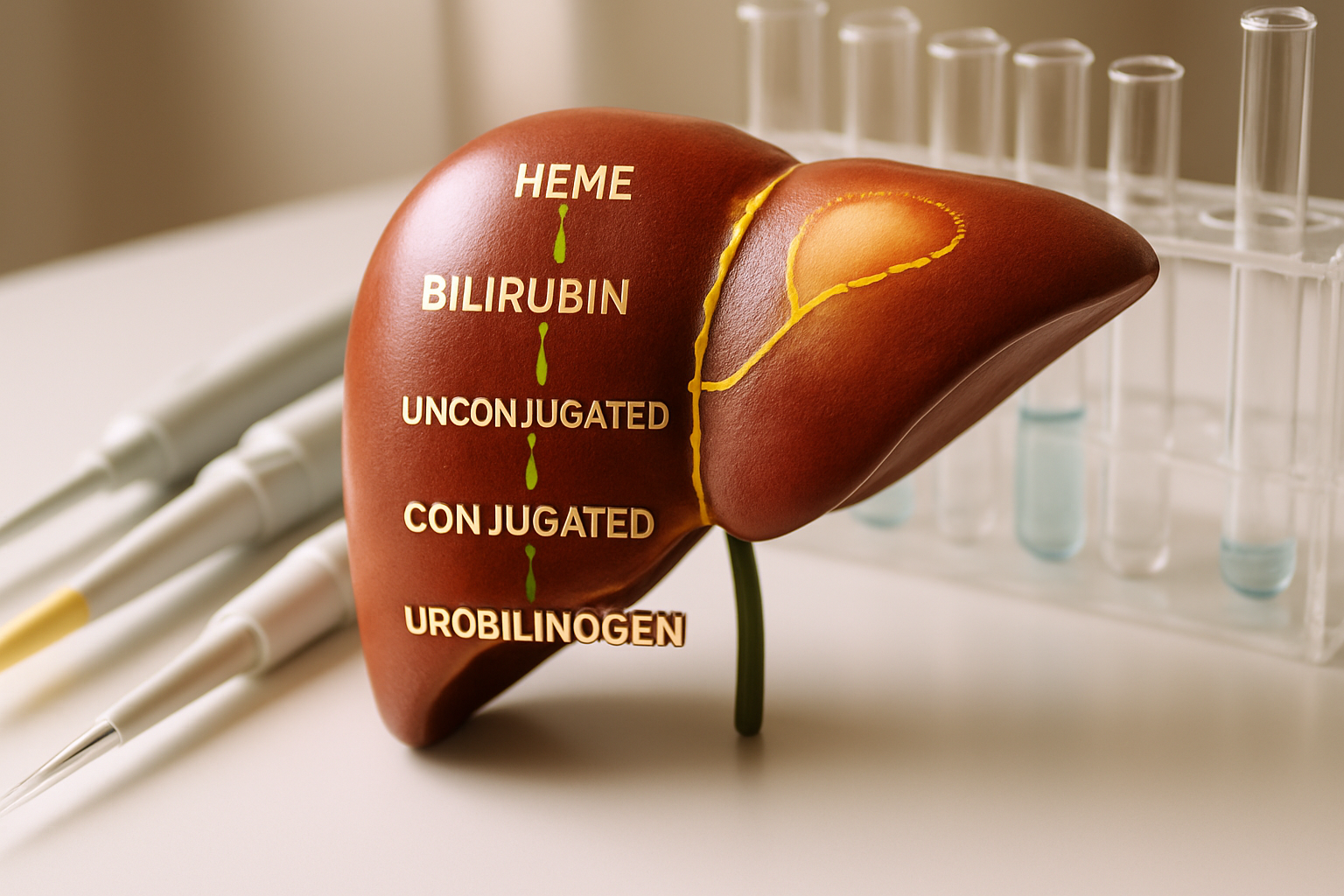
During heme degradation, heme oxygenase catalyses the opening of the heme ring through an oxidation reaction, resulting in the formation of linear tetrapyrrole biliverdin, ferric iron (Fe3+), and carbon monoxide (CO). Bilirubin is subsequently produced by the reduction of biliverdin via biliverdin reductase, transitioning from its green pigment form to a red-orange pigment.
The liver plays a crucial role in processing bilirubin, producing bilirubin glucuronyl transferase, which conjugates bilirubin with glucuronate for excretion into bile. In the gastrointestinal tract, bilirubin is deconjugated, yielding urobilinogen and stercobilin, with the kidneys reabsorbing some urobilinogen and excreting it as urobilin. Stercobilin primarily accounts for the colour of feces, as it is oxidised to urobilinogen therein.
Clinical Implications of Hyperbilirubinemia
Hyperbilirubinemia is characterised by elevated bilirubin levels in the blood, leading to yellowing of the skin and eyes, known as jaundice. While it is common for newborns to exhibit some degree of jaundice due to immature liver function, certain conditions can precipitate more severe hyperbilirubinemia.
Common Causes of Hyperbilirubinemia
The production of bilirubin is a normal byproduct of red blood cell breakdown. The liver is responsible for converting unconjugated bilirubin into conjugated bilirubin for excretion. In newborns, the transition from placental to liver excretion can lead to elevated bilirubin levels, especially in the following scenarios:
- Physiological Jaundice: A common and typically benign condition in newborns due to the immaturity of the liver, usually resolving within the first week of life.
- Breastfeeding Failure Jaundice: Occurs when a newborn experiences inadequate milk intake, leading to dehydration and reduced bilirubin elimination, more pronounced in premature infants.
- Breast Milk Jaundice: Develops in approximately 2% of breastfed infants, peaking between two to three weeks of age due to substances in breast milk that may inhibit bilirubin processing.
- Hemolytic Jaundice: Results from increased red blood cell destruction, often due to blood type incompatibility or conditions like Rh disease, exacerbated by bruising during delivery.
- Jaundice from Liver Dysfunction: Chronic liver issues can lead to impaired bilirubin processing, resulting in elevated bilirubin levels.
It is essential to monitor bilirubin levels in newborns, as a significant proportion of term and nearly all premature infants experience some degree of hyperbilirubinemia, necessitating appropriate clinical intervention.
Comments (0)
Loading comments…
Checking sign-in status…