
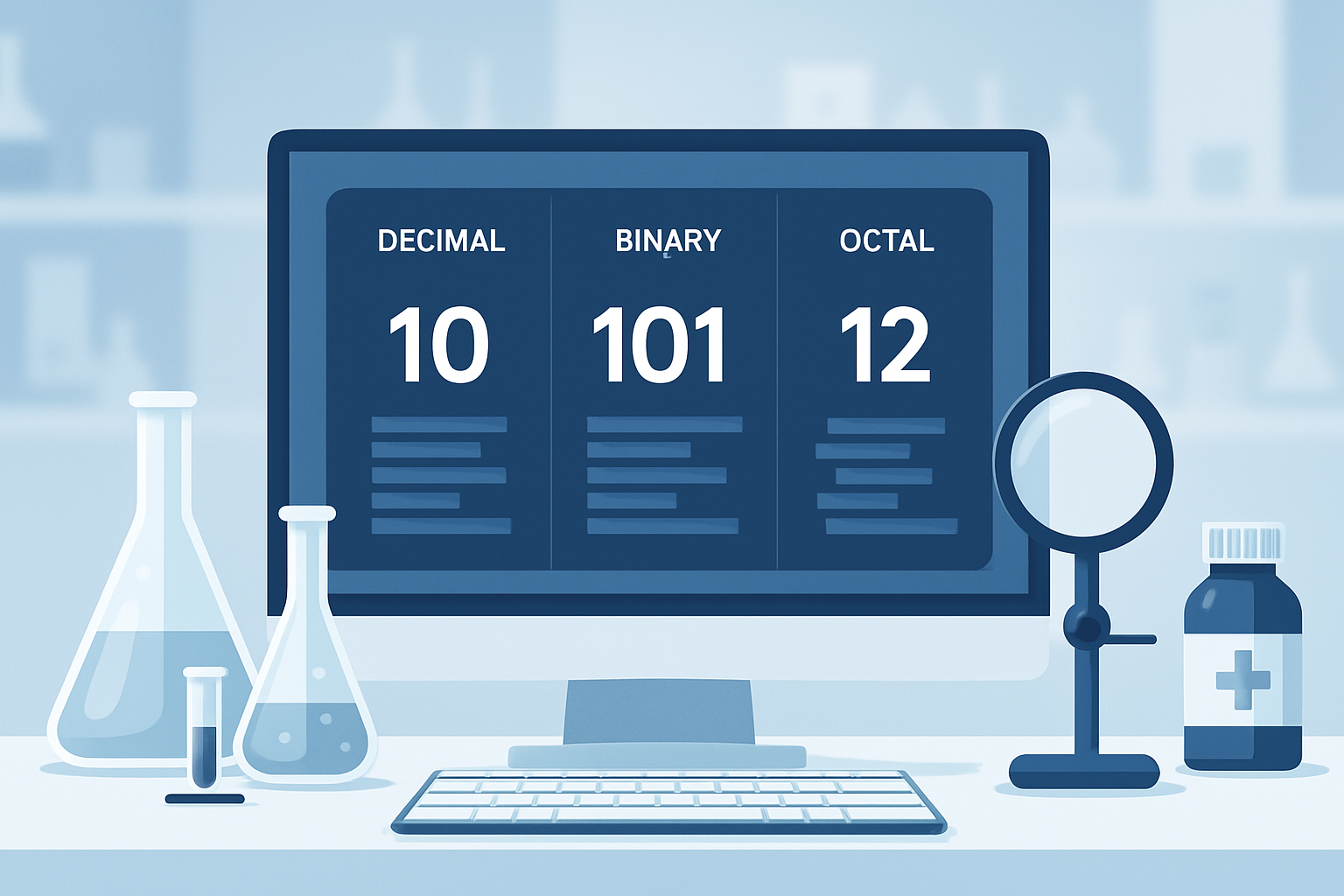
Understanding number system conversions between decimal, binary, and octal is essential for data representation in computing. The article details methods for converting between these systems, including recursive division for decimal to binary and positional notation for binary to decimal.
Converting numbers between different systems is crucial in various fields, especially in computing and data representation. Understanding how to transition between decimal, binary, and octal systems enables better manipulation and interpretation of data.
Transforming Decimal Numbers to Binary
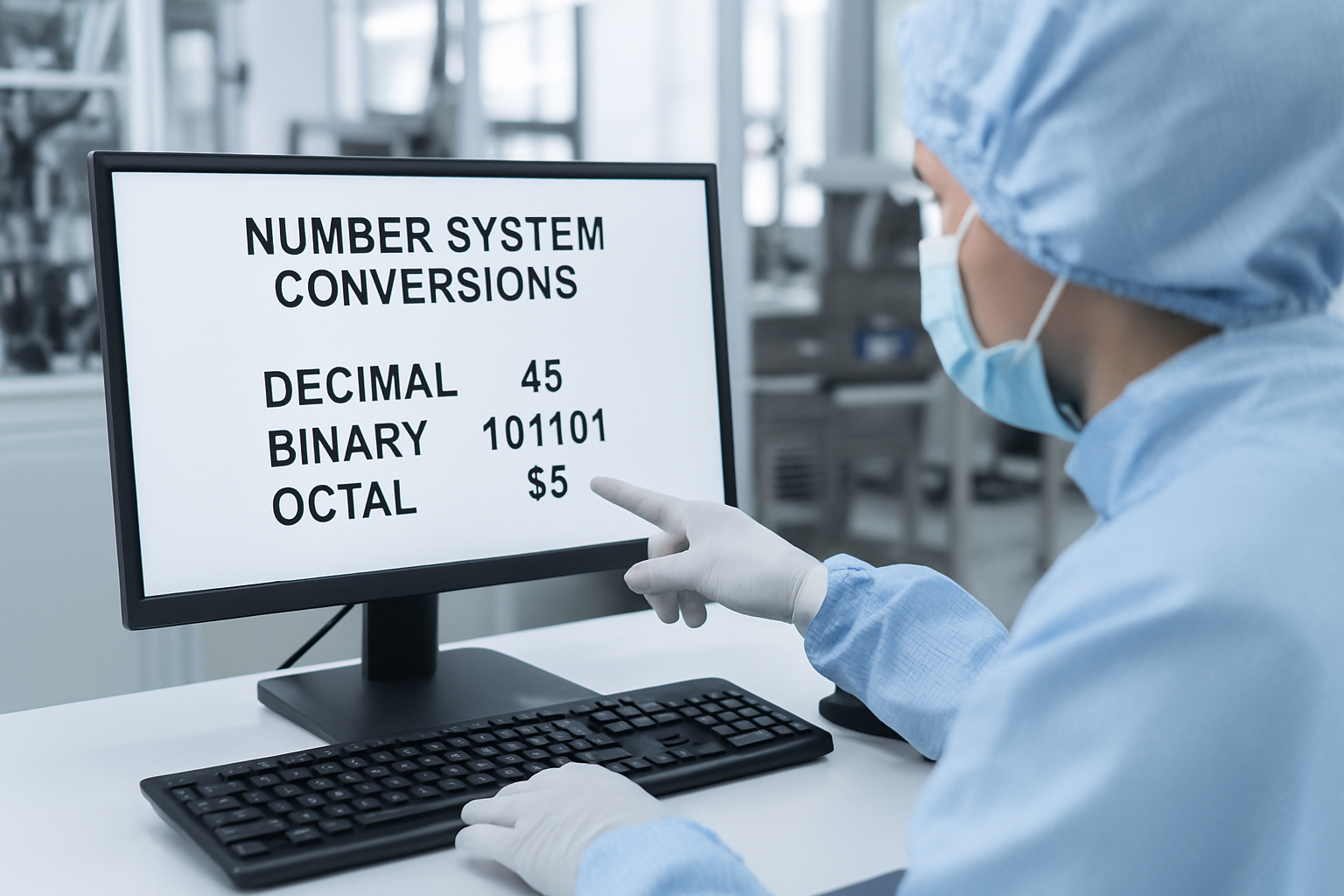
To convert a decimal number to binary, one effective method involves recursive division by 2. This process continues until the quotient reaches zero, at which point the remainders collected during the division provide the binary equivalent when read in reverse order. The binary system operates on a base of 2, using only two digits: 0 and 1, while the decimal system operates on a base of 10, using ten digits from 0 to 9.
Steps for Decimal to Binary Conversion
Loading flowchart…
- Divide the decimal number by 2 and note the remainder.
- Continue dividing the quotient by 2, recording the remainders.
- Repeat until the quotient becomes zero.
- Write the remainders in reverse order to obtain the binary representation.
The first remainder collected represents the Least Significant Bit (LSB), while the last one corresponds to the Most Significant Bit (MSB).
Binary to Decimal Conversion Techniques
Converting binary numbers back to decimal can be achieved through two primary methods: positional notation and doubling. Both methods simplify the understanding of large binary numbers, which can be cumbersome in their native format.
Positional Notation Method
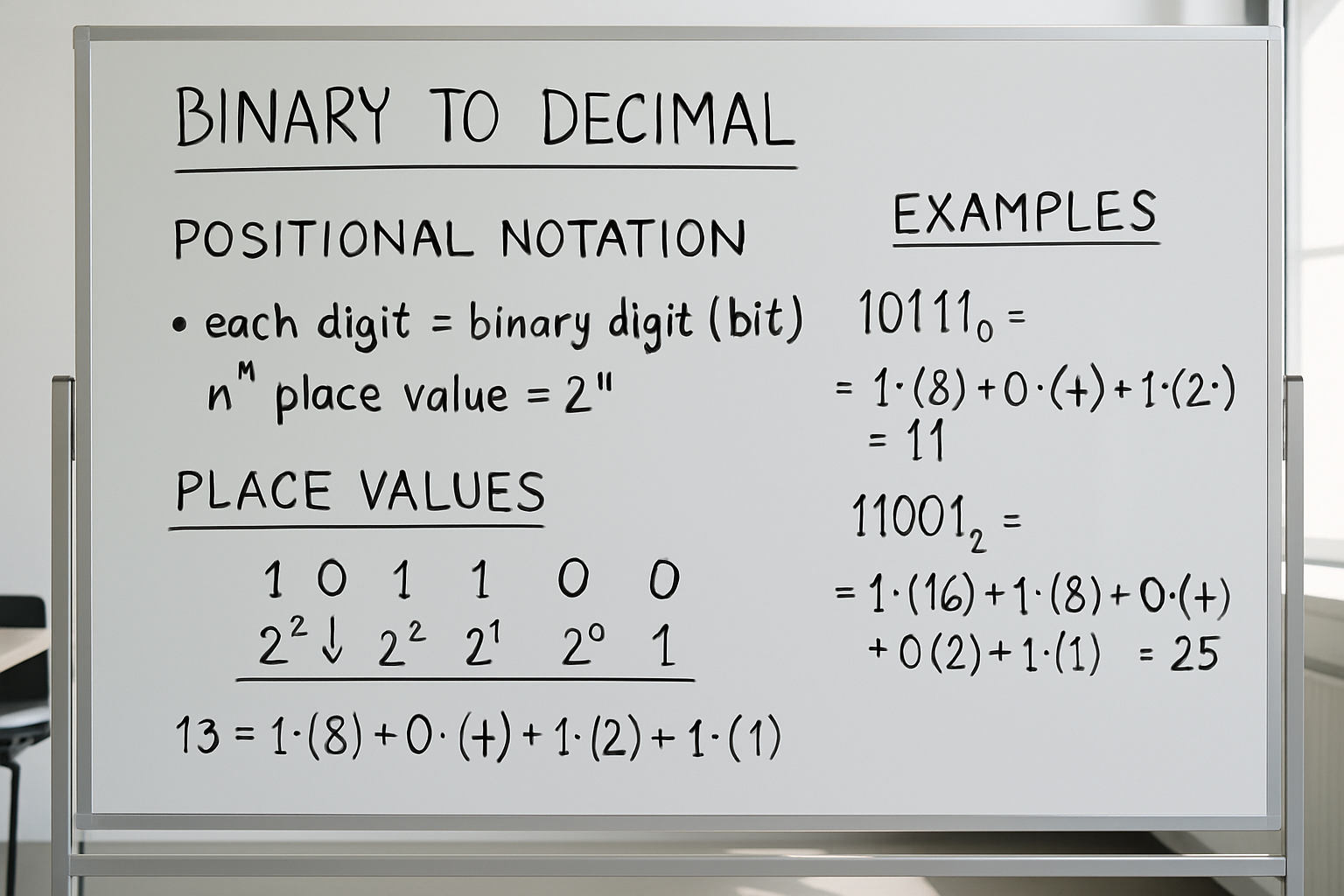
This method relies on the weights assigned to each binary digit based on its position. Starting from the rightmost digit, each binary digit is multiplied by 2 raised to the power of its position index. The results are then summed to yield the decimal equivalent.
Doubling Method
Another approach is the doubling method, where each binary digit is considered sequentially, doubling the accumulated total and adding the current binary digit. This method streamlines the conversion process.
Converting Octal Numbers to Binary
Octal numbers, which operate on a base of 8, can also be converted to binary. This process involves two main steps: converting the octal number to decimal, followed by converting that decimal number to binary.
Conversion Steps
- Convert the octal number to decimal by multiplying each digit by 8 raised to the power of its position.
- Once in decimal form, apply the decimal to binary conversion method previously described.
Octal to Decimal Conversion Process
To convert an octal number into decimal, evaluate the number of digits present. Each digit is multiplied by 8 raised to the power of its position, from right to left. If a decimal part exists, it should be treated similarly, using negative powers of 8.
By mastering these conversion techniques, professionals can enhance their understanding of data representation in computing and facilitate better communication regarding numerical data across various systems.
[[TABLE_1]]
Comments (0)
Loading comments…
Checking sign-in status…