

The de novo synthesis of fatty acids, especially palmitic acid, involves acetyl-CoA and malonyl CoA, occurring mainly in adipose tissue, liver, and kidneys. The process includes stages of production, conversion, and reactions by the fatty acid synthase complex.
The de novo synthesis of fatty acids is a critical biochemical pathway in the human body, particularly for the production of palmitic acid. This process begins with acetyl-CoA, a central metabolite derived from carbohydrates, amino acids, and fat breakdown. Understanding this pathway is essential for professionals in pharmaceuticals and biochemistry, as it has implications for metabolic health and the development of therapeutic interventions.
Key Sites of Fatty Acid Synthesis
Fatty acid synthesis predominantly occurs in three primary sites within the body:
- Adipose tissue
- Liver
- Kidneys
Stages of De Novo Fatty Acid Synthesis
Loading flowchart…
The synthesis of fatty acids, particularly palmitic acid, occurs in three main stages:
1. Production of NADPH and Acetyl CoA
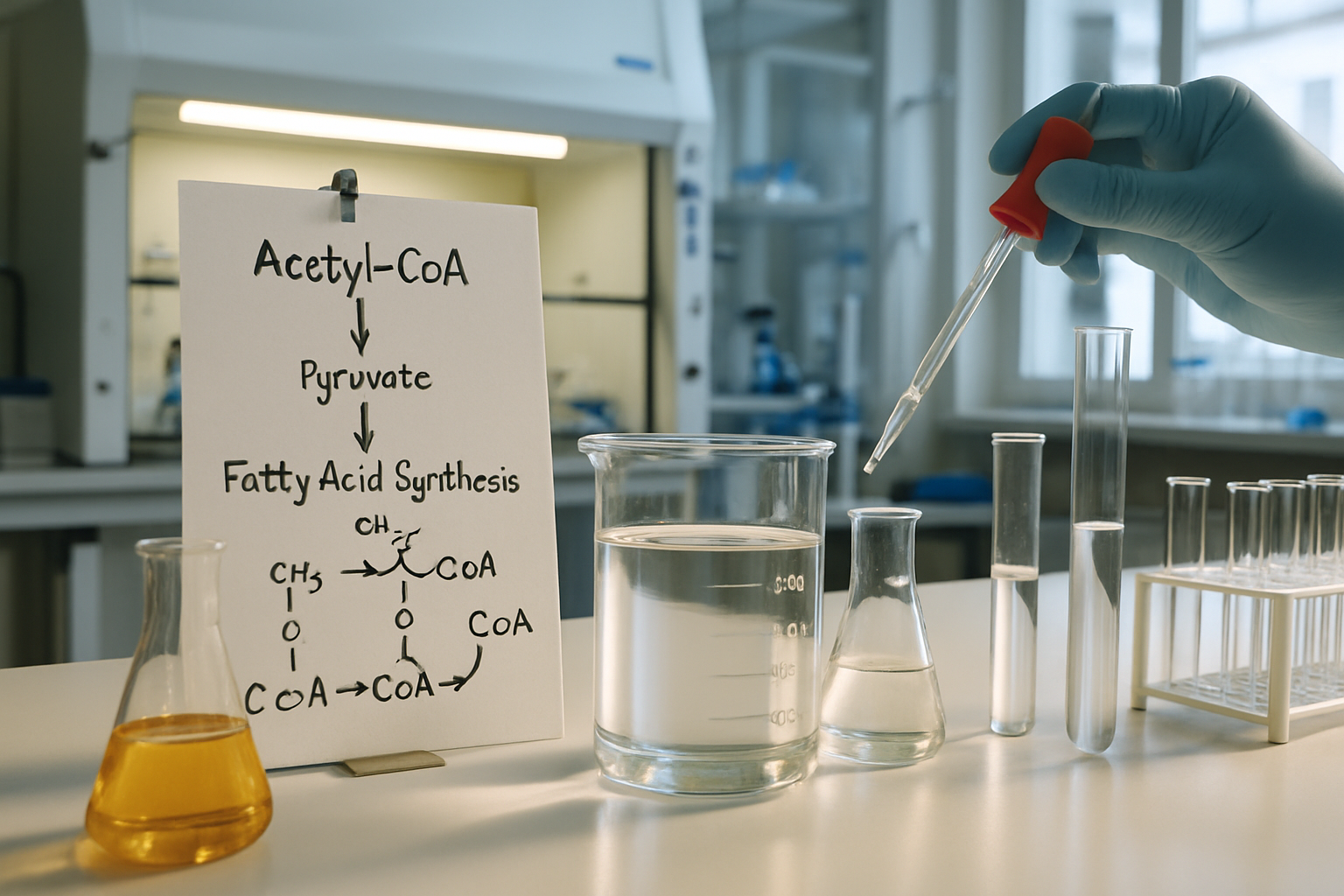
Acetyl CoA is crucial for fatty acid production, primarily sourced from the oxidation of pyruvate in the mitochondrial matrix, as well as from amino acids and ketone bodies. Due to its inability to cross mitochondrial membranes, acetyl CoA must be converted into citrate, which can be transported into the cytosol. Here, citrate is cleaved back into acetyl CoA and oxaloacetate, facilitating the continuation of fatty acid synthesis.
2. Conversion to Malonyl CoA
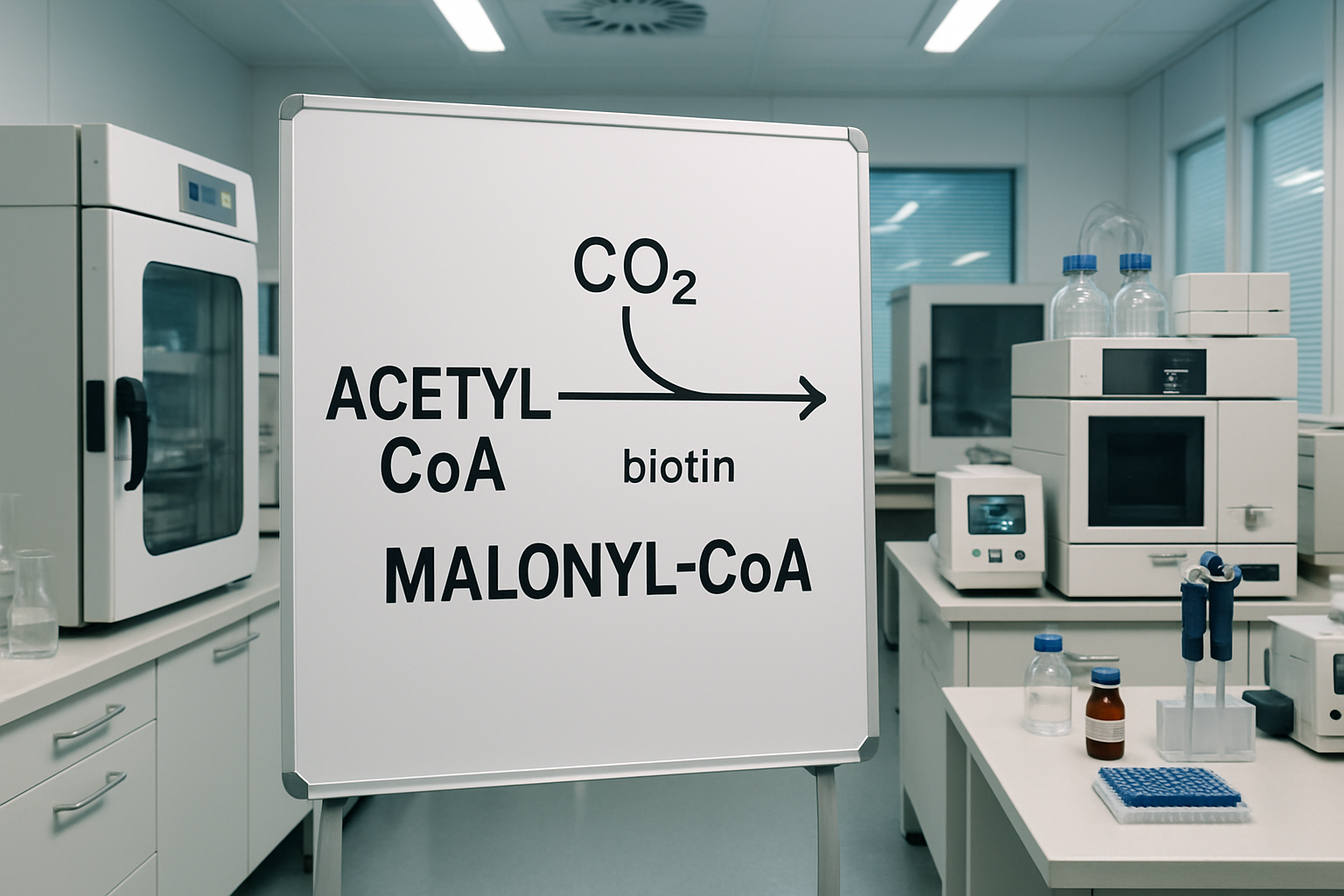
The next step involves the carboxylation of acetyl CoA to form malonyl CoA. This reaction is ATP-dependent and requires biotin for the fixation of carbon dioxide. Malonyl CoA serves as a building block for the elongation of the fatty acid chain.
3. Reactions of Fatty Acid Synthase Complex
The fatty acid synthase (FAS) complex, a multifunctional enzyme, catalyses the series of reactions that lead to the formation of fatty acids. Each monomer of the FAS complex contains acyl carrier proteins (ACPs) and various enzymatic activities. The synthesis process involves the sequential addition of two-carbon units derived from malonyl CoA, thereby elongating the fatty acid chain until palmitate, a 16-carbon saturated fatty acid, is produced.
Overall Reaction Summary
In summary, palmitate is synthesized via a complex interplay of acetyl CoA and malonyl CoA, with two carbon atoms originating from acetyl CoA and the remaining fourteen from malonyl CoA. This intricate biochemical process highlights the importance of fatty acids in metabolic functions and their role in energy storage as triglycerides.
Comments (0)
Loading comments…
Checking sign-in status…