
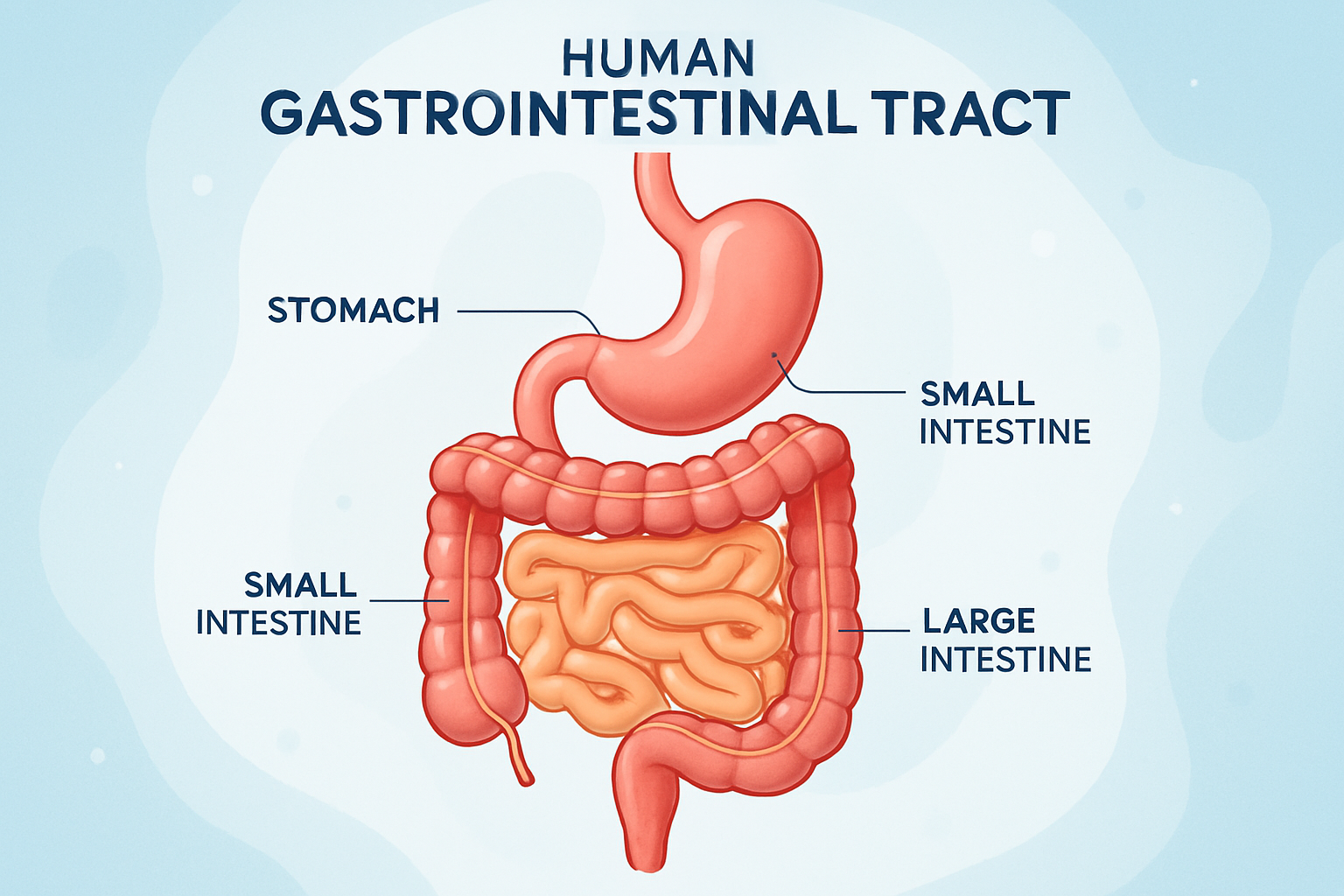
The gastrointestinal tract is essential for digestion, involving various organs that process food into nutrients. Peptic ulcers, which can cause abdominal pain, develop in the stomach or small intestine due to factors like Helicobacter pylori infection and NSAID use.
The gastrointestinal tract plays a crucial role in digestion, transforming food into essential nutrients and energy. Understanding its structure and function is vital for recognising various digestive disorders, including peptic ulcers.
Overview of the Gastrointestinal Tract
The journey of food through the body is a complex process that involves multiple organs functioning in harmony. The digestive system comprises several key components, including the gastrointestinal (GI) tract, liver, pancreas, and gallbladder.
Food enters through the mouth and travels through a series of connected hollow organs, ultimately exiting the body. The primary organs involved in this process include the mouth, throat (esophagus), stomach, small intestine, large intestine, rectum, and anus. Additionally, accessory organs like the pancreas, liver, and gallbladder support digestion by producing important digestive enzymes and substances.
Oral Cavity
Digestion begins in the oral cavity. The act of chewing mechanically breaks down food, while saliva, produced by salivary glands, contains enzymes that initiate the chemical process of digestion. When food is swallowed, it is pushed towards the throat by the tongue.
Throat and Esophagus
The esophagus is a muscular tube that connects the throat to the stomach. When swallowing occurs, the epiglottis prevents food from entering the windpipe. Peristalsis, a series of coordinated muscle contractions, then propels the food down the esophagus into the stomach.
Gastric Region
The stomach serves as a temporary storage and mixing chamber for food. It secretes strong acids and enzymes that begin the breakdown of food into a semi-liquid form. Once adequately processed, the contents of the stomach are released into the small intestine.
Intestinal Segments
The small intestine is divided into three sections: the duodenum, jejunum, and ileum. Digestive enzymes and bile from the liver facilitate the breakdown of food in these segments. Nutrients are primarily absorbed in the jejunum and ileum, with the remaining liquid waste transitioning to the large intestine.
Endocrine Function of the Pancreas
The pancreas plays a dual role by producing digestive enzymes for the duodenum and hormones such as insulin that regulate blood sugar levels. Insufficient insulin production can lead to conditions like diabetes, highlighting the pancreas's importance in both digestion and metabolic processes.
Hepatic Functions
The liver is a vital organ responsible for processing nutrients absorbed from the small intestine. It produces bile, essential for fat digestion, and detoxifies potentially harmful substances, including medications. The liver's multifaceted role underscores its importance in maintaining overall health.
Bile Storage
The gallbladder stores and concentrates bile from the liver, releasing it into the small intestine as needed for the digestion of fats.
Large Intestine
The large intestine, or colon, serves to process waste before elimination. It includes several segments: the cecum, ascending colon, transverse colon, descending colon, and sigmoid colon. Peristalsis helps transform the waste from liquid to solid as water is absorbed. The colon also houses beneficial bacteria that aid in digestion and synthesise vitamins.
Rectal Function
The rectum, an 8-inch segment connecting the colon to the anus, acts as a temporary storage site for stool. It signals the body when it is time to evacuate, holding the stool until it is expelled.
Anal Canal
The anus, surrounded by sphincter muscles, regulates the elimination of stool. It features a lining that can sense the consistency of rectal contents, allowing for conscious control over bowel movements.
Peptic Ulcers
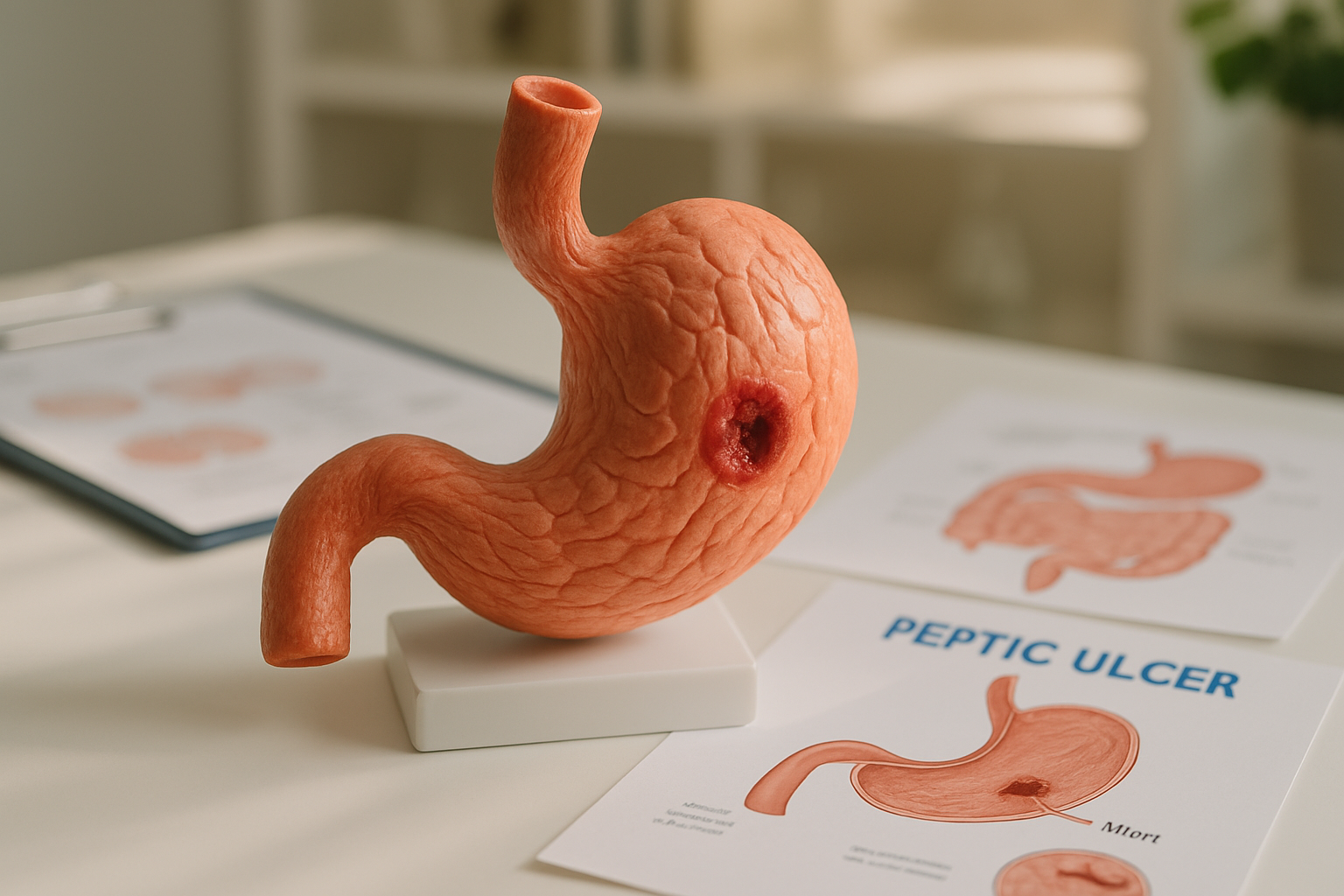
Peptic ulcers are sores that develop on the inner lining of the stomach or the upper segment of the small intestine, commonly causing abdominal pain. There are two types of peptic ulcers: gastric ulcers, which occur in the stomach, and duodenal ulcers, which occur in the small intestine.
Identifying Symptoms
The hallmark symptom of a peptic ulcer is a burning stomach pain that may worsen when the stomach is empty or at night. Other potential symptoms include:
- Heartburn
- Fatty food intolerance
- Nausea
- Bloating or belching
In some cases, ulcers may not present noticeable symptoms until complications arise, such as:
- Dizziness
- Changes in appetite
- Unexplained weight loss
- Dark stools or blood in vomit
Common Causes
Loading flowchart…
Various factors contribute to the development of peptic ulcers. The primary causes include:
- Helicobacter pylori infection: This bacterium disrupts the mucous barrier protecting the stomach lining, leading to ulcer formation.
- Use of nonsteroidal anti-inflammatory drugs (NSAIDs): Regular use of medications like ibuprofen or naproxen can irritate the stomach lining, increasing ulcer risk.
- Combination with other medications: Certain drugs, such as anticoagulants or SSRIs, can elevate the risk of ulcer development, particularly when used with NSAIDs.
While stress does not directly cause peptic ulcers, it can exacerbate existing conditions, making management crucial for those diagnosed.
Comments (0)
Loading comments…
Checking sign-in status…