
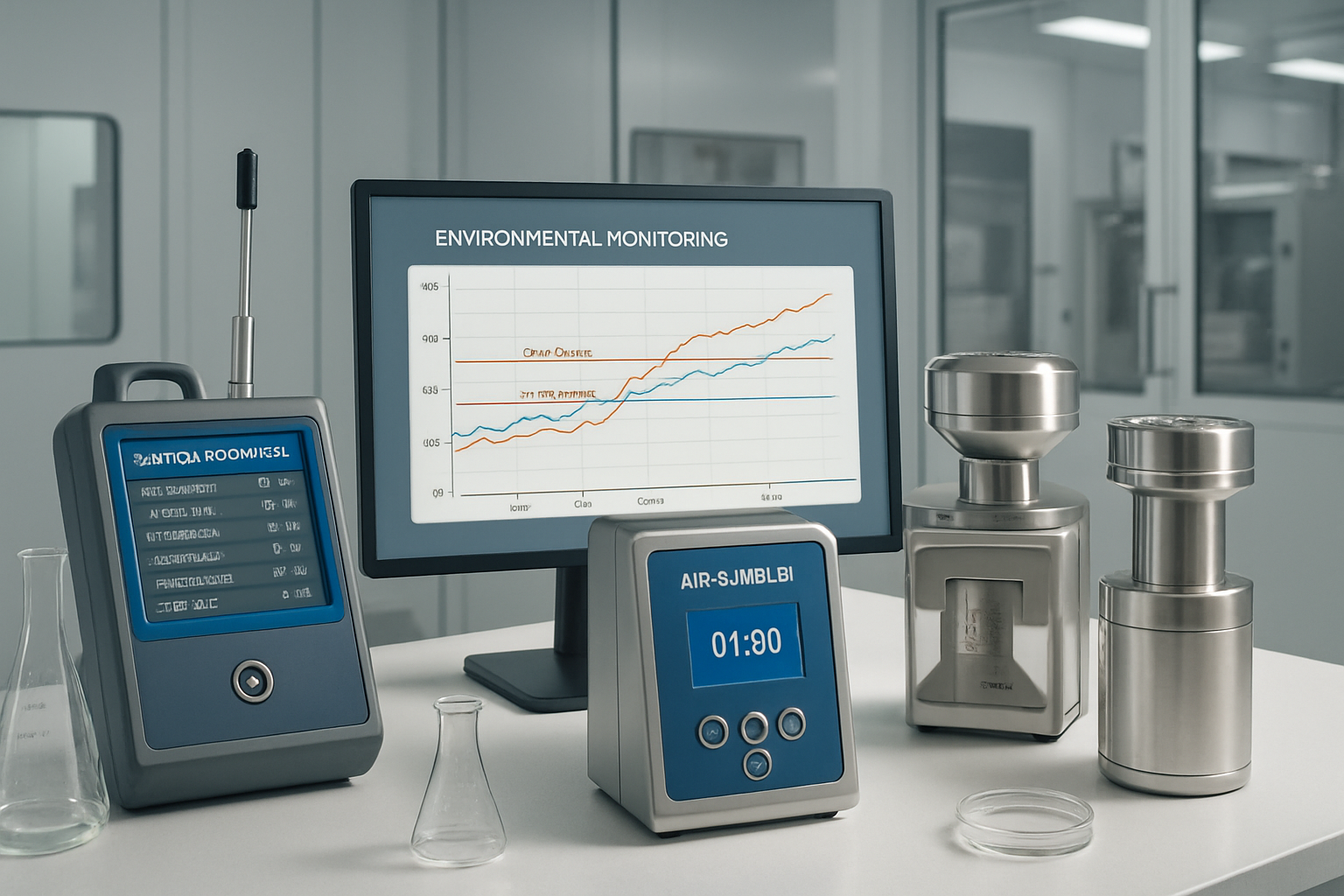
Effective environmental monitoring in sterile product manufacturing relies on establishing data-driven alert and action levels. These levels must reflect operational conditions and be regularly reviewed to ensure product quality and patient safety.
In the context of sterile product manufacturing, effective environmental monitoring is vital due to its direct impact on product quality and patient safety. Regulatory bodies such as the USFDA, EMA, and WHO mandate well-defined alert and action levels for environmental monitoring. It's insufficient to simply establish static limits; manufacturers must leverage data to create relevant alert and action levels that reflect actual operational conditions.
Understanding Environmental Monitoring Trending

Environmental monitoring trending involves analysing data systematically over time from clean rooms and controlled environments. Key sources for this data include viable and non-viable particle counts from settle plates, contact plates, and active air sampling, along with surface swabs and other utility samples like WFI and compressed air. This trending is essential for detecting potential issues before they escalate into serious compliance failures or contamination events in the manufacturing process.
Differentiating Between Alert and Action Levels
Before implementing alert and action levels, it is crucial to understand the distinctions between the two:
- Alert Level: This is a predetermined microbiological or particle count that signals a deviation from normal conditions. While it does not signify immediate risk to the product, it necessitates increased vigilance and investigation to determine the cause.
- Action Level: This level indicates a significant risk of contamination and loss of control. If this level is exceeded, immediate corrective actions must be taken, and a thorough impact assessment is required.
The Importance of Data-Driven Levels
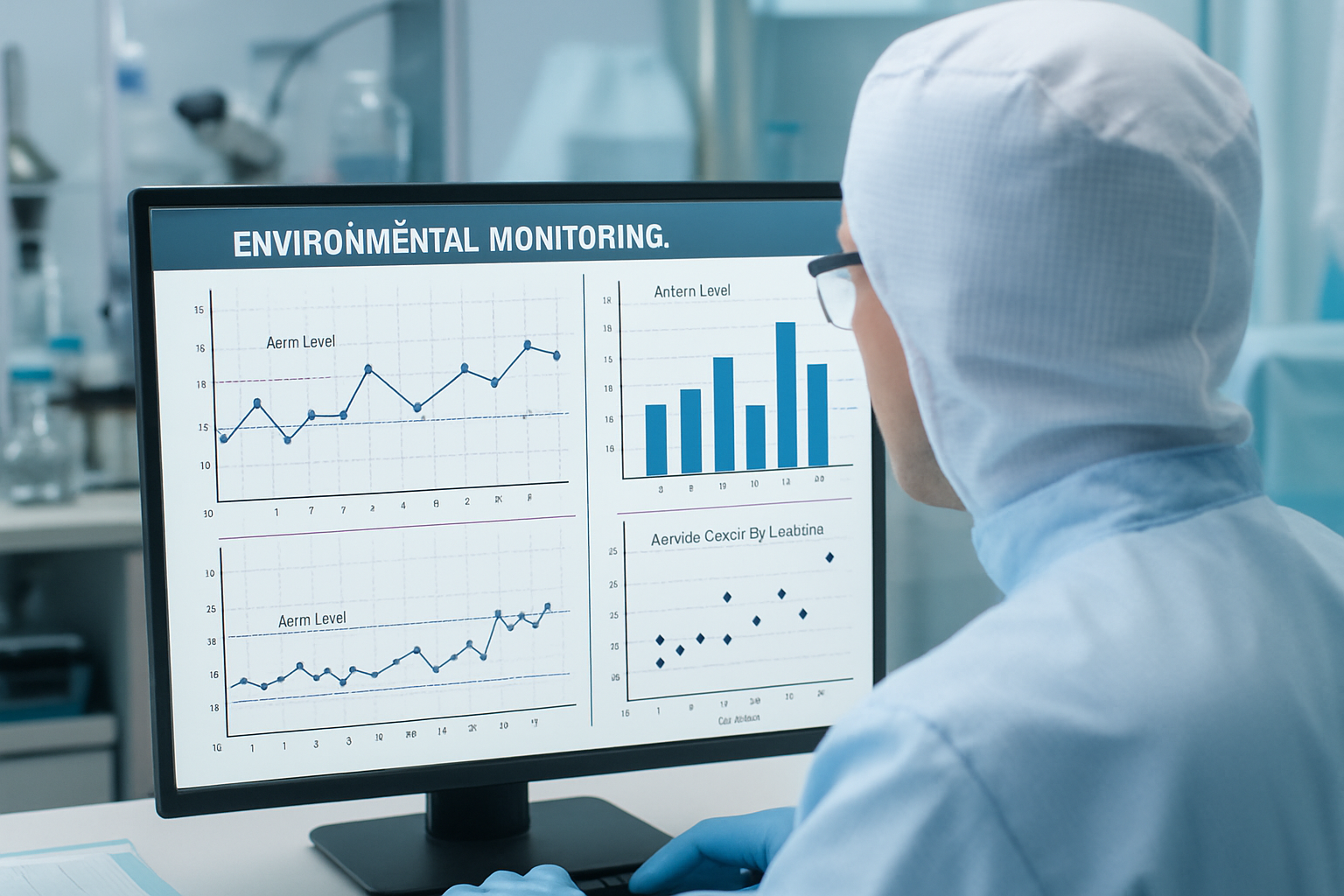
Some organizations establish alert and action levels by simply adopting regulatory clean room classifications without considering their specific operational data. However, regulatory agencies now require that these levels be grounded in facility-specific data. By employing trending analysis over time, companies can accommodate variables such as seasonality and operator performance across different shifts. Data-driven levels yield realistic thresholds based on actual operational performance, reducing false alarms and enabling early detection of deviations before they have a detrimental impact on product quality.
Steps for Setting Alert and Action Levels
Loading flowchart…
Overview: step 1: Collect and Organize Historical Data
Begin by gathering environmental monitoring data from all sampling points over a period of 6 to 12 months. Ensure that the data is categorized according to sampling type, such as air sampling, surface sampling, personnel monitoring, and utility sampling, while also noting environmental conditions during sampling.
Step 2: Conduct Statistical Analysis
Regulatory guidelines like USP advocate for a statistical approach to establish alert and action levels. Methods such as the 2 Sigma and 3 Sigma approaches can be applied:
- Alert Level: Mean + 2 Standard Deviations (SD)
- Action Level: Mean + 3 Standard Deviations (SD)
For instance, if the average count is 1 CFU per plate and the standard deviation is 1, the calculations would yield an alert level of 3 CFU and an action level of 4 CFU.
Overview: step 3: Adhere to Regulatory Cleanroom Limits
When calculating alert and action levels based on internal data, ensure that these levels do not exceed established regulatory limits. For example, if the EU GMP Annex 1 specifies a maximum of 1 CFU for a Grade A clean room, and your data suggests an alert at 2 CFU, this is invalid as it surpasses regulatory expectations.
Step 4: Tailor Levels to Different Sample Types
It is essential to differentiate limits for various types of samples, such as personal monitoring versus utility monitoring. Each sample type carries different levels of risk and variability, making it inappropriate to apply uniform levels across all categories.
Step 5: Conduct Regular Trend Reviews
Perform monthly or quarterly trend analyses to monitor variations over time. Look for patterns, such as spikes in specific locations or seasonal fluctuations that might indicate operator-related issues. Update alert and action levels annually or following significant changes in operations, such as upgrades to HVAC systems or changes in cleaning agents.
Responding to Alert and Action Levels
Effective responses to exceeding alert and action levels are essential:
- If an alert level is exceeded, review environmental conditions, HVAC performance, and cleaning records. Augment monitoring frequency temporarily and consider retraining operators as needed.
- In the case of an action level being exceeded, quarantine the affected batch until a comprehensive assessment has been completed. Initiate a full investigation that includes root cause analysis, execute CAPA measures, and meticulously document all actions taken in the deviation management system.
Overview: common Mistakes in Establishing Alert/Action Levels
Several prevalent errors occur when defining alert and action levels, including:
- Setting levels based solely on regulatory guidelines without supporting trending data.
- Failing to segregate data by location or sample type.
- Neglecting to revise limits following changes in processes or facilities.
- Ignoring shift-based and seasonal variations.
- Treating every alert as an action, leading to investigation fatigue.
Regulatory Guidance for Reference
It is crucial to remember that establishing alert and action levels is not merely a compliance formality. Properly conducted, it serves as a proactive system for detecting environmental drifts before they impact product quality. Key references include:
- EU GMP Annex 1 (2023) – Provides clear expectations for data-driven EM programs.
- USP – Discusses microbiological control and monitoring of cleanrooms using statistical methods.
- FDA Guidance on Sterile Drug Products (2004) – Outlines risk-based EM expectations.
- ISO 14698 – Focuses on biocontamination control.
- PDA Technical Report 13 – Addresses EM trend analysis.
By implementing a data-driven approach to environmental monitoring, pharmaceutical manufacturers can create an effective system that safeguards product integrity and patient safety.
Overview: frequently Asked Questions about Environmental Monitoring Trending
Overview: q1. What constitutes environmental monitoring (EM) trending?
Environmental monitoring entails the analysis of microbiological and particle data collected from controlled environments, allowing for the identification of patterns and potential contamination threats.
Q2. What is the minimum data requirement for setting alert and action levels?
Regulatory bodies recommend a minimum of 6 to 12 months of data from each sampling location to capture variability across different conditions.
Overview: q3. Should different sample types share the same alert and action levels?
No, due to the differing levels of risk and variability, it is essential to define separate alert and action levels for each sample type.
Overview: q4. How frequently should alert and action levels be reviewed?
These levels should be reassessed annually or following significant operational changes, such as upgrades or shifts in production processes.
Q5. What tools are applicable for trending EM data?
Common tools include spreadsheets, laboratory information management systems, and quality management software.
Q6. What significance does personnel monitoring have in trending?
Personnel are a significant source of contamination in cleanrooms. Monitoring personnel data, such as glove prints and gown contact plates, helps detect contamination risks associated with individual operators.
Q7. Is it possible to lower alert and action levels over time?
Yes, if consistent low counts are observed in a clean room, levels can be reduced to tighten control, provided this change is scientifically justified and documented.
Q8. Why has trending become increasingly important?
Regulatory agencies now place greater emphasis on data-driven approaches to environmental monitoring, shifting from reactive measures to proactive risk management in line with modern quality systems.
Comments (0)
Loading comments…
Checking sign-in status…