
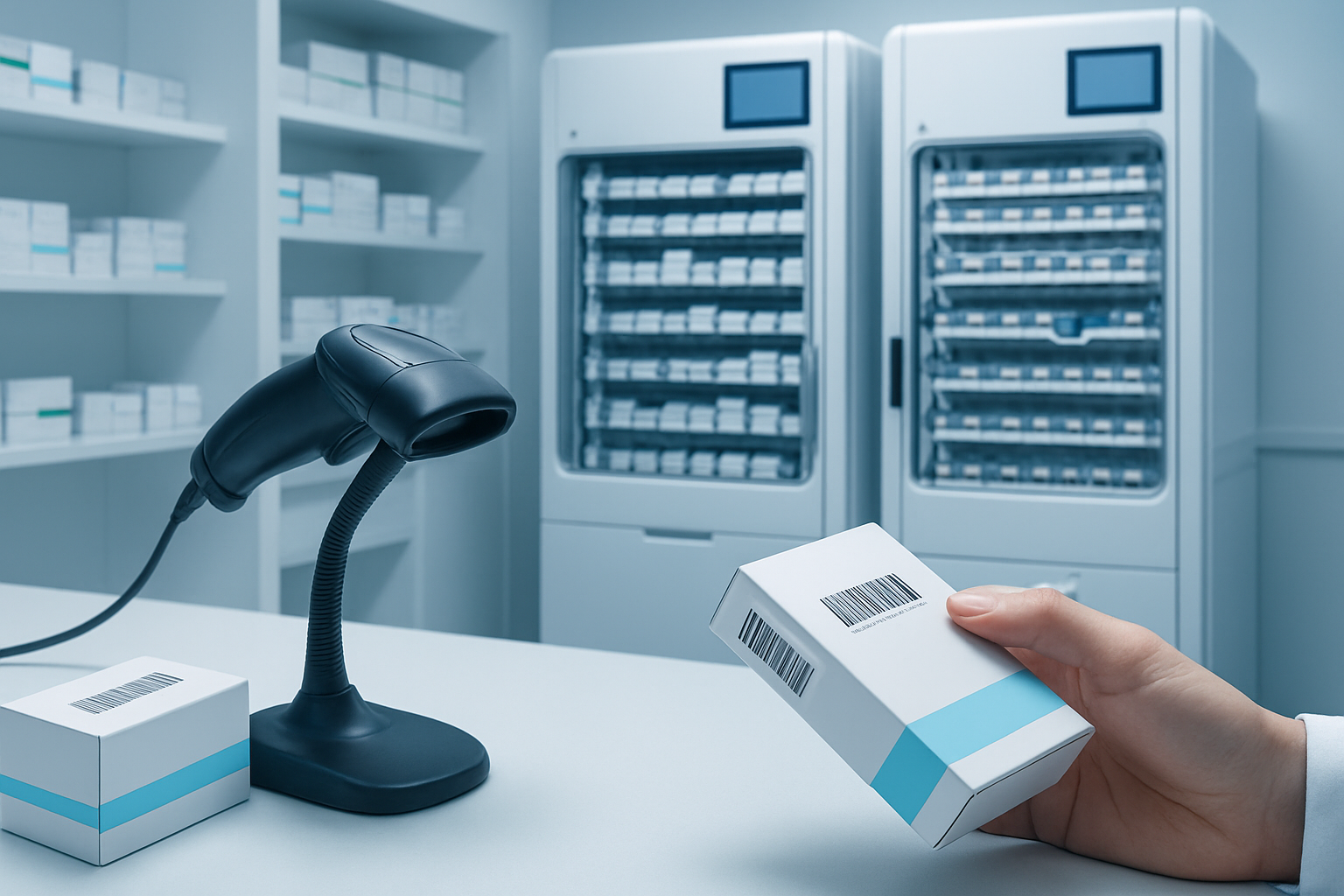
Barcode technology enhances inventory management and drug dispensing in pharmacies by enabling accurate tracking and reducing manual entry errors. Automated dispensing systems further streamline operations and improve patient safety by minimizing medication errors and securing controlled substances.
Barcode technology plays a crucial role in the pharmaceutical industry, facilitating efficient inventory management and accurate drug dispensing. With over one million types of barcodes available, this technology has transformed how products are tracked and identified.
Functionality of Barcode Systems

A barcode is a rectangular image composed of parallel lines of varying widths and lengths. Scanners, including mobile devices equipped with barcode readers, interpret these barcodes. In a pharmacy setting, barcodes are printed on products to store essential information for future identification, enhancing the overall inventory management process.
Barcodes streamline various operations within retail and pharmacy environments, enabling precise tracking of stock levels, updating inventories, and applying discounts. The most common barcode formats include UPC-A, EAN-8, Code 39, UPC-E, and EAN-13, with UPC and EAN being the most widely used. The advantages of employing barcodes include:
- Increased data accuracy, reducing manual entry errors.
- Minimal training required for personnel, as barcode scanners are user-friendly.
- Enhanced inventory control, leading to improved operational efficiency.
- Cost-effectiveness, as generating barcodes incurs no significant expenses.
- Real-time data availability due to high-speed processing capabilities.
Barcode Scanning Process
Barcode scanners operate by generating an analogue signal that detects reflections from a red light illumination system. This signal is transmitted to a decoder, which validates the barcode and converts it into text, typically using a check digit for accuracy. The decoded information is then entered into a connected computer system, where machine learning algorithms can identify the product, thus accelerating inventory management processes.
Automated Drug Dispensing Solutions
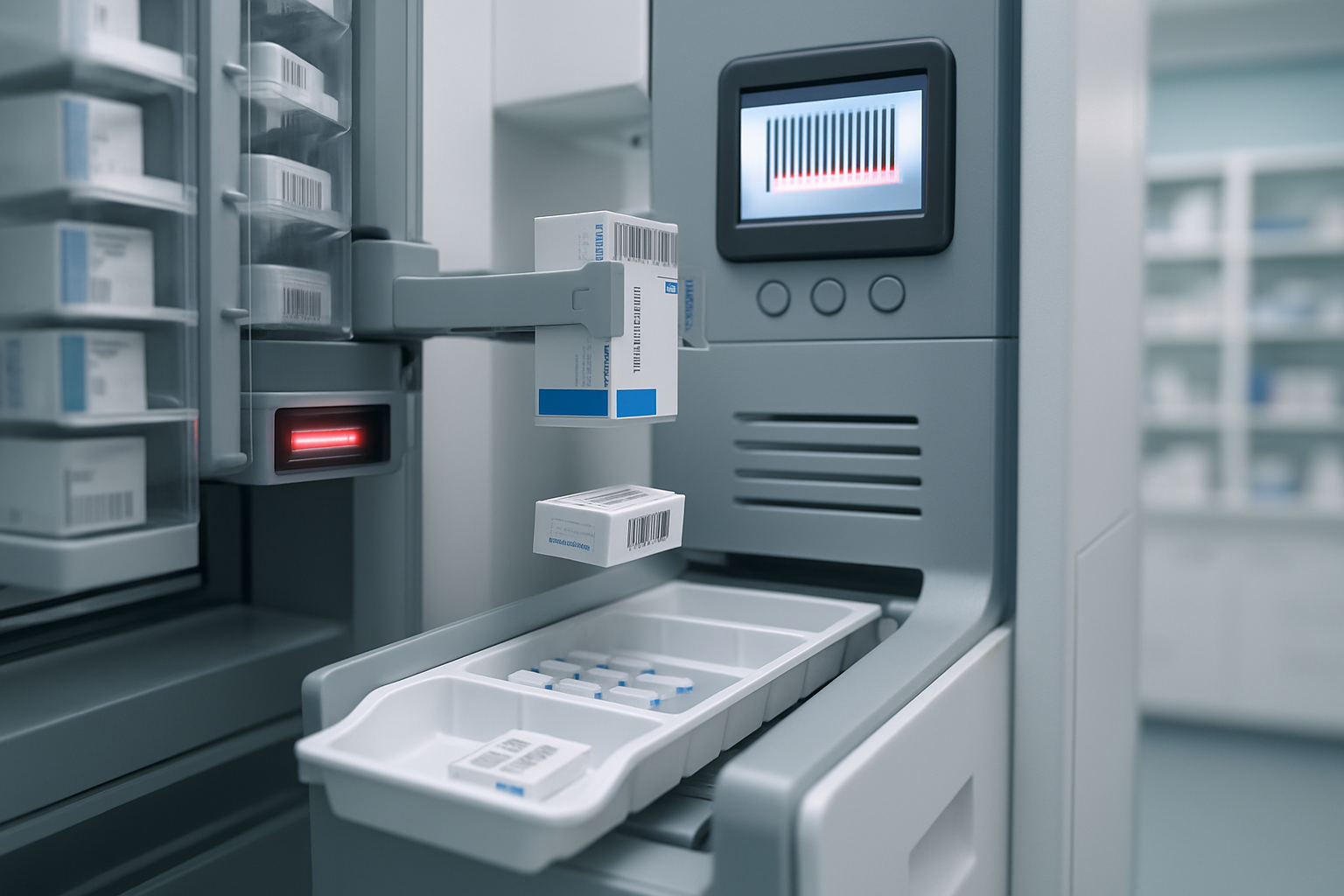
As healthcare demands rise and the need for efficiency increases, hospitals are turning to automated medication dispensing systems. These systems aim to reduce medication errors and streamline pharmacy operations, addressing the risks associated with human factors in drug dispensing.
Automated dispensing systems are a critical component of pharmacy automation, which also includes devices like tablet counters, storage and retrieval systems, compounding machines, and packaging equipment. While these systems do not resolve all issues in hospital settings, they significantly enhance medication management.
Role of Automated Dispensing Machines
Automated dispensing machines (ADMs) are computerised devices used in hospitals and nursing homes to securely store and dispense medications. These systems are often strategically placed in patient care areas, such as wards and emergency rooms, to provide quick access to commonly prescribed drugs, eliminating delays associated with traditional pharmacy delivery.
ADMs improve the workflow for nursing staff, allowing them to focus on patient care rather than administrative tasks. They also secure controlled substances with lockbox systems that require multi-factor authentication, ensuring robust inventory control and reducing the risk of drug theft. Furthermore, automated systems facilitate accurate patient billing and contribute to patient safety by minimising adverse drug reactions and identifying potential drug interactions.
In summary, the integration of barcode technology and automated dispensing systems in pharmacies is essential for enhancing operational efficiency and patient safety. As the healthcare landscape continues to evolve, these tools will remain vital in addressing the challenges faced by pharmaceutical professionals.
[[TABLE_1]]
Comments (0)
Loading comments…
Checking sign-in status…