

Phosphorylation processes are vital for ATP production in cellular energy metabolism, encompassing oxidative phosphorylation in mitochondria and substrate-level phosphorylation in the cytoplasm. Each mechanism operates differently, contributing to the overall energy balance in cells.
Phosphorylation processes play a crucial role in cellular energy metabolism, particularly in the context of ATP production. Understanding the mechanisms of oxidative phosphorylation and substrate-level phosphorylation is essential for comprehending how cells generate energy from nutrients.
Mechanisms of Oxidative Phosphorylation

Loading flowchart…
Oxidative phosphorylation, often referred to as electron transport-linked phosphorylation, accounts for the majority of ATP produced during cellular respiration. This process occurs in the inner mitochondrial membranes of eukaryotic cells and is a key component of how cells convert energy derived from nutrients into a usable form.
Overview of Oxidative Phosphorylation
This process culminates in the synthesis of ATP through the transfer of electrons. The high-energy electrons originate from metabolic pathways, such as glycolysis and the citric acid cycle. Once these electrons are transferred to the electron transport chain (ETC), they facilitate the pumping of protons across the mitochondrial membrane, creating an electrochemical gradient.
Electron Transport Chain Components
The electron transport chain consists of several key complexes:
- NADH-Coenzyme Q Oxidoreductase (Complex I): This complex initiates the electron transport process by oxidizing NADH and pumping protons into the intermembrane space.
- Succinate-Coenzyme Q Oxidoreductase (Complex II): This complex oxidizes succinate while reducing coenzyme Q10, allowing for further electron transfer.
- Coenzyme Q-Cytochrome C Reductase (Complex III): This enzyme catalyzes the oxidation of QH2 and facilitates the reduction of cytochrome c, contributing to the proton gradient.
- Cytochrome C Oxidase (Complex IV): The final complex in the chain, it transfers electrons to oxygen, reducing it to water and further establishing the proton gradient.
Chemiosmosis and ATP Synthase
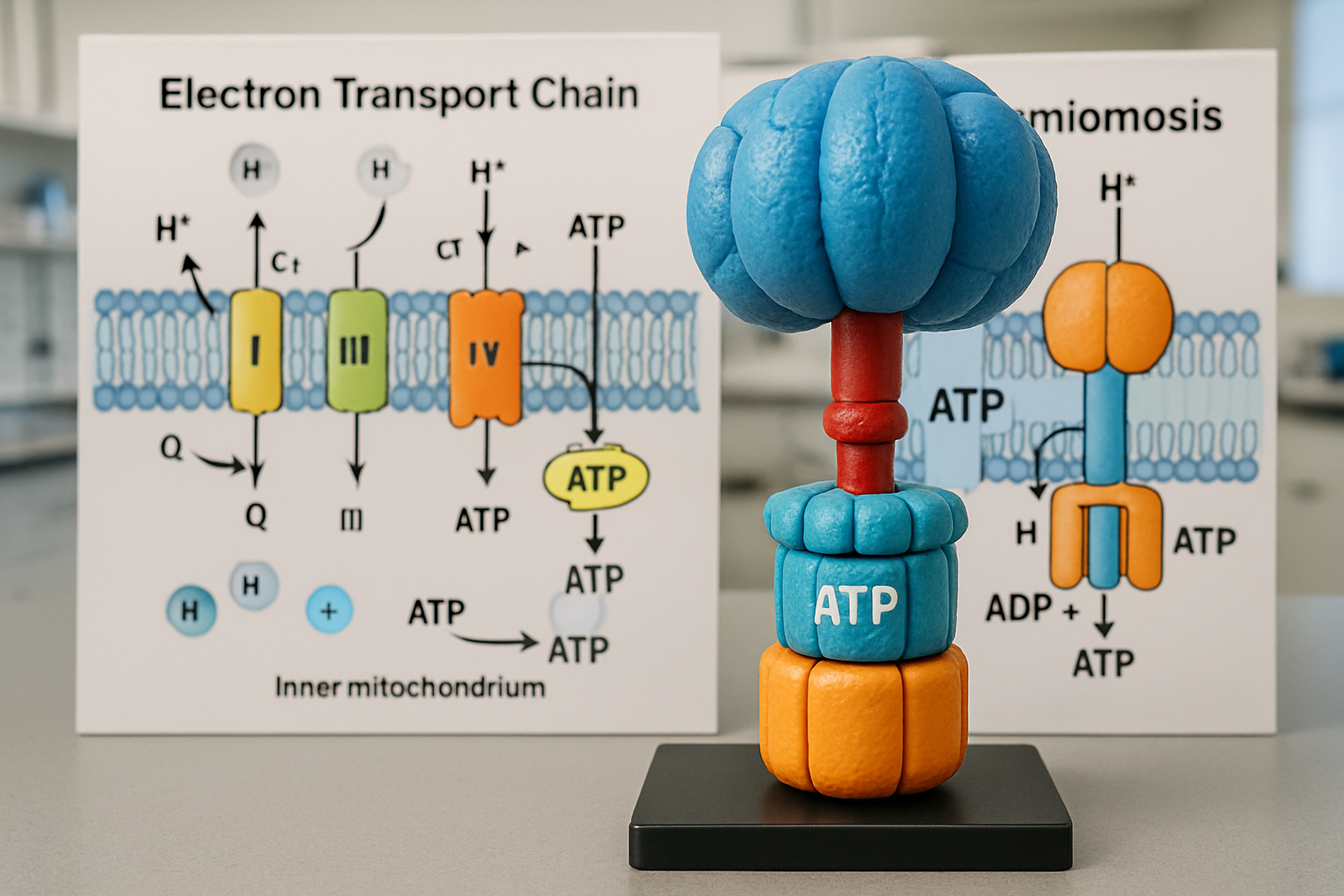
The proton gradient established by the electron transport chain is utilized by ATP synthase. As protons flow back into the mitochondrial matrix through this enzyme, ADP is phosphorylated to form ATP. This process is known as chemiosmosis and is critical for energy production in the cell.
Substrate-Level Phosphorylation Mechanisms
Substrate-level phosphorylation represents an alternative method for ATP synthesis that occurs independently of the electron transport chain. This process involves the direct transfer of a phosphate group from a high-energy substrate to ADP, generating ATP.
Characteristics of Substrate-Level Phosphorylation
This form of phosphorylation typically occurs in the cytoplasm during glycolysis and in the mitochondria during the citric acid cycle. Importantly, substrate-level phosphorylation does not rely on an electrochemical gradient, distinguishing it from oxidative phosphorylation.
Examples of Substrate-Level Phosphorylation
Key instances of substrate-level phosphorylation include:
- In glycolysis, 1,3-bisphosphoglycerate transfers a phosphate group to ADP to form ATP.
- During the citric acid cycle, GTP is produced, which can be readily converted to ATP.
- The enzyme creatine phosphokinase catalyses the transfer of phosphate from phosphocreatine to ADP in muscle tissues.
Comparative Overview of Phosphorylation Mechanisms
While both oxidative and substrate-level phosphorylation result in the production of ATP, they operate through different mechanisms and energy sources. Oxidative phosphorylation relies on the electron transport chain and the subsequent creation of a proton gradient, whereas substrate-level phosphorylation involves direct chemical reactions that transfer phosphate groups to ADP.
In summary, these processes are integral to cellular metabolism, with each contributing to the overall energy balance in living organisms. Understanding their mechanisms allows for a greater appreciation of how cells manage energy production and utilization.
Comments (0)
Loading comments…
Checking sign-in status…