

A structured validation sampling strategy is essential in pharmaceutical manufacturing to ensure process control and product quality. Key considerations include identifying critical attributes, ensuring representative samples, and justifying sample size and frequency based on scientific reasoning and risk assessment.
In pharmaceutical manufacturing, a well-structured validation sampling strategy is crucial for demonstrating that processes are under control and consistently yield quality products. This strategy encompasses what will be sampled, the origin of samples, the quantity, timing, and how the collected data will substantiate process control. A flawed sampling plan can undermine the validity of an otherwise sound validation effort.
Identifying Key Attributes for Sampling
The initial step in developing a sampling strategy is to identify the specific process or quality attribute that needs validation. Instead of merely asking how many samples are necessary, it is more pertinent to determine which critical quality attributes (CQAs) or critical process parameters (CPPs) the sampling will address. For instance, validating blend uniformity requires different considerations compared to cleaning validation. The sampling approach must align with the intended outcomes of the validation study.
Ensuring Samples Reflect the Process

Before executing any sampling, it is vital to ascertain that the samples collected are representative of the product. This involves considering various factors such as:
- The start, middle, and end of the manufacturing run
- Locations of equipment used
- Stages of the processing
- Batches processed
- Operational shifts or conditions
- Worst-case scenarios
For example, when validating a liquid product mixed in a tank, it is insufficient to sample only at the tank outlet, as this may not account for potential stratification. Instead, samples should be taken throughout the mixing process to ensure uniformity.
Sample Locations Informed by Risk Assessment
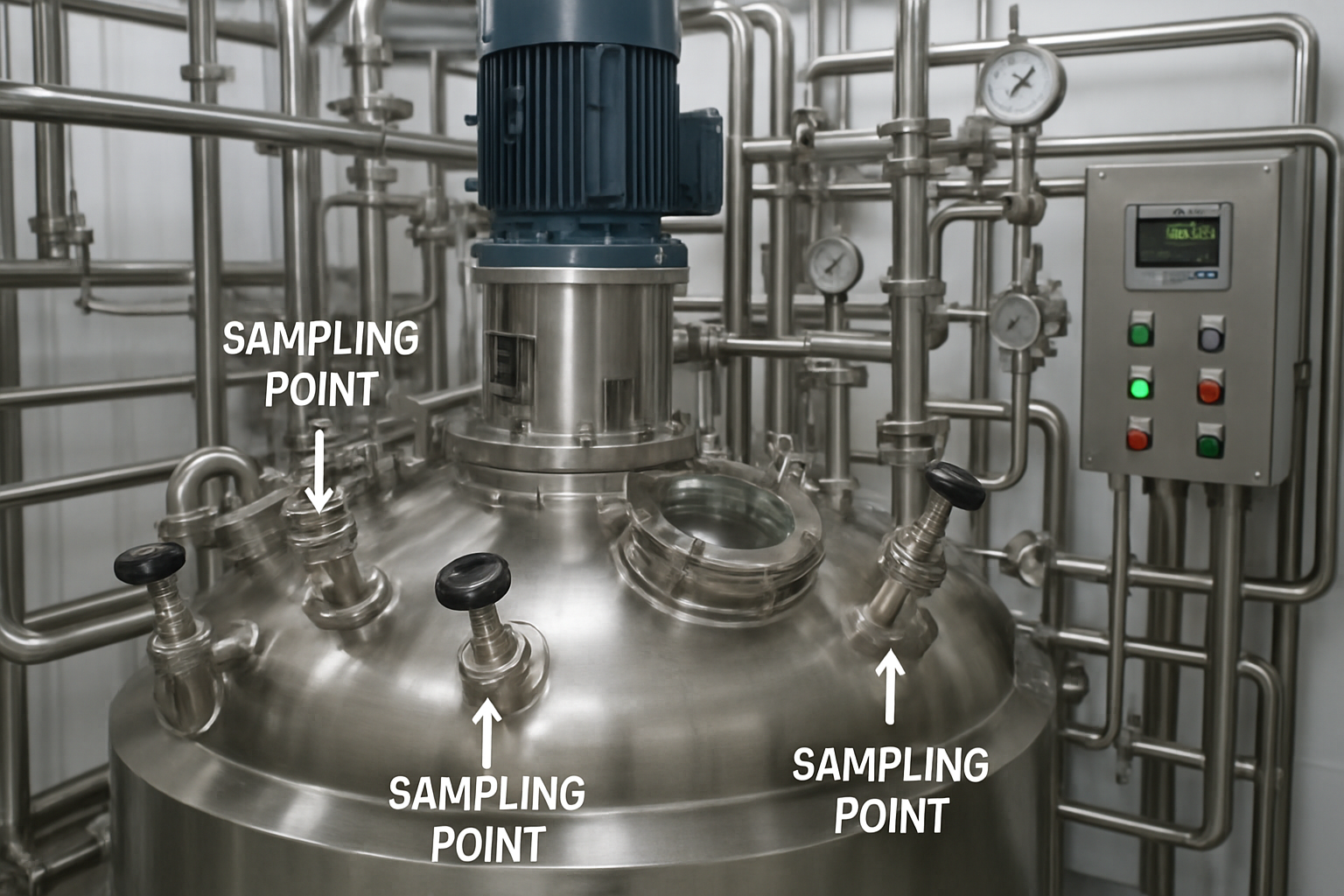
The selection of sampling locations should be grounded in a thorough risk assessment. This is particularly critical in contexts such as cleaning validation and environmental monitoring. For instance, in cleaning validation, it is essential to sample from areas that are typically challenging to clean, such as gaskets and joints, rather than only from easily accessible surfaces. In process validation, sampling locations should be determined by the design of the process itself.
Determining Sample Size
There is no one-size-fits-all answer to how many samples are necessary. The appropriate number must be justified based on scientific reasoning, taking into account the variability of the process, the associated risks, batch size, and the complexity of the operation. The FDA advises that a sufficient number of samples should be collected during process performance qualification (PPQ) to achieve a desired level of statistical confidence. Simply stating that three samples are adequate without a scientific rationale is insufficient.
Significance of Sampling Frequency
The frequency of sampling is critical for monitoring process behaviour over time. For example, if a parameter fluctuates during a lengthy production run, collecting only the first and last samples may miss important variations. The FDA emphasises that PPQ requires more frequent sampling compared to routine production, which aids in determining optimal regular sampling levels.
Justifying Worst-Case Sampling
When identifying worst-case scenarios for sampling, it is essential to base selections on thorough risk assessments rather than arbitrary choices. For cleaning validation, a cleaning product should not be deemed worst-case without evaluating its solubility, potency, and cleanability. For process validation, worst-case conditions should challenge the process while still falling within acceptable limits for critical parameters.
Avoiding Common Sampling Errors
One frequent pitfall in sampling is designing a plan based on convenience rather than the needs of the validation process. Another common mistake is altering the sampling strategy in response to unexpected test results. Any changes to the sampling plan must be documented and rationalised to understand their impact on the validation outcomes.
QA Review Prior to Protocol Approval
Loading flowchart…
Before approving a validation protocol, quality assurance should critically assess several elements:
- Is there a scientifically justified sampling scheme for each critical attribute?
- Are the chosen sampling sites supported by rationale?
- Is the sample size justified based on risk or statistical analysis?
- Does the frequency of sampling account for process variability?
- Are the identified worst-case conditions adequately justified?
- Have the sampling methods been validated as necessary?
- Were acceptance criteria established prior to sampling?
- Can the data substantiate successful validation?
- Is there a proper system for sample identification and data management?
Integrating Sampling into the Validation Framework
Validation sampling should not be viewed as a standalone laboratory task but rather as part of a comprehensive scientific argument supporting the effectiveness of a manufacturing process. An effective sampling strategy integrates risk assessment, process knowledge, and the rationale for sample selection and frequency. If the sampling plan fails to articulate the variability it seeks to capture, the validation effort is incomplete. The ultimate goal is to gather data that accurately reflects the validated process, thereby providing reliable evidence of its controlled state.
[[TABLE_1]]
Comments (0)
Loading comments…
Checking sign-in status…