
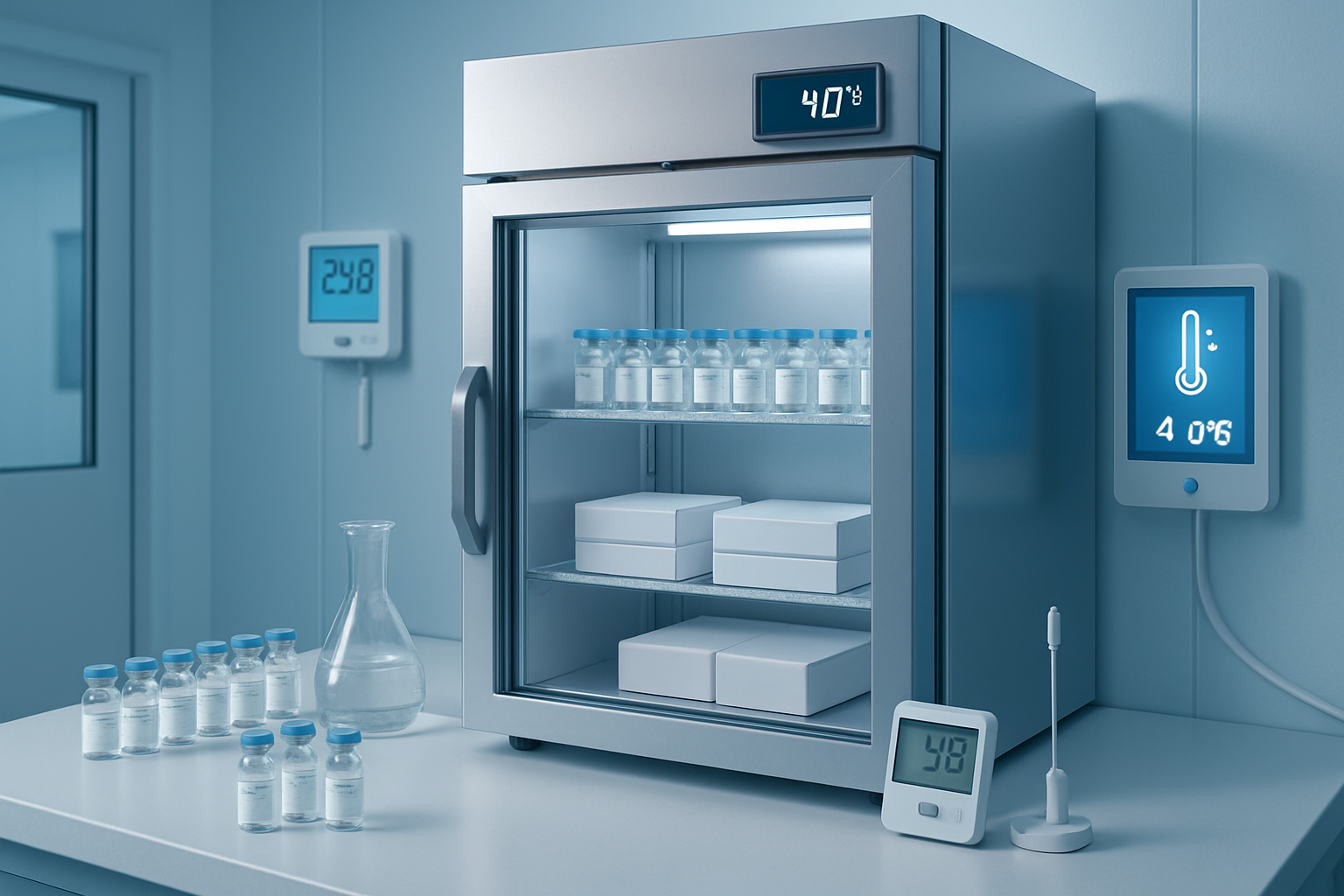
Maintaining the integrity of temperature-sensitive pharmaceuticals requires robust cold chain validation processes. This includes temperature mapping, equipment verification, and continuous monitoring to ensure compliance with regulatory standards.
In the pharmaceutical industry, maintaining the integrity of temperature-sensitive products is critical. The cold chain encompasses all methods necessary to keep these products within defined temperature ranges throughout their lifecycle, from manufacturing to delivery. Regulatory authorities require robust validation processes to guarantee that products remain effective and safe for patient use.
Understanding Cold Chain Systems

A cold chain system encompasses the equipment and procedures designed to maintain specified temperature conditions for pharmaceuticals. This includes:
- Storage solutions such as refrigerators and freezers
- Transport systems including refrigerated vehicles
- Monitoring devices to track temperature
Typical temperature requirements for sensitive products are:
- Refrigerated items: 2°C to 8°C
- Frozen products: -20°C
- Ultra-cold storage for specific vaccines: -70°C
Importance of Cold Chain Validation
Validating cold chain systems is essential to confirm that temperature requirements are consistently met. This validation helps:
- Preserve the quality and stability of pharmaceutical products
- Protect patient health by ensuring the effectiveness of medications
- Meet regulatory demands and maintain compliance
- Reduce financial losses associated with product spoilage
Even brief deviations from recommended temperature ranges can compromise product efficacy.
Compliance with Regulatory Standards
Cold chain validation must align with international regulations, which are crucial in establishing best practices. Key regulatory frameworks include:
1. Principles of Good Distribution Practice (GDP)
These principles outline acceptable practices for the storage and transport of pharmaceuticals.
Overview: 2. WHO Technical Report Series 961
This report provides guidance on temperature-controlled handling of pharmaceutical products.
3. Good Manufacturing Practices (GMP)
Manufacturers are required to validate all systems impacting product quality.
Overview: 4. ICH Q1A Stability Testing Guidelines
This guideline supports the requirements related to the stability of temperature-sensitive products.
Essential Components of Cold Chain Validation
Effective cold chain validation involves several critical elements:
Overview: 1. Temperature Mapping

Temperature mapping is a fundamental aspect of validation. This process involves placing sensors in various locations within storage and transport units to log temperatures over time. It identifies both high and low temperature zones, ensuring that every potential scenario, including worst-case conditions, is accounted for.
2. Equipment Verification
Verification of cold chain equipment is essential. It must be subjected to three validation processes:
- Installation Qualification (IQ): This step verifies proper installation according to specifications.
- Operational Qualification (OQ): This evaluates whether the system maintains appropriate temperature settings under controlled conditions.
- Performance Qualification (PQ): This tests the equipment's effectiveness during regular operational use.
3. Continuous Monitoring Systems
Ongoing temperature monitoring is vital. This includes using calibrated data loggers, implementing alarm systems to signal temperature breaches, and utilising real-time monitoring solutions.
4. Calibration of Measurement Devices
Temperature sensors must be regularly calibrated against recognised standards. It's critical to maintain comprehensive records of all calibration activities.
5. Packaging Assessment
Packaging must be validated to ensure it maintains temperature integrity during transportation. Essential components of this validation include:
- Testing the insulation performance of packaging materials
- Evaluating the effectiveness of gel packs and dry ice
- Simulating transport conditions to assess packaging behaviour
6. Verification of Transport Processes
All transport routes must be verified through comprehensive assessments. This includes:
- Route qualification
- Seasonal variation studies
- Worst-case scenario testing
7. Risk Evaluation
Conducting a thorough risk assessment identifies potential failure points, including equipment malfunction, power outages, transportation delays, and human error. A risk-based approach enhances system reliability.
Steps in the Cold Chain Validation Process
Loading flowchart…
Step 1: Define Validation Criteria
Establish the temperature ranges and identify product sensitivities, along with acceptance criteria for validation.
Step 2: Create a Validation Protocol
This includes defining the scope, objectives, equipment, and methods of testing.
Step 3: Carry Out Qualification Tests
Complete the IQ, OQ, and PQ processes, documenting all findings.
Step 4: Execute Temperature Mapping
Collect and analyse temperature data to evaluate temperature distribution over time within the cold chain.
Step 5: Validate Shipping Conditions
Simulate actual shipping experiences to evaluate packaging and transportation effectiveness.
Overview: step 6: Review and Approve Results
Compile data and develop a validation report for necessary approvals.
Step 7: Ongoing Monitoring
Continuous temperature monitoring must be established, with a schedule for revalidation set.
Overview: best Practices for Cold Chain Validation
Overview: 1. Equipment Validation
Ensure all equipment is validated and functioning correctly.
2. Real-Time Monitoring Systems
Implement advanced monitoring systems with alert mechanisms.
3. Calibration Protocols
Maintain accurate records of sensor calibrations.
Overview: 4. Staff Training on Cold Chain Procedures
All personnel should be adequately trained in cold chain requirements.
5. Periodic Revalidation
Systems require revalidation, especially after any modifications.
6. Documentation of Validation Activities
Ensure thorough documentation for audit and compliance purposes.
Significance of Data Integrity
Reliable data integrity is vital for effective cold chain validation. Adherence to ALCOA+ principles ensures data is Attributable, Legible, Contemporaneous, Original, and Accurate. This fosters confidence in the validation outcomes.
Implications of Cold Chain Failures
Failures in the cold chain can lead to severe consequences such as:
- Degradation of pharmaceutical products
- Loss of product efficacy
- Threats to patient safety
- Regulatory penalties
- Financial repercussions and potential recalls
Developments in Cold Chain Validation
Advancements in technology are enhancing cold chain systems. Innovations include:
- IoT-based temperature monitoring solutions
- GPS tracking systems for transport
- Blockchain technology for supply chain transparency
- AI-driven predictive analytics to improve system reliability
To protect the safety and efficacy of temperature-sensitive pharmaceuticals, rigorous cold chain validation is required. This encompasses temperature mapping, equipment verification, continuous monitoring, and comprehensive risk assessments. Adhering to both Good Distribution Practices and Good Manufacturing Practices helps companies maintain product integrity and regulatory compliance.
Common Inquiries Regarding Cold Chain Validation
Overview: q1. What constitutes a cold chain system?
The cold chain refers to the controlled processes essential for preserving and transporting temperature-sensitive pharmaceuticals.
Q2. What is the significance of cold chain validation?
This validation guarantees that pharmaceuticals remain within specified temperature ranges throughout their journey.
Q3. Can you explain temperature mapping?
Temperature mapping involves tracking and recording temperatures throughout the cold chain, from storage to transport.
Q4. What are Good Distribution Practices?
Good Distribution Practices (GDP) are guidelines ensuring proper methods for the shipping and handling of pharmaceuticals.
Q5. What factors lead to temperature excursions?
Temperature excursions may occur due to equipment failures, electrical issues, or improper handling.
Q6. What is the recommended frequency for calibration?
Calibration should be performed according to company Standard Operating Procedures (SOPs) and relevant regulatory guidelines.
Q7. What does transport validation entail?
Transport validation tests and documents whether the temperature control systems employed during transportation maintain the required temperature range.
Q8. What are the consequences of a cold chain failure?
Failures can compromise product quality, jeopardise patient safety, and incur significant financial losses for companies.
Comments (0)
Loading comments…
Checking sign-in status…