
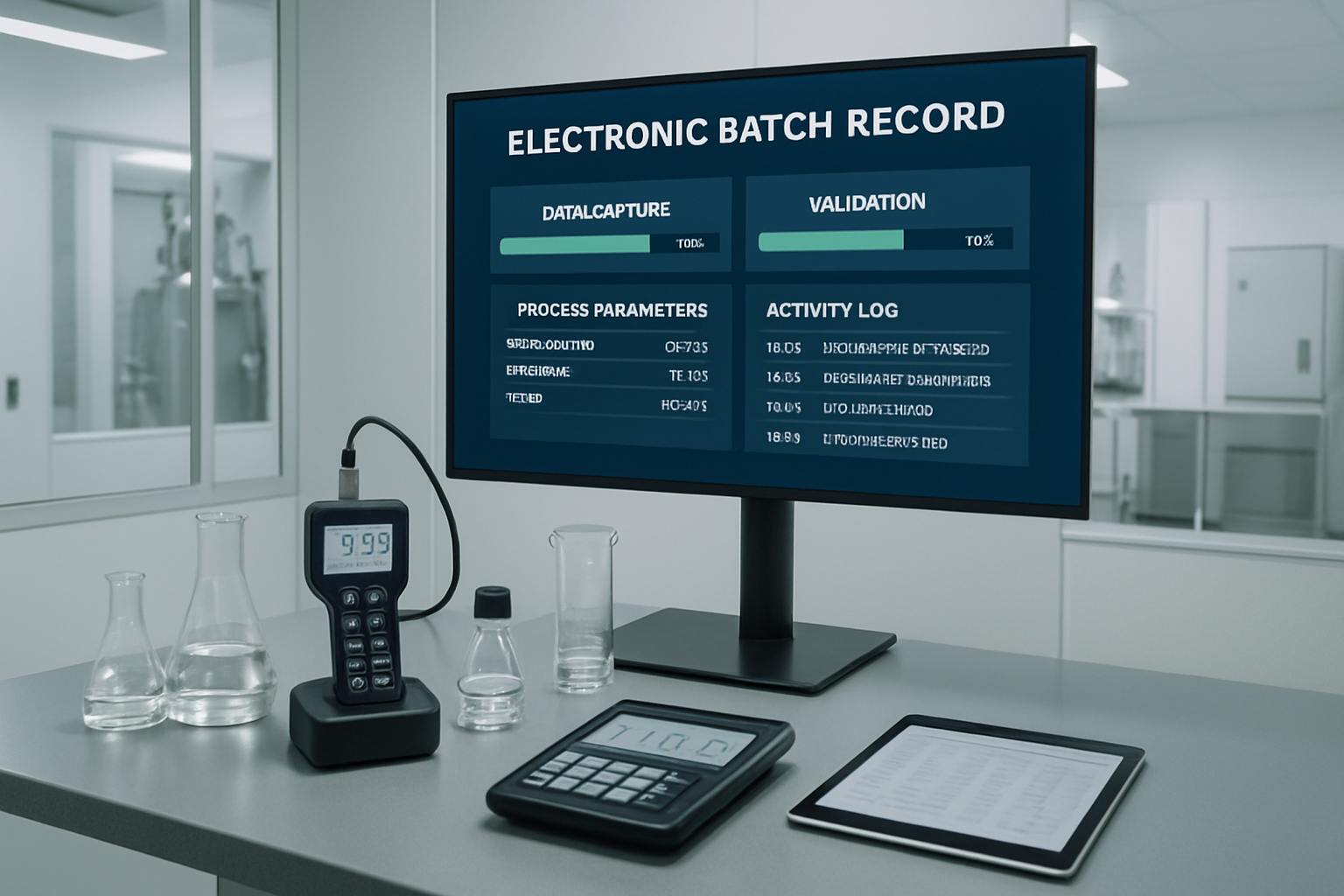
The shift to Electronic Batch Records (EBRs) in pharmaceutical manufacturing enhances data accuracy and integrity but requires a robust validation strategy to ensure compliance with regulatory standards. Key validation steps include planning, risk assessment, testing, and ongoing maintenance to uphold data integrity and operational accuracy.
The pharmaceutical sector is undergoing a substantial shift towards digitalisation, prominently reflected in the move from traditional paper-based records to Electronic Batch Records (EBRs). This transition not only modernises documentation procedures but also improves data accuracy and integrity within manufacturing processes. However, the introduction of EBR systems necessitates a robust validation strategy to ensure these systems perform correctly and comply with regulatory standards.
Defining Electronic Batch Records
An Electronic Batch Record (EBR) serves as the digital counterpart to the traditional batch manufacturing record, encompassing and managing all data relevant to the batch production process. EBR systems typically handle:
- Manufacturing instructions
- Process parameters
- In-process inspections
- Equipment usage records
- Operator inputs and approvals
These systems enhance real-time data capture, streamline automated workflows, and improve traceability compared to physical records.
Significance of EBR Validation

The validation of an EBR system is essential to confirm its operational accuracy and the reliability of the records produced. A lack of thorough validation can lead to significant risks, such as:
- Incorrect data capture
- Errors in production records
- Data integrity issues
- Non-compliance with regulations
Regulatory organisations, including the U.S. FDA, have established criteria for the validation of electronic systems and records in regulated manufacturing environments, particularly as outlined in 21 CFR Part 11.
Regulatory Framework for EBR Validation
EBR system validation must align with several key regulatory frameworks:
Compliance with 21 CFR Part 11
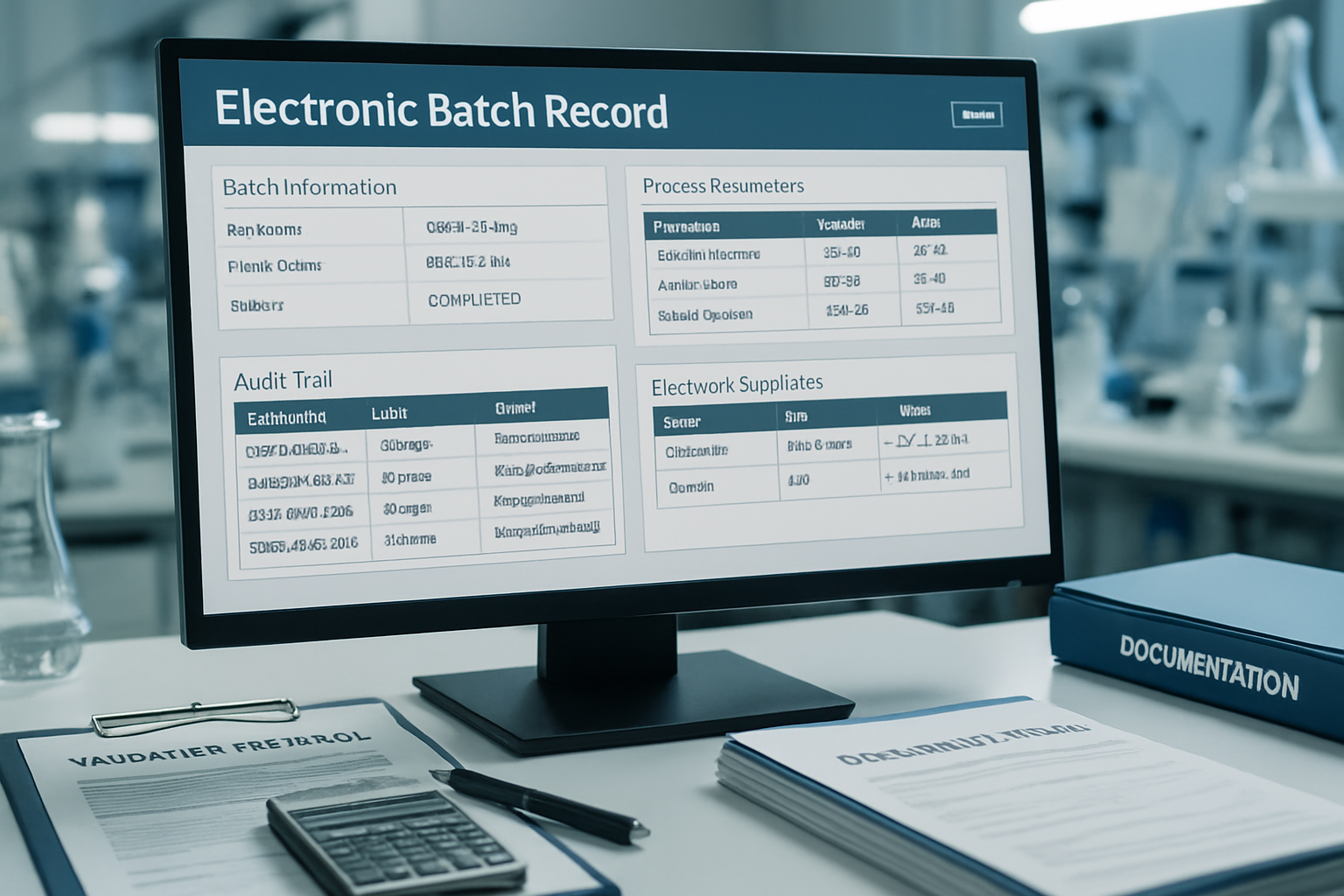
This regulation governs the use of electronic records and signatures, requiring features such as:
- Memorable user access
- Audit trails
- Electronic signatures
- Integrity controls over data
Good Manufacturing Practices (GMP)
GMP standards mandate validation for any system that influences product quality or data reliability.
Understanding GAMP 5
GAMP 5 provides a risk-based framework for the validation of computerised systems, including EBRs.
Overview of EBR Validation Strategies
A successful validation strategy is essential for demonstrating compliance and ensuring that the EBR system is appropriately qualified for its intended use. This strategy follows a lifecycle model throughout the project, from initial planning to ongoing maintenance.
Structured Approach to EBR Validation
Loading flowchart…
Initial Planning Phase
The validation process commences with defining the objectives and scope of the EBR system, which includes:
- Identifying system boundaries
- Establishing user requirements
- Conducting a risk assessment
- Formulating the Validation Plan
Overview: user Requirements Specification (URS)
The URS outlines the functionalities expected from the system and should encompass:
- Functional requirements
- Data handling specifications
- Access control and security measures
- Regulatory compliance needs
Overview: system Design and Configuration
This phase involves developing the system design based on information gathered from the URS and Software Requirements Specification (SRS).
Conducting Risk Assessments
Risk assessments identify critical elements within the system that may impact product quality and data integrity, guiding the prioritisation of validation efforts based on ICH Q9 Quality Risk Management principles.
Testing Procedures
The testing phase verifies whether the system operates as intended, typically involving:
- Installation Qualification (IQ): Ensures correct installation.
- Operational Qualification (OQ): Confirms proper system operation.
- Performance Qualification (PQ): Validates the system's performance in real production scenarios.
Validation of Data Integrity
Compliance with ALCOA+ principles is critical for the EBR system, requiring that:
- Data is accurately captured
- Secure audit trails are maintained
- Data access is controlled
- Preventative measures against data alteration are in place
Implementation and Launch
Upon successful validation, the system may be implemented, requiring careful planning for:
- User training
- Data migration verification
- System access control checks
Monitoring and Maintenance
Post-implementation, validation activities continue with:
- Periodic system reviews
- Software and hardware updates
- Change control management
Essential Aspects of EBR Validation
Maintaining Audit Trails
Audit trails document all system activities and changes, including:
- A record of data creation and modifications
- Details of who made changes, along with timestamps
- Secured formats that prevent alterations
Use of Electronic Signatures
Electronic signatures must be unique to users, secure, and legally equivalent to handwritten signatures.
Implementing Access Controls
Access controls dictate who can perform specific tasks, which can be enforced through:
- Role-based access
- Passwords
- User authentication
Ensuring Backup and Recovery
Robust backup and recovery strategies are crucial to safeguard data against potential losses.
Challenges Encountered in EBR Validation
Organisations may face several obstacles during the EBR validation process, including:
- Complex cross-system configurations
- Integration challenges with multiple systems
- Incomplete requirement documentation
- Insufficient documentation practices
- Frequent system updates
Such challenges can prolong validation timelines and elevate compliance risks.
Overview: recommended Practices for EBR Validation
Implementing a structured methodology enhances the validation process and outcomes. Effective practices include:
- Establishing clear, testable requirements
- Utilising a risk-based validation approach
- Maintaining thorough traceability
- Ensuring proper documentation
- Providing adequate training for end users
- Conducting regular system evaluations
Advantages of an Effective EBR System
A validated EBR system offers numerous benefits, such as:
- Reduction of manual errors
- Enhancement of data integrity
- Increased process efficiency
- Real-time process monitoring
- Improved audit preparedness
These advantages contribute to higher product quality and adherence to regulatory standards.
The Critical Role of Quality Assurance in EBR Validation
Quality Assurance (QA) plays an integral role in validating electronic batch record systems. Key responsibilities include:
- Reviewing validation documentation
- Approving validation protocols and reports
- Ensuring compliance with regulations
- Monitoring system performance
Through these activities, QA guarantees that EBR validation aligns with regulatory expectations.
Common Queries Regarding EBR Validation
Overview of an Electronic Batch Record (EBR)?
EBRs are digital systems designed for capturing batch production data.
Why is validation of EBR essential?
Validating an EBR system ensures that manufacturing data is accurately captured and complies with regulations throughout production.
What does 21 CFR Part 11 entail?
This regulation oversees the use of electronic records and signatures in e-records.
Overview of GAMP 5?
GAMP 5 outlines the validation methodology for computerised systems.
Overview: what are audit trails?
Audit trails are comprehensive records detailing system activities and data modifications.
What do IQ, OQ, PQ refer to?
These terms denote the varying levels of qualifications necessary for system approval.
How is data integrity upheld in EBRs?
Data integrity is maintained through robust security measures, audit trails, and access controls.
What are the benefits of implementing EBR systems?
EBR systems enhance manufacturing efficiency, effectiveness, and compliance.
Comments (0)
Loading comments…
Checking sign-in status…