
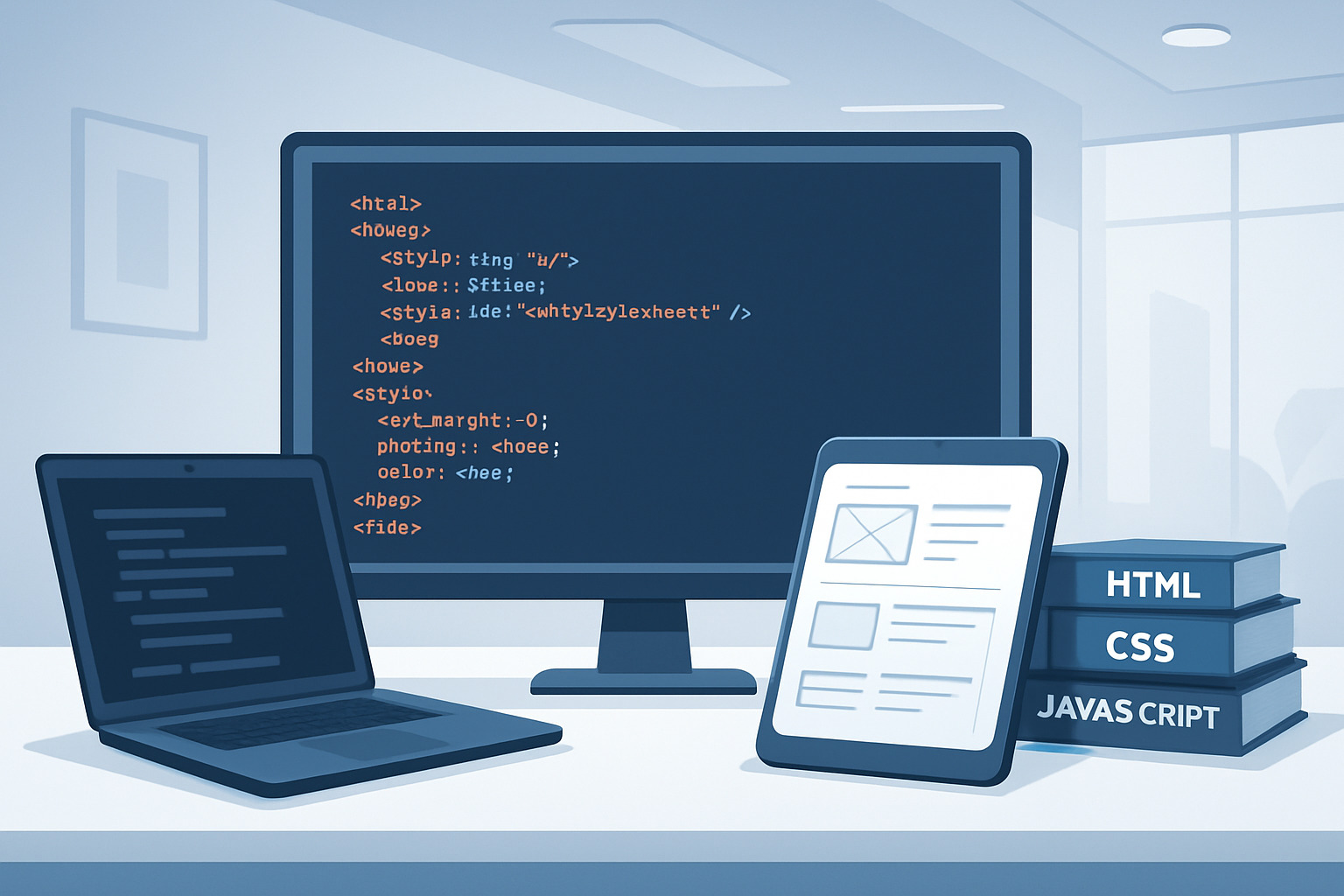
A solid understanding of HTML, XML, CSS, and programming languages is essential in web development, as each serves distinct roles in functionality and aesthetics. HTML structures content, XML manages data, CSS enhances visual appeal, and programming languages facilitate software development.
In the realm of web development, a solid understanding of various languages is crucial. HTML, XML, CSS, and programming languages each play distinct roles, contributing to the functionality and aesthetic of web applications.
Fundamentals of HTML

HTML, or Hypertext Markup Language, serves as the backbone of web pages. It structures content through a series of tags, allowing for the creation of links and the embedding of multimedia elements. The effectiveness of HTML lies in its ability to define how content is presented on the screen, thereby forming the architecture of a website.
Key Characteristics
- Easy to learn and modify, making it accessible for beginners.
- Facilitates effective presentation of information.
- Cross-platform compatibility, functioning seamlessly on various operating systems.
- Supports multimedia elements like images and videos, enhancing user engagement.
- Case insensitive, simplifying coding.
Uses of HTML
HTML serves multiple purposes in web development:
- Creating web pages with tags and hyperlinks that connect to other pages.
- Enabling navigation across the internet, where anchor tags play a vital role in linking pages.
- Embedding videos and images easily, with adjustable attributes for optimal display.
- Utilising client-side storage through HTML5 features like localStorage and IndexedDB, moving beyond traditional cookies.
Exploring XML

XML, or eXtensible Markup Language, is designed for data storage and transfer. Unlike HTML, which focuses on presentation, XML prioritises the structure and management of data, making it platform and programming language agnostic.
Defining Properties
XML is characterised by its emphasis on data handling:
- It is designed for the transportation and storage of data.
- It became a W3C recommendation on February 10, 1998, ensuring standardisation.
- XML requires user-defined tags, distinguishing it from HTML's predefined tags.
CSS: The Styling Language
Cascading Style Sheets (CSS) is a simple yet powerful language that enhances the visual appeal of web pages. It allows developers to style HTML documents without altering the underlying structure.
Benefits of Using CSS
- Streamlined maintenance, as changes can be made in one stylesheet to affect all linked pages.
- Time-saving, with reusable styles across multiple HTML documents.
- Enhanced aesthetics through a broader range of styling options compared to HTML alone.
- Improved search engine optimisation due to cleaner code.
- Support for offline browsing through caching mechanisms.
Insights into Programming Languages
Programming languages are essential for translating algorithms into executable programs. They enable communication between the programmer and the computer, facilitating the development of software applications.
Characteristics of Effective Programming Languages
An ideal programming language possesses several key attributes:
- Clarity and simplicity for ease of learning and use.
- Abstraction capabilities for managing complex structures.
- Portability across different systems.
- High efficiency in translating to machine language and executing tasks.
- Comprehensive documentation and structured development tools.
- Consistent syntax and semantics for reliable coding.
Comments (0)
Loading comments…
Checking sign-in status…