
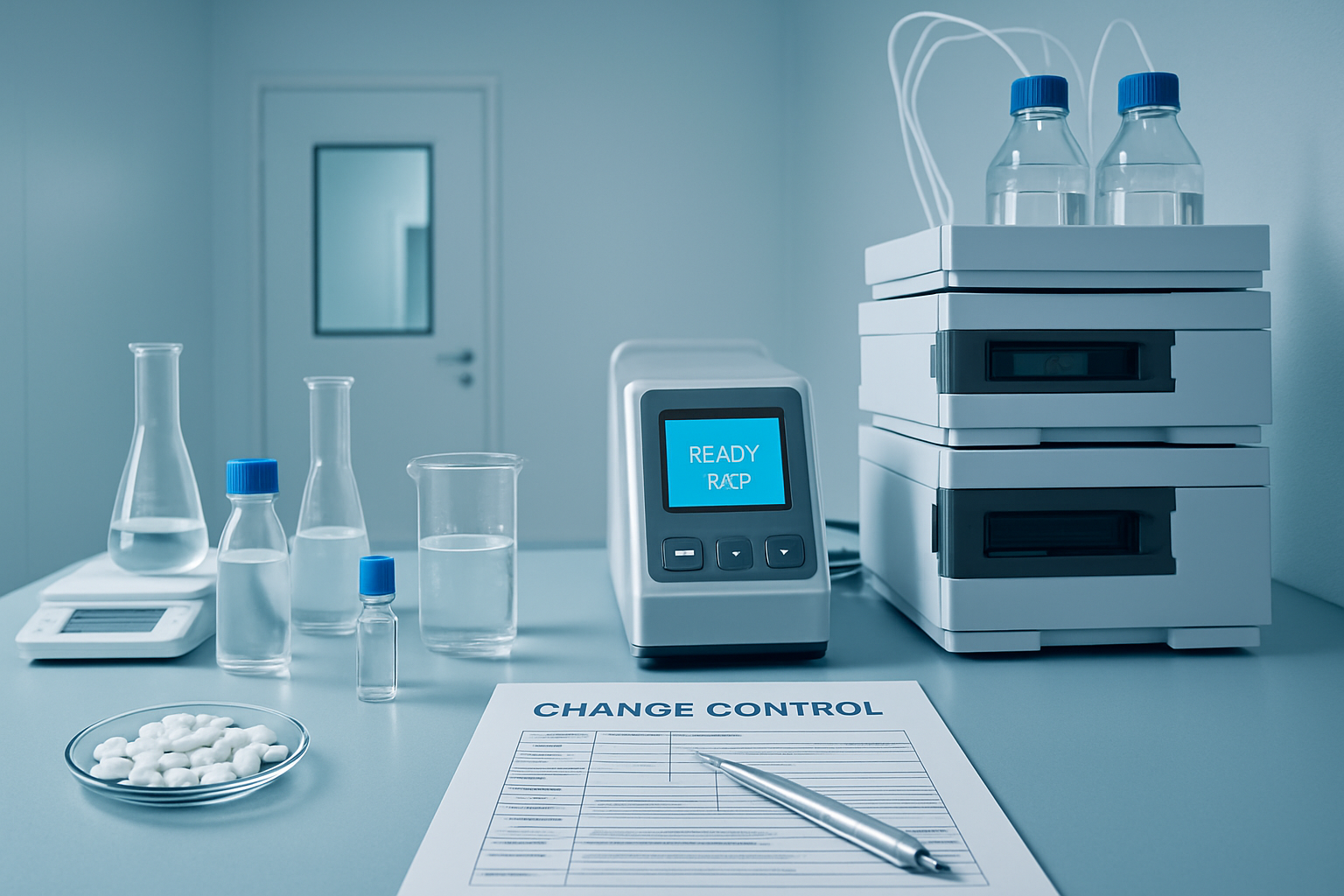
Change control is essential in pharmaceutical manufacturing to manage modifications and maintain validation status. Proper documentation and impact assessments are crucial to ensure compliance and product quality.
In pharmaceutical manufacturing, maintaining a validated state is crucial for ensuring the production of high-quality, safe products that comply with regulatory standards. Changes—whether related to equipment, processes, or systems—are inevitable in this environment. If not managed properly, these changes can jeopardize the integrity of validated processes. A robust change control system is essential for effectively managing these modifications.
Overview: fundamentals of Change Control and Validation

Change control provides a structured methodology for evaluating, approving, implementing, and documenting changes within the manufacturing process. This approach encompasses various elements, including:
- Equipment
- Utilities
- Manufacturing process configurations
- Raw materials and suppliers
- Analytical methods
- Computerized systems used in manufacturing
Validation ensures that a system operates consistently within specified requirements. Any alterations made through change control must be assessed to confirm that the validated state remains intact. Failure to follow change control procedures could result in the loss of validation status without timely detection.
Significance of Minor Changes
Many individuals mistakenly assume that only substantial changes impact validation. However, even minor modifications can have significant consequences. For instance:
- Replacing a small part in equipment may affect product performance.
- A software update may change how data is handled or stored.
- A small adjustment to a process step can alter the overall quality of the final product.
According to 21 CFR Part 11, changes to computerized systems could lead to compliance issues, underscoring that the risk associated with a change is more critical than its size.
Impact Assessment's Critical Role
Loading flowchart…
Conducting an impact assessment is vital in the change control process. It determines whether validation has been affected and identifies necessary actions. Key considerations for an impact assessment include:
- Identification of affected products or product lines and their intended uses
- Critical process parameters and their potential effects
- Equipment performance and the implications of the change
- Integrity of data before and after the change, including any need for data revalidation
Organisations often employ a risk-based approach, as outlined in ICH Q9, Quality Risk Management, to guide validation activities and prioritise efforts.
Areas of Validation Impacted by Changes
Changes can significantly affect multiple aspects of validation, often in interconnected ways. Key areas include:
Overview: equipment Qualification
Modifications to equipment may necessitate:
- Re-executing Installation Qualification (IQ)
- Conducting Operational Qualification (OQ) retests
- Verifying Performance Qualification (PQ)
Even slight adjustments, such as modifications to calibration ranges, require impact assessments.
Overview: process Validation
Changes to process parameters are particularly sensitive, as even minor modifications can lead to undesirable variations in product quality. For example:
- Adjusting mixing speed
- Altering drying temperature
- Changing batch size
Such changes may necessitate partial or complete revalidation of the process.
Overview: cleaning Validation
Factors impacting cleaning validation can include:
- Introduction of new products
- Changes in cleaning agents
- Modifications to equipment design
Each of these changes may affect residue limits or cleaning effectiveness and must be addressed accordingly.
Overview: computerized Systems
Given their critical role in data integrity, computerized systems require thorough evaluation. Changes warranting further assessment under 21 CFR Part 11 compliance include:
- Software application changes or updates
- Changes in system configurations
- Replacement of hardware components
Importance of Documentation and Traceability
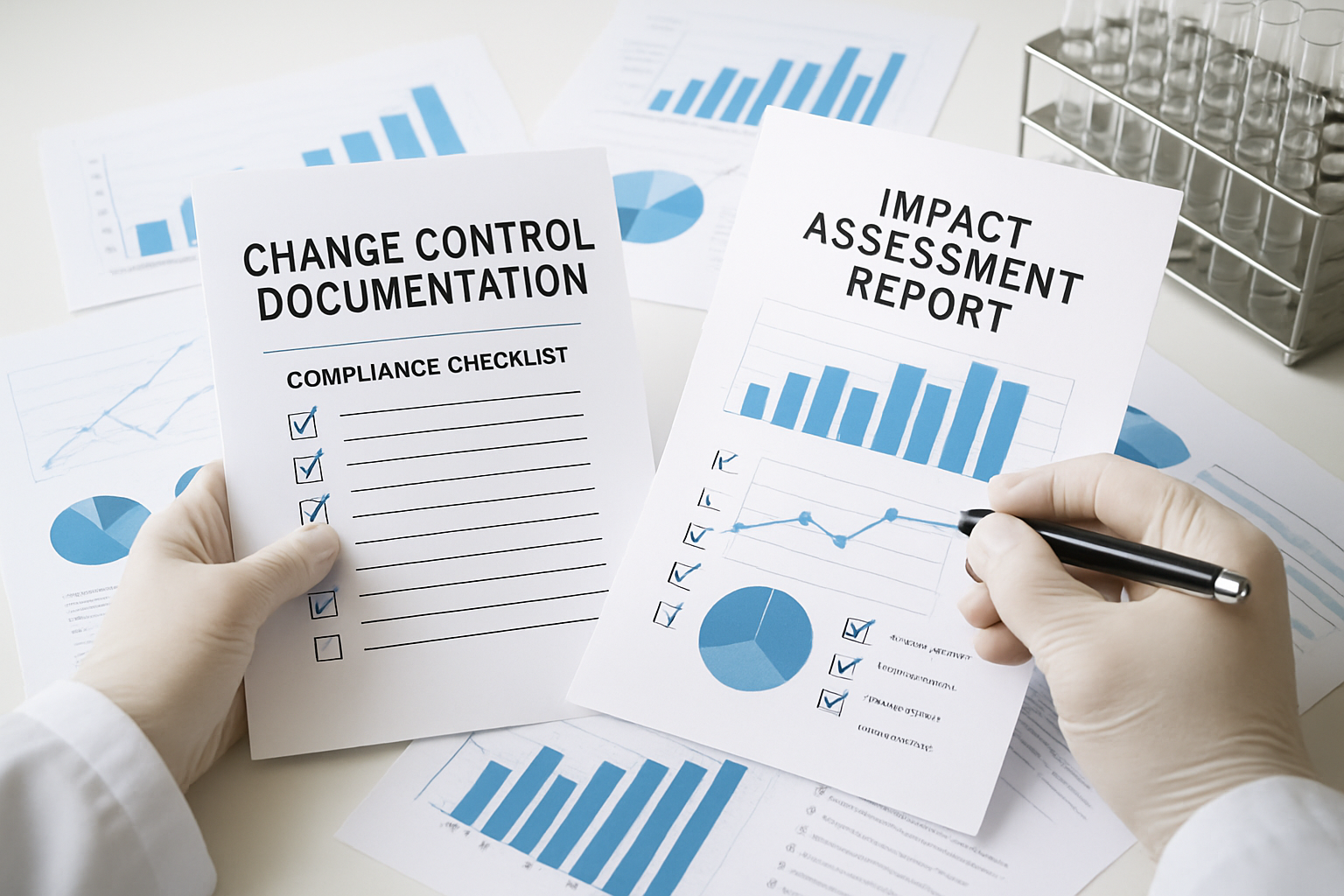
Proper documentation is essential in managing the validation impacts of changes. Every modification must be traceable from initiation to completion. Essential documents include:
- Change request and justification
- Impact assessment report
- Approval documents
- Validation documentation
- Final conclusions
Traceability ensures that every change is linked to validation activities, with all decisions backed by supporting evidence. Poor documentation can lead to regulatory observations, regardless of other compliance factors.
Challenges in Change Control Management
Many companies encounter obstacles when managing change control processes, including:
- Underestimating the effects of change
- Lack of cross-functional involvement
- Ambiguous documentation
- Failure to update validation documentation appropriately
Such missteps can compromise compliance and heighten the risk of regulatory actions.
Enhancing Change Control Effectiveness
To achieve successful change control, organisations should adopt a systematic approach. Best practices include:
- Involving Quality Assurance early in the process
- Employing a risk-based strategy
- Providing scientific justification for changes
- Training team members
- Conducting annual reviews of change control processes
Effective implementation of these practices enhances the management of validation impacts. It establishes a consistent change control framework, aiding regulatory bodies in understanding a company’s change control processes.
Regulatory Expectations
Regulatory agencies expect a well-defined change control process, with complete documentation, validation, and maintenance aligned with Good Manufacturing Practices. During inspections, regulators typically look for:
- Comprehensive and properly documented impact assessments
- Validation decisions supported by clear justifications
- Evidence of revalidation where applicable
Failure to meet these expectations may lead to regulatory observations, warning letters, or product recalls.
Frequently Asked Questions Regarding Change Control and Validation Status
Q1. How is change control defined in pharmaceuticals?
Change control refers to the process by which pharmaceutical companies assess and manage modifications to processes, equipment, or systems.
Q2. What does validation status signify?
Validation status indicates whether a system operates within approved and validated parameters.
Q3. In what ways do changes affect validation processes?
Modifications can impact system performance and may necessitate revalidation depending on the associated risk.
Q4. Is revalidation mandatory after every change?
Revalidation is not required for every change, only those deemed significant enough to potentially influence quality or performance.
Q5. What constitutes an impact assessment?
An impact assessment evaluates the potential effects of a change on product quality and compliance.
Q6. Which guideline supports a risk-based approach in this context?
ICH Q9, Quality Risk Management, outlines the framework for implementing a risk-based approach within the pharmaceutical sector.
Q7. Why is traceable documentation vital in change control processes?
Documentation is crucial as it provides accountability and evidence for audits, helping ensure compliance with regulations.
Q8. What are the consequences of neglecting change control?
Ineffective change control can lead to non-compliance, increased risk to product safety, and potential regulatory penalties.
Comments (0)
Loading comments…
Checking sign-in status…