
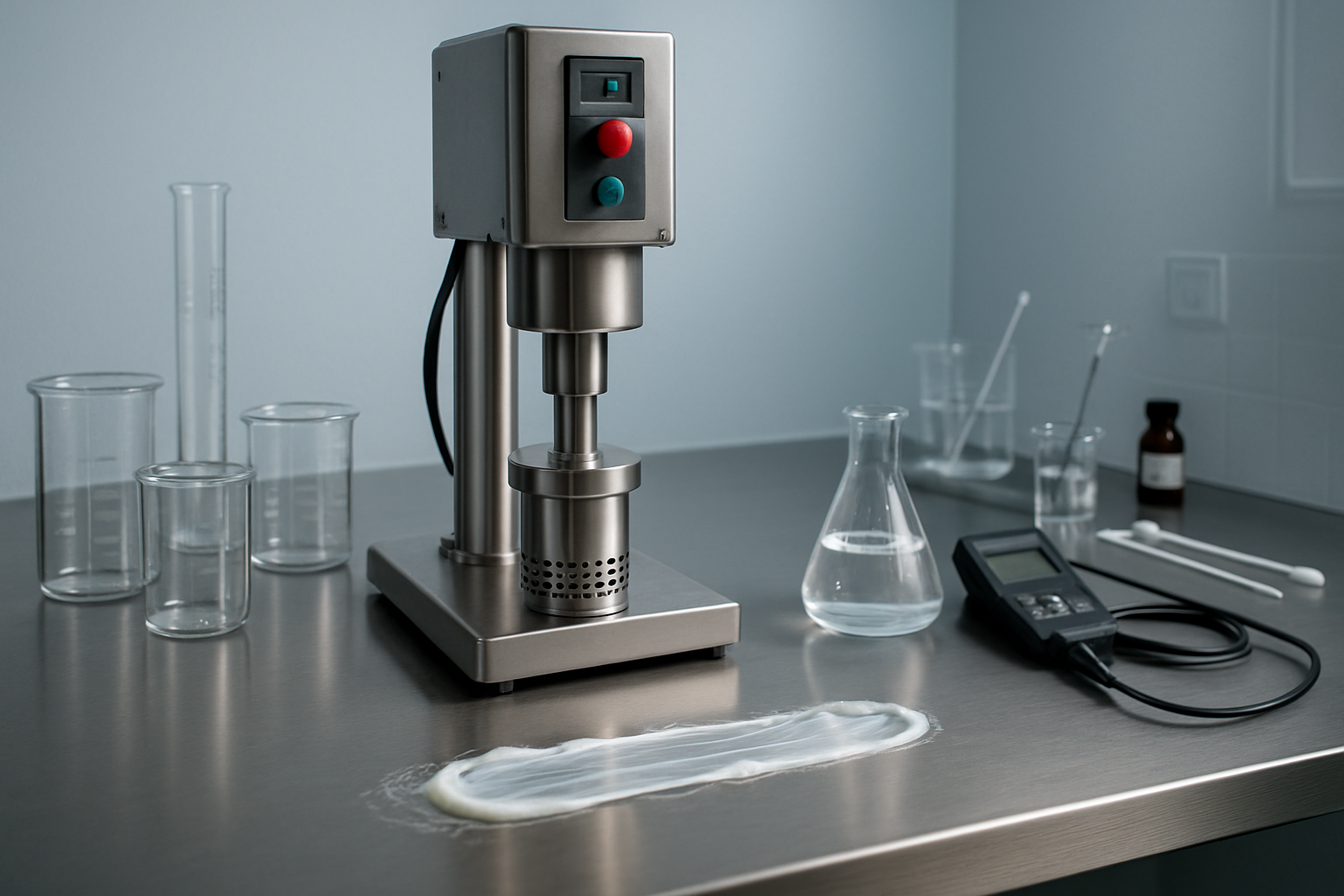
Cleaning validation in ointment production is complex due to the formulation of products like waxes and oils. A thorough strategy involves visual assessments, swab sampling, rinse testing, and targeted analytical methods to ensure effective cleaning and compliance with regulatory guidance.
Cleaning validation in ointment production requires careful consideration due to the specific challenges posed by the formulation of these products. Ointments, creams, and gels often contain components like waxes, oils, and emulsifiers, making the cleaning process more complex compared to traditional solid oral dosage forms. Residues can remain in hard-to-reach areas of equipment, necessitating a thorough validation strategy that combines visual assessments, scientifically backed sampling techniques, and analytical evaluations.
Distinct Cleaning Requirements for Ointment Equipment
Ointment manufacturing equipment operates under conditions that can complicate cleaning efforts. The machinery involved, such as high-shear mixers and homogenisers, can create a thin film of product on large stainless-steel surfaces. The difficulty of cleaning varies significantly based on the product characteristics. For instance, a water-soluble cream may be cleaned with water, but ointments containing petrolatum or waxes may necessitate specific temperature controls, mechanical actions, and a defined sequence of cleaning steps. It is crucial to consider the impact of dirty hold time on the cleaning process, as residues left for extended periods become more challenging to remove. Regulatory guidance, such as that from the FDA, emphasises the importance of simulating worst-case scenarios during validation.
Identifying the Most Challenging Ointment for Validation
Cleaning validation does not require individual testing for every product if a scientific approach to product selection is employed, such as bracketing or grouping. Key factors to consider during this selection include:
- Solubility of the product in the cleaning medium
- Concentration and potency of active ingredients
- Toxicological properties
- Composition of the formulation
- Adhesiveness to equipment surfaces
- Presence of waxes or oils
- Thermal properties
- Historical cleaning data
- Difficulty in residue removal
Choosing a product that poses a greater challenge, such as one with a viscous oily base and an insoluble potent active ingredient, ensures that the cleaning validation process is robust. This selection process should be documented based on principles of Quality Risk Management.
Key Techniques for Cleaning Validation
1. Visual Assessment
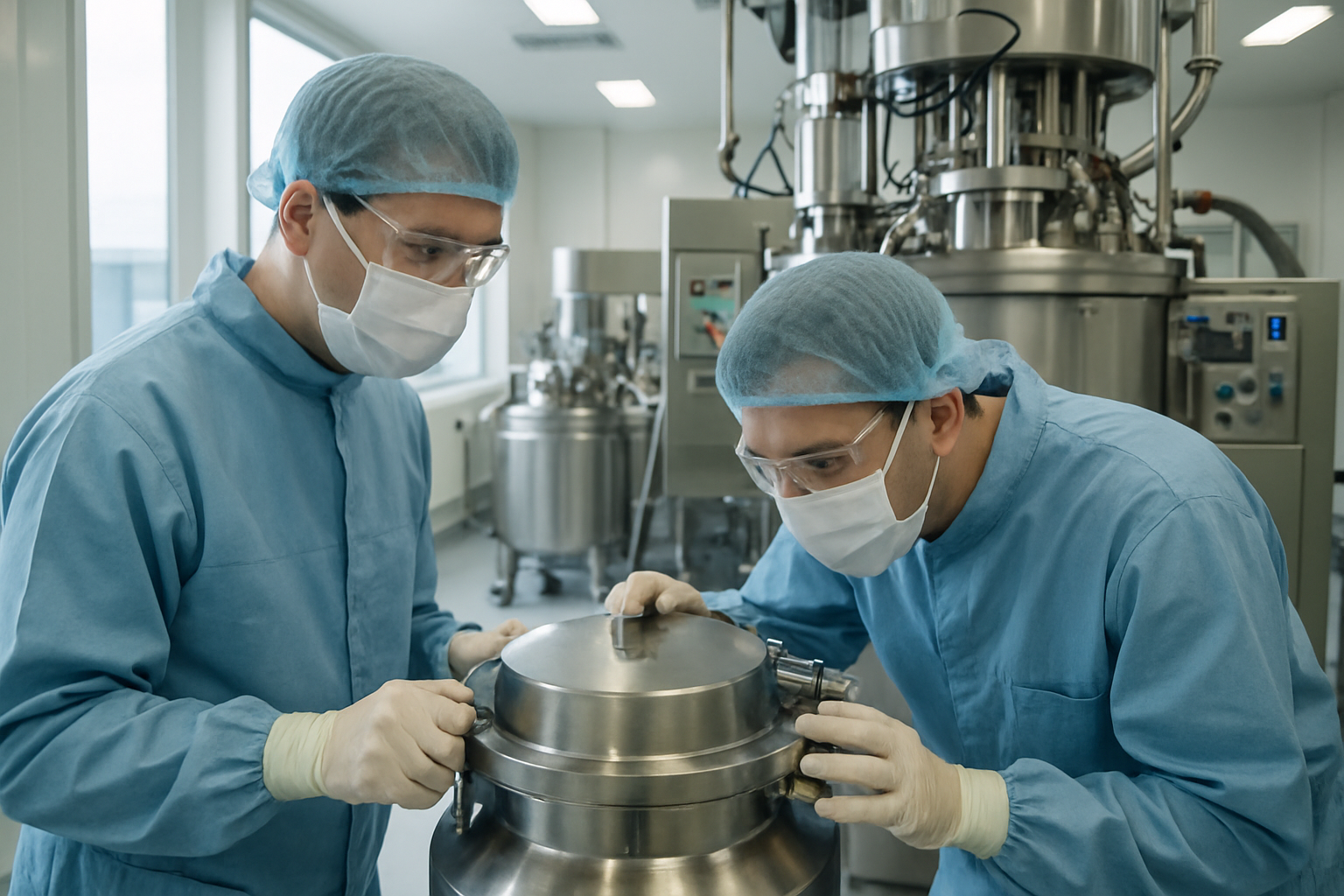
Visual inspection plays a critical role in cleaning validation for ointment manufacturing. Inspectors must examine critical product-contact points under appropriate lighting conditions. Attention should focus on:
- Stirrer blades and shafts
- Vessel walls and bottoms
- Homogeniser components
- Gaskets and valves
- Transfer hoses
- Hard-to-reach areas
While visual inspections can reveal gross contamination, they do not guarantee chemical cleanliness. The FDA warns that a thorough visual inspection may only identify the most concentrated residues, underscoring the need for supplementary testing methods.
2. Surface Swabbing
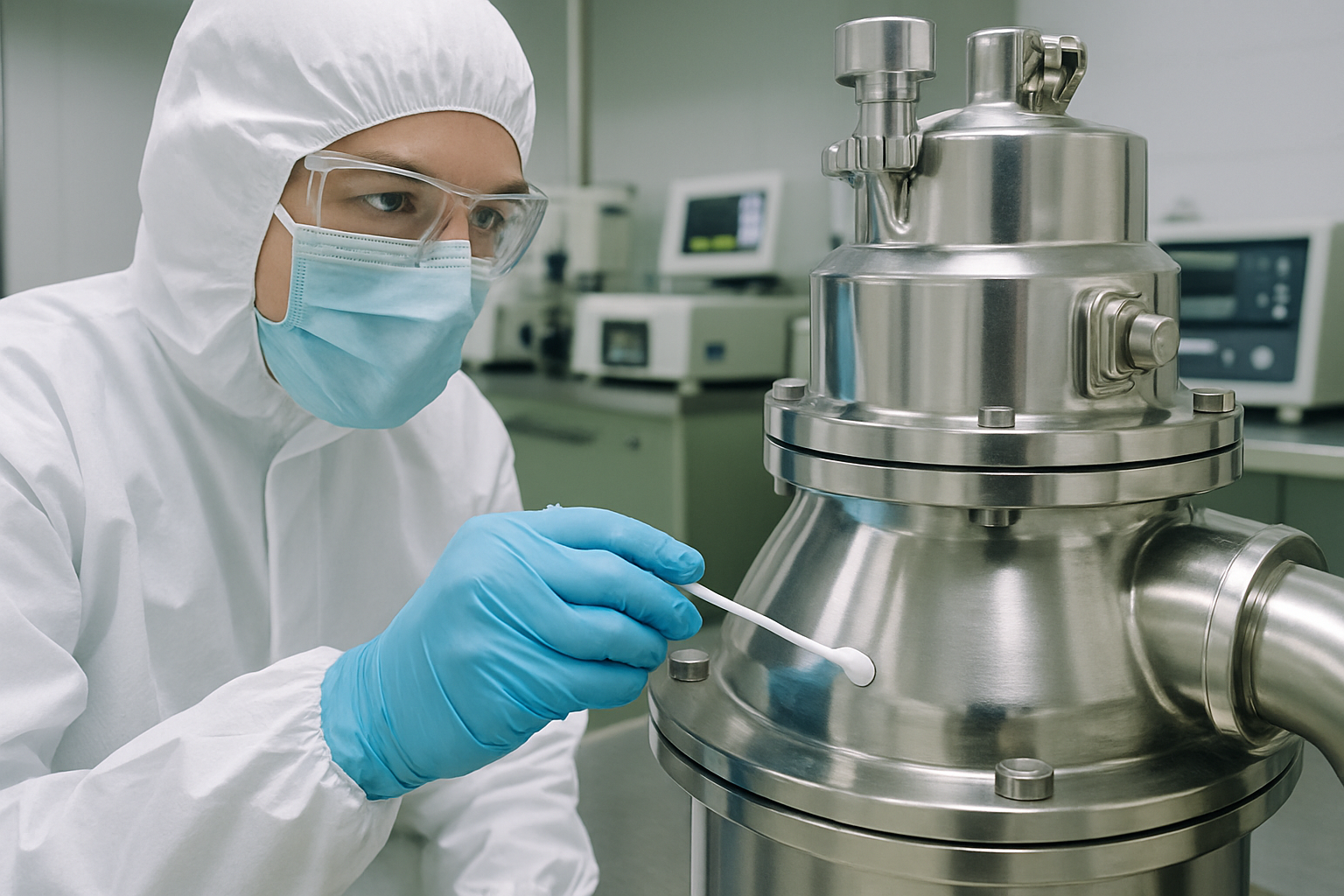
Swab sampling provides concrete evidence of cleanliness by directly sampling the surfaces of equipment. The validation protocol must identify the most contaminated areas and worst-case scenarios. The chosen swabbing method should demonstrate efficacy in recovering residues, supported by recovery studies that validate the swab and solvent used. This technique is highlighted as essential in FDA guidance for cleaning validation.
3. Rinse Testing
Rinse sampling is employed when direct swabbing is impractical, such as in internal transfer lines or complex systems. However, the selection of rinse solvent is crucial, as oily or waxy residues may not dissolve effectively, leading to misleading results. The FDA acknowledges the utility of rinse sampling in hard-to-reach areas but cautions against its limitations for residues that are insoluble or adhered to surfaces. A combination of swab and rinse sampling will yield more reliable results than relying on rinse sampling alone.
4. Targeted Analytical Methods
Choosing the appropriate analytical method for residue testing is vital. Ideally, a specific analysis for the active ingredient should be conducted to ensure optimal sensitivity and accuracy. Other methods, such as Total Organic Carbon (TOC) testing or detergent-specific assays, may be employed depending on the formulation and validation requirements. The cleaning validation procedures must specify the equipment, cleaning protocols, accepted cleaning levels, sampling strategies, and analytical methods used, as outlined in the FDA's Q7A guideline.
Microbiological Considerations in Cleaning Validation
The presence of water in some ointment formulations introduces a risk of microbiological contamination. Therefore, cleaning validation must incorporate measures to control microbial presence, particularly in relation to product type, equipment, and manufacturing processes. Proper drying and protection of equipment post-cleaning is essential, especially when there are delays between batch productions. A surface may appear clean chemically but still present biological risks if moisture allows microbial growth.
QA Considerations During Validation Review
When validating the cleaning process, QA personnel must assess various factors beyond mere residue statistics. The goal is to demonstrate the reproducibility of the cleaning process. Key questions to evaluate include:
- Was the worst-case product justification scientifically valid?
- Did sampling encompass the most challenging areas to clean?
- Is the dirty hold time reflective of real conditions?
- Is there evidence of proper cleaning agent concentration?
- Were cleaning parameters, such as temperature and time, controlled?
- Was hand scrubbing adequately performed?
- Were recovery rates studied?
- Is the established residue limit supported by scientific evidence?
- Were deviations identified and investigated?
- Were any repeated cleaning attempts necessary during validation?
Relying on repeated cleaning to achieve satisfactory results can mask issues with process efficiency, and the FDA guidance cautions against a routine “test until clean” approach.
An Effective Framework for Ointment Cleaning Validation
Loading flowchart…
The cleaning validation process should follow a systematic approach, typically involving the following steps:
- Conducting a risk assessment
- Identifying the highest risk scenarios
- Defining the cleaning protocol
- Developing and validating the analytical techniques
- Executing the cleaning evaluation study
- Implementing the cleaning process
- Assessing the results
- Preparing a formal report
- Establishing ongoing monitoring procedures
Key parameters in the cleaning process, such as cleaning agent concentration, cleaning temperature, contact time, and drying methods, must be clearly established. Any changes in formulas, equipment, cleaning agents, or processes should trigger a post-change control assessment to determine if additional cleaning validation is required. In summary, cleaning validation in ointment production demands a focus on the removal of various residues, including adhesives, oily substances, and poorly soluble materials. Employing a comprehensive validation strategy that includes multiple testing methods will provide assurance of cleanliness. QA departments should prioritise understanding the overall cleaning process effectiveness rather than solely relying on sample test results.
Comments (0)
Loading comments…
Checking sign-in status…