
Pharmaceutical manufacturing facilities must adapt to evolving regulations and technologies to ensure compliance and efficiency. This article outlines practical strategies for assessing current conditions, optimizing layouts, upgrading equipment, enhancing quality management systems, and fostering a culture of continuous improvement.
Pharmaceutical manufacturing plants are critical in transforming raw materials into safe and effective medications. However, facilities originally designed to comply with Good Manufacturing Practices (GMP) may no longer meet current standards or operate efficiently due to evolving regulations and technologies. Upgrading these facilities is essential not only for modernisation but also for ensuring quality, safety, and operational excellence. This piece outlines practical approaches to enhancing pharmaceutical manufacturing facilities across various domains.
Assessing the Existing Facility Conditions
Loading flowchart…
The first step in facility enhancement involves a thorough assessment of its current state. This evaluation should include:
- Compliance with current GMP guidelines set by regulatory authorities such as the FDA, EU, and WHO.
- Identification of workflow inefficiencies that may increase downtime or contamination risks.
- Analysis of equipment performance and calibration data.
- Review of the environmental control systems, including HVAC, temperature, and humidity metrics.
- Evaluation of the movement of personnel and materials within the facility.
Employing a GMP audit checklist or engaging a third-party evaluator can help highlight areas needing corrective and preventive actions. Once the facility's current condition is established, action plans can be formulated to mitigate risks and align with regulatory requirements.
Overview: enhancing Facility Layout for Compliance and Efficiency
An efficient layout is critical to minimise cross-contamination and optimise workflow in cleanrooms. To achieve this, consider the following principles:
Establishing Unidirectional Flow
Design the cleanroom layout to facilitate separate entry and exit points for personnel. This approach should also apply to material movements, ensuring a continuous, one-way path for raw materials, intermediates, and finished products.
Designate Specific Areas
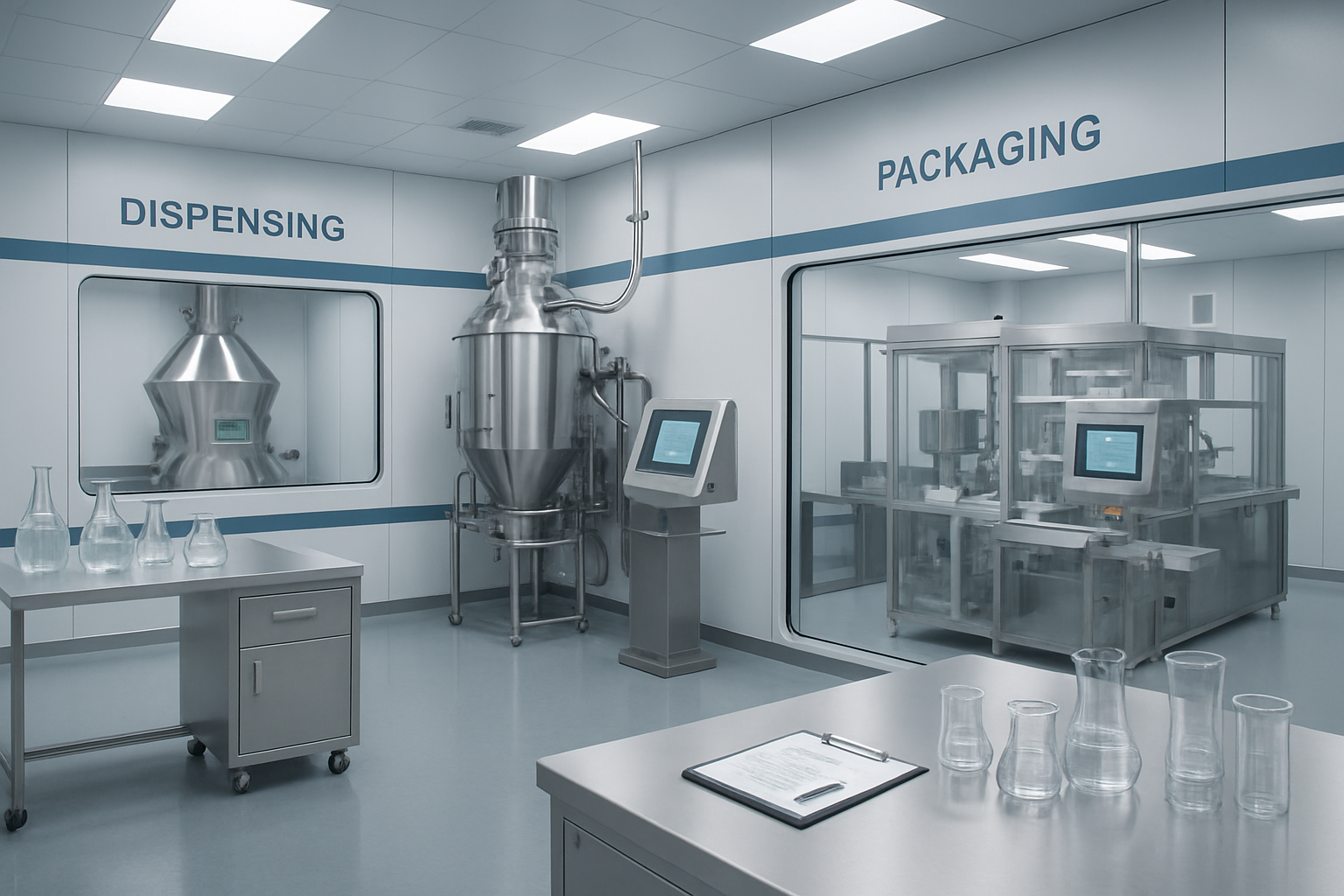
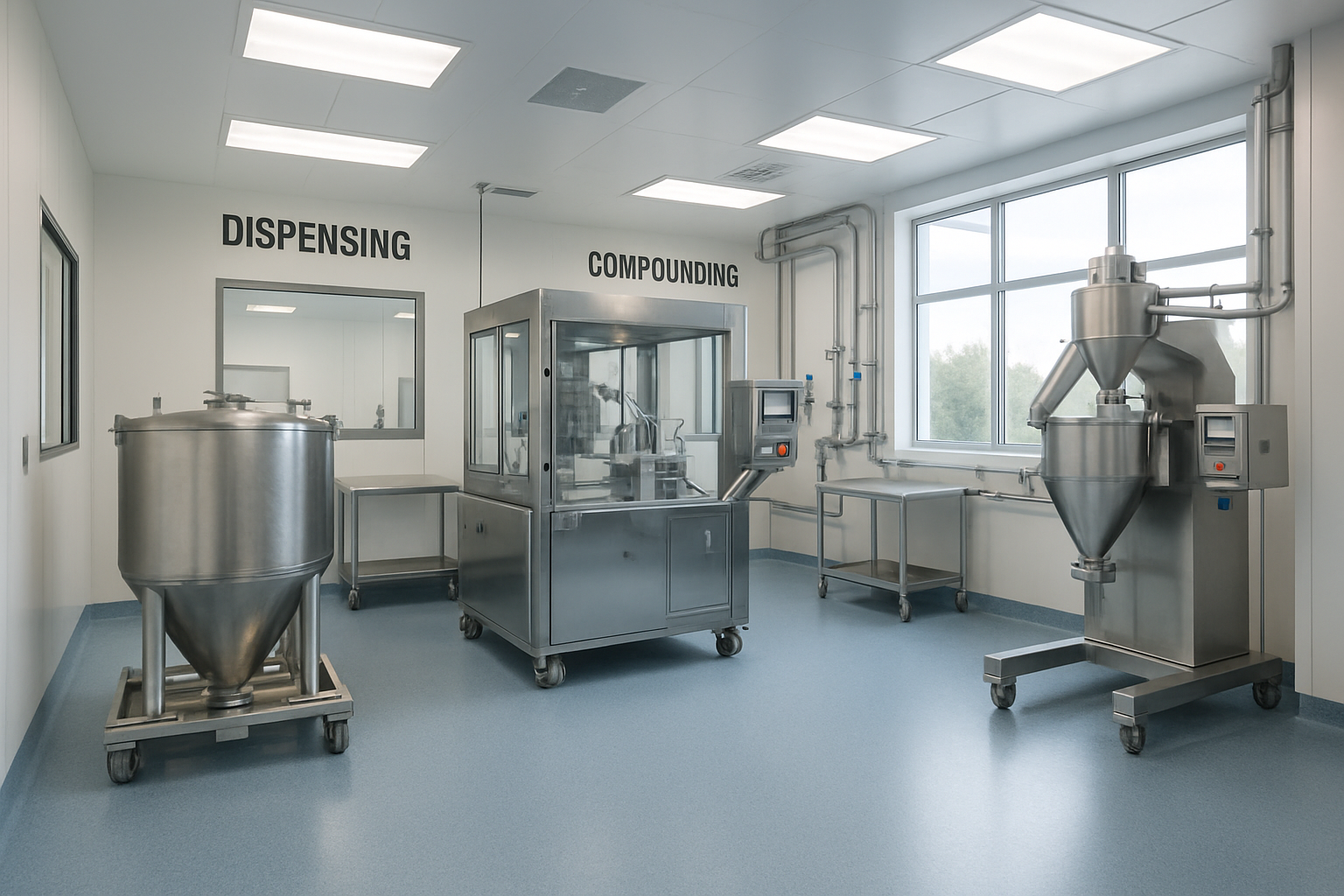
Clearly defined zones for dispensing, compounding, granulation, and packaging operations can help prevent cross-contamination.
Optimising Space Utilisation
Make efficient use of available space by assigning dedicated areas to minimise clutter and enhance cleanliness. Cleanroom designs should comply with ISO 14644 and Schedule M standards to uphold cleanliness and facilitate maintenance.
Modernising Equipment and Utilities
Upgrading Equipment
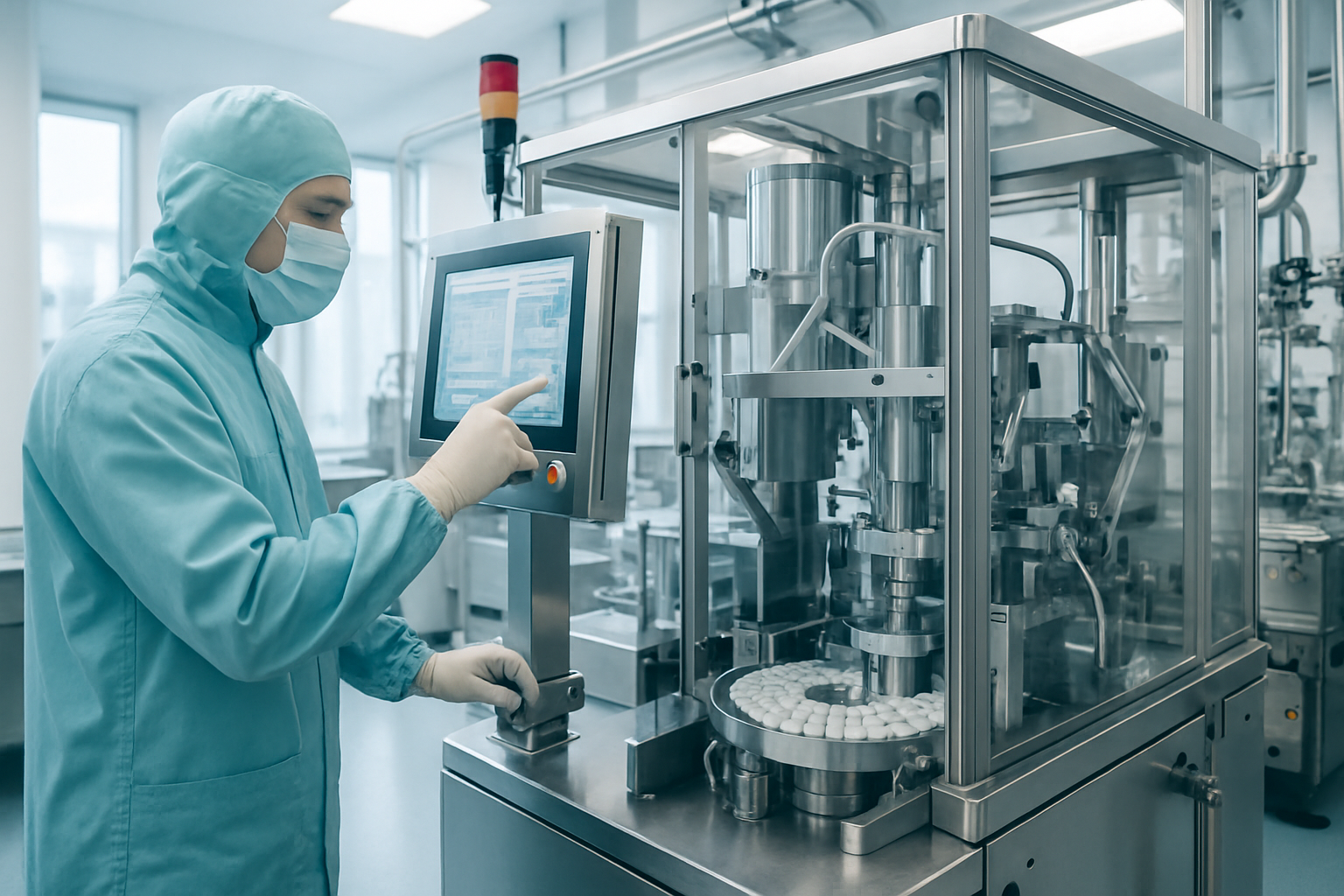
Investing in GMP-compliant automated equipment can significantly reduce manual handling. Examples include:
- Automated granulators, tablet presses, and capsule fillers for improved accuracy.
- Clean-in-place (CIP) and steam-in-place (SIP) systems for validated cleaning processes.
- SCADA and PLC systems offering real-time production monitoring.
Such automation enhances product consistency, reduces human error, and bolsters data integrity.
Improving Utility Systems
Key utilities, including HVAC, purified water systems, WFI, and compressed air, must be validated, monitored, and maintained. Recommendations include:
- Upgrading to energy-efficient air handling units and ensuring proper filtration through HEPA filters.
- Monitoring temperature, pressure differentials, and relative humidity regularly.
- Ensuring the provision of oil-free compressed air and sanitised water systems.
Reliable utility systems underpin facility compliance and repeatable processes.
Strengthening Environmental Monitoring and Cleanroom Controls
Effective contamination control is paramount for GMP compliance. Upgrading environmental monitoring (EM) systems is crucial, and potential improvements include:
- Integrating real-time particle monitoring systems.
- Establishing a testing schedule for HEPA filter integrity.
- Maintaining appropriate pressure differentials between clean areas.
- Increasing air changes per hour (ACPH) in sterile zones to conform to ISO classifications.
- Utilising microbiological monitoring tools, such as air samplers and settled plates.
Ensure cleanroom surfaces are smooth and non-porous, resistant to cleaning agents, to facilitate effective cleaning and maintenance.
Enhancing the Quality Management System
Your Quality Management System (QMS) is critical for monitoring and controlling production processes. To improve its effectiveness:
- Integrate electronic batch records for enhanced data management.
- Conduct regular internal audits to verify QMS compliance with regulatory standards.
- Update standard operating procedures (SOPs) and provide relevant employee training.
- Implement risk-based quality management strategies (as per ICH Q9) for process improvements.
A data-centric QMS facilitates compliance and fosters continuous improvement through corrective and preventive actions (CAPA) and deviation tracking.
Overview: implementing Digital and Automated Processes
Pharmaceutical companies increasingly adopt automation to minimise manual operations, reduce errors, and enhance data integrity. Consider the following technologies:
- Manufacturing Execution Systems (MES) that integrate production and quality monitoring.
- SCADA systems for real-time operational metrics.
- Laboratory Information Management Systems (LIMS) for automated sample tracking.
- Electronic Batch Records (EBR) for comprehensive, traceable documentation.
Automation supports compliance with FDA regulation 21 CFR Part 11, including electronic signatures and audit trails.
Overview: fostering Training and Personnel Hygiene
Even the most advanced facilities cannot succeed without properly trained personnel. Establish ongoing training and competency assessments to ensure compliance with GMP and hygiene standards. Training should encompass:
- Good documentation practices.
- Cleanroom gowning and behaviour protocols.
- Equipment operation and sanitation.
- Contamination control measures.
- Deviation management and CAPA handling.
Regular requalification programmes and comprehensive training records are essential to uphold hygiene standards in the facility.
Improving Cleaning and Sanitation Protocols
Refined cleaning and sanitisation practices are hallmarks of an enhanced facility. Implement validated cleaning procedures to move away from purely manual methods, such as:
- Using automated cleaning systems for repeatable processes.
- Employing ultrasonic cleaners for small tools.
- Utilising rotary sanitizers to ensure effective microbial control.
Cleaning validation must adhere to GMP standards to confirm effective residue and microorganism removal.
Adopting Energy-Efficient and Sustainable Practices
Environmental sustainability has become a significant concern. Enhancing energy efficiency can lower operational costs and reflect corporate responsibility. Suggestions include:
- Installing energy recovery systems within HVAC systems.
- Using LED lighting with occupancy sensors.
- Recycling purified water for non-critical cleaning tasks.
- Optimising airflow to alleviate HVAC load.
- Applying green building principles in new projects.
Reinforcing Validation and Calibration Initiatives
Regular validation and calibration help maintain control over systems and equipment. Essential validation practices include:
- Conducting equipment qualification (IQ, OQ, PQ) and process validation.
- Routine calibration of instruments for accuracy.
- Regular requalification of critical HVAC and equipment.
Validation and calibration records are crucial during regulatory inspections.
Improving Documentation and Data Integrity
Weak documentation is a common issue identified during inspections. To strengthen documentation practices, consider:
- Implementing electronic data management systems.
- Utilising controlled document templates with version control.
- Documenting activities immediately as they occur.
- Ensuring audit trails can identify responsible personnel for each step.
All documentation must comply with ALCOA+ principles: Attributable, Legible, Contemporary, Original, Accurate, Complete, Consistent, Enduring, and Accessible.
Fostering a Culture of Continuous Improvement
Developing a culture that prioritises continuous improvement is as crucial as physical enhancements. Encourage departments to adopt a quality-first mindset by:
- Facilitating communication between production and quality teams.
- Implementing a system for root cause analysis of deviations.
- Establishing a process to verify CAPA effectiveness.
- Conducting management reviews of continuous improvement initiatives.
With a commitment to continuous improvement, a company can evolve from compliance to excellence, ultimately benefiting product quality and patient trust.
Common Queries Regarding Facility Upgrades
Why is it crucial to enhance pharmaceutical manufacturing facilities?
Upgrading facilities fosters compliance with GMP, enhances product quality, increases efficiency, and safeguards patient safety.
What initial step should be taken for facility enhancement?
Commencing with a thorough GMP audit is vital to identify vulnerabilities and devise an action plan to rectify deficiencies.
How does layout redesign contribute to compliance?
By creating a unidirectional flow for products and establishing designated zones, layout redesign mitigates contamination risks and enhances compliance.
Which technologies can improve facility performance?
Automation technologies, including MES, SCADA, and EBR, significantly enhance operational monitoring and data integrity.
What is the recommended frequency for facility validation?
Facility validation should take place initially during project setup and at regular intervals defined by GMP requirements to uphold integrity.
What measures can enhance energy efficiency in facilities?
Improving HVAC systems, utilising LED lighting, and implementing energy recovery systems can boost energy efficiency.
How does staff training contribute to GMP enhancements?
Effective training ensures that all personnel understand processes, cleaning protocols, and hygiene standards crucial for GMP compliance.
Which key GMP areas should be targeted for improvement?
Key areas for GMP enhancement include quality management, equipment upkeep, cleaning validation, and documentation practices.

Comments (0)
Loading comments…
Checking sign-in status…